


Beverage Refrigerators
Beverage refrigerators ensure that bottles and cans are within easy reach, prominently displayed, and reliably chilled in the food service, hospitality, catering, and retail industries. They are ideal for bars, restaurants, kiosks, cafés, event venues, and any business that needs to keep beverages readily available during service. Beverage Refrigerator Guide »


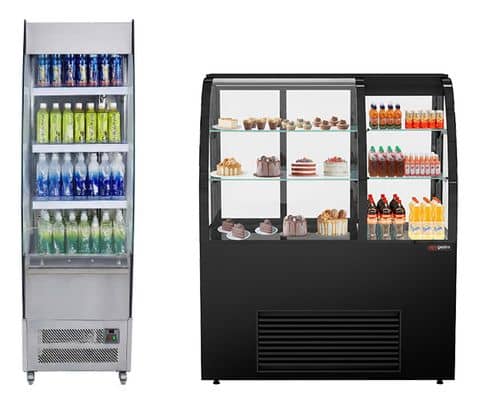


Beverage Refrigerators for Display Cooling in Everyday Foodservice Operations
Beverage refrigerators are commercial refrigeration units designed for the storage, display, and dispensing of chilled beverages. They are used wherever bottles, cans, or packaged beverages need not only to be kept cold but also to be clearly visible and easily accessible to guests or employees.
In professional settings, beverage refrigerators thus serve a dual purpose: they ensure beverages stay cold while also supporting sales. In bars, cafés, snack bars, kiosks, cafeterias, hotels, or event venues, glass doors, interior lighting, and adjustable shelves make it easier to keep track of inventory. The staff can quickly identify which beverages need to be restocked, and guests can immediately see what’s available. This can ease the workload on service staff, especially during peak hours, because there’s less searching, opening, and rearranging to do.
What Criteria Really Matter When Choosing a Beverage Refrigerator
The right choice depends first and foremost on the intended use. A compact beverage refrigerator with a glass door is suitable for small sales areas, satellite locations, or limited floor space. Models with two or three doors offer more cooling capacity and are suitable for businesses with higher beverage turnover. Larger units with multiple doors are a good choice when many varieties need to be displayed simultaneously or to handle heavy peak periods.
Key decision-making criteria include:
-
Cooling capacity and number of doors appropriate for the daily volume of beverages
-
Dimensions and floor space in the bar, dining area, or sales area
-
Temperature range for bottles, cans, and packaged beverages
-
Interior lighting, glass door, and shelf configuration for good visibility
-
Lockable doors, sturdy shelves, and easy cleaning for everyday use
The technical features should also be suited to the realities of daily operations. Recirculating air cooling ensures even temperature distribution inside the unit, while adjustable shelves make it easier to organize different bottle sizes. A standard 230-volt outlet is practical for many models, but should be checked before purchase, along with the unit’s width, door hinge direction, ventilation clearances, and installation location.
Planning, Space Requirements, and Efficient Workflows
A beverage refrigerator should be placed where it improves workflow. Behind the bar, direct access by the staff is key. In a retail space or kiosk, product presentation takes center stage. In cafeterias, clubhouses, or event areas, it’s often important that larger quantities can be restocked quickly and that the doors close securely even with frequent use.
When planning, it’s worth considering typical usage patterns. If many soft drinks are sold at lunchtime or if multiple people are taking drinks at the same time during an event, a unit that’s too small will quickly prove insufficient. Conversely, an oversized model takes up unnecessary floor space and consumes more energy than needed. It therefore makes sense to base your selection on actual usage frequency, product range, and restocking frequency.
For a cohesive operational concept, beverage refrigerators can be easily combined with bar and beverage chilling tables if additional refrigerated storage space is needed directly at the workstation. In areas with more product displays, bottle chillers or retail solutions can also be added without replacing the beverage refrigerator.
Materials, Hygiene, and Durability in Daily Use
Commercial beverage refrigerators must withstand frequent opening, fluctuating ambient temperatures, humidity, cleaning routines, and mechanical stress. Sturdy glass doors, durable shelves, easily accessible interiors, and smooth surfaces make day-to-day use easier. Especially when placed in plain view in the dining area, the unit should not only function properly but also maintain a neat and well-maintained appearance at all times.
Removable or adjustable shelves are helpful for cleaning. Spilled beverages, condensation, or dust in the ventilation area should be removed regularly to maintain hygiene and proper function. Lockable doors can be useful in publicly accessible areas, such as clubhouses, hotels, self-service zones, or event venues. Those who store different beverage sizes should also ensure sufficient load capacity and flexible shelf heights.
Cost-effectiveness results from proper sizing
A beverage refrigerator is a cost-effective choice when it matches actual needs. Too little storage space leads to frequent restocking, disorganized storage, and service bottlenecks. Too much capacity takes up space and can disrupt operations if the unit is poorly positioned or only partially utilized.
The operational benefits stem primarily from consistent availability, quick access, and fewer disruptions in day-to-day operations. Cold beverages are within easy reach, the product assortment remains visible, and restocking processes can be organized more predictably. For high-traffic establishments, combining the unit with refrigerators and freezers with glass doors be a good option if, in addition to beverages, other refrigerated items need to be stored in plain view. For wine service or delicate bottles, however, a separate wine refrigerator is the more suitable solution.
How to Choose the Right Beverage Refrigerator
The best decision results from the interplay of product assortment, floor space, foot traffic, and service workflow. Small businesses benefit from compact, easily accessible models. Bars, kiosks, and restaurants with high beverage turnover should pay closer attention to the number of doors, cooling capacity, lighting, and a sturdy interior layout. This way, the beverage refrigerator becomes not just a storage unit, but a functional component of an organized, efficient, and professional workflow.