


Rice Cookers for the Food Service Industry and Commercial Kitchens
Rice cookers cook large quantities of rice evenly and keep it warm after cooking. They are ideal for restaurants, snack bars, sushi restaurants, buffets, catering, and institutional food service. Rice Cooker Guide »
Product type
Capacity
Price
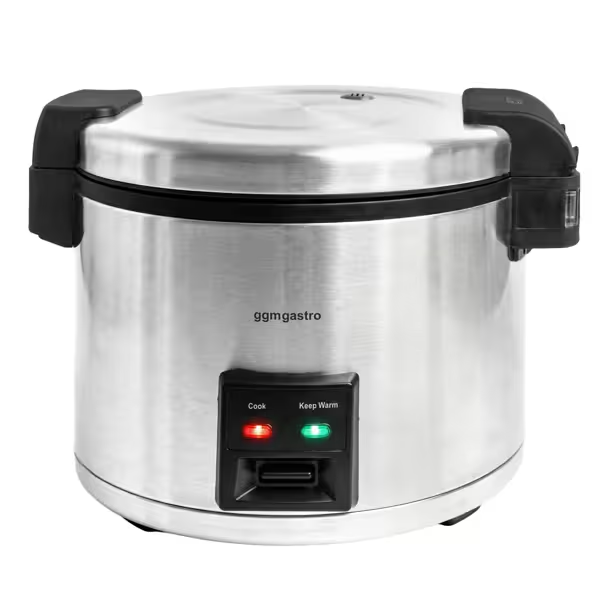
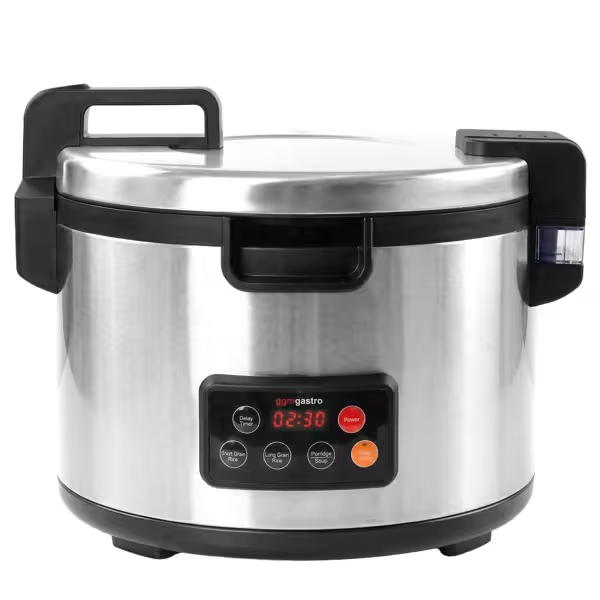
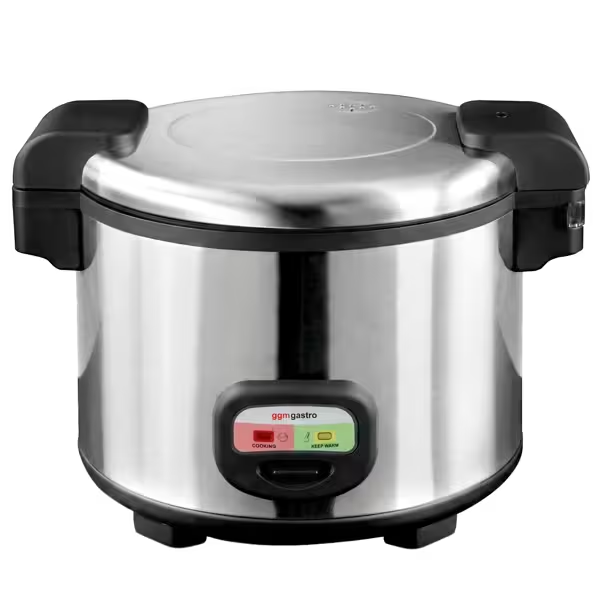

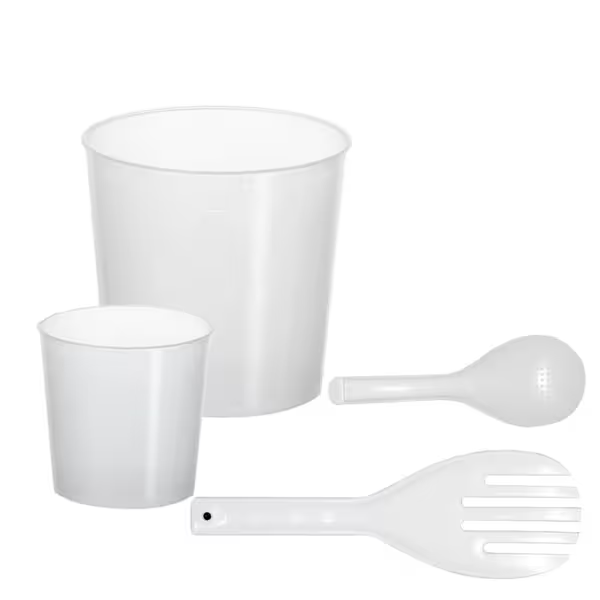
Rice Cookers for Streamlined Workflows in Everyday Restaurant Operations
A professional rice cooker is an electric countertop appliance designed for the controlled preparation of large quantities of rice. After cooking, many models automatically switch to keep-warm mode, so the rice is ready to serve without requiring constant supervision.
In restaurants, Asian takeout, sushi restaurant, or in institutional food service, this clear process logic helps prepare rice without relying on an available stovetop. This takes the pressure off the team, especially during prep and peak hours. While the appliance is running, staff can prepare other ingredients, plate dishes, or serve orders.
A rice cooker does not, however, replace the need to plan the required quantities. The key factors are how many servings are needed in a single production run and how quickly additional rice can be prepared. For smaller establishments, a model with a capacity of about 5.4 liters may be sufficient. For higher throughput, buffet service, or multiple serving rounds, units with a capacity of about 8 or 8.2 liters are suitable.
Assessing Capacity, Performance, and Footprint Correctly
Capacity is the most obvious, but not the only, selection criterion. Liter measurements provide a general idea of the pot’s size, but must be considered in conjunction with the type of rice used, the amount of water, and the desired serving size. Power also affects how quickly the appliance heats up and processes larger quantities.
The following points are particularly relevant when making your selection:
- Amount of rice needed per cooking cycle
- Electrical power rating and 230-volt connection
- External dimensions and space required to open the lid
- Cooking and keep-warm functions
- Removable inner pot and available accessories
The location should be easily accessible without blocking the path between the preparation and serving areas. The appliance can be operated safely on a stable, heat-resistant work surface. A power outlet in the immediate vicinity prevents loose cables in the work area. When planning the kitchen, combining the rice cooker with functional stainless steel furniture can help integrate it into a streamlined production line.
Consistent results even during rush hour
Rice cooking in a pot on the stove requires regular attention. The temperature, cooking time, and amount of water must be monitored while other dishes are being prepared. A rice cooker standardizes this process and ensures consistent results, even with a changing staff.
This is particularly important when rice is needed continuously as a staple side dish, for bowls, sushi, curries, or buffet dishes. During lunch service, a prepared batch can be ready for serving immediately, while a second batch is produced according to schedule. The keep-warm mode provides some flexibility in terms of timing. However, it is not intended for unlimited storage: Keeping the rice warm for too long can alter its texture, moisture content, and quality.
Quick Checklist for Selection:
- Is the capacity sufficient for the busiest serving period?
- Does the unit fit on the available countertop space?
- Is a 230-volt outlet within reach?
- Can the inner pot be quickly removed and cleaned?
- Are a replacement pot, measuring cup, and rice spoon available?
Cleaning and Hygiene Without Unnecessary Extra Work
Rice contains starch and can stick to the pot and lid if left to sit for a long time. A removable, nonstick-coated inner pot therefore makes it easier to portion the rice and clean the pot afterward. Smooth housing surfaces can be wiped down after use, while the lid, drip pans, and gaskets should be checked regularly for residue.
Before cleaning, the appliance must be allowed to cool and disconnected from the power source. Harsh or abrasive cleaning agents can damage coatings. An intact inner pot surface is not only important for maintenance but also for even cooking and easy removal of the rice. An additional replacement pot can speed up the changeover during multiple production runs and reduce downtime between cleaning and the next production run.
Integrating a rice cooker effectively into your kitchen routine
A rice cooker operates most efficiently when preparation, portioning, and serving are coordinated. Rice, water, measuring cups, and serving utensils should be readily available nearby. For ingredients and side dishes served alongside the rice, refrigerated tables or preparation tables ensure short distances and an organized mise en place.
After serving, the return process must also be taken into account. Removable inner pots and accessories require a designated spot in the dishwashing system, ensuring clean and used equipment do not mix. This keeps the workflow traceable from preparation through cleaning.
A properly sized rice cooker can free up stove capacity, reduce manual steps, and make rice production easier to plan. It is crucial to choose a model that matches the portion size, floor space, connection options, and actual workload of the establishment.