


Egg Cooker
Egg cookers help food service establishments prepare multiple eggs at the same time with a precisely controllable cooking process. They are particularly well-suited for breakfast service and buffet operations, where capacity, ease of use, and reliable operations are essential. Egg Cooker Guide »
Product type
Width of the Interior
Depth Interior
Height Interior
Price
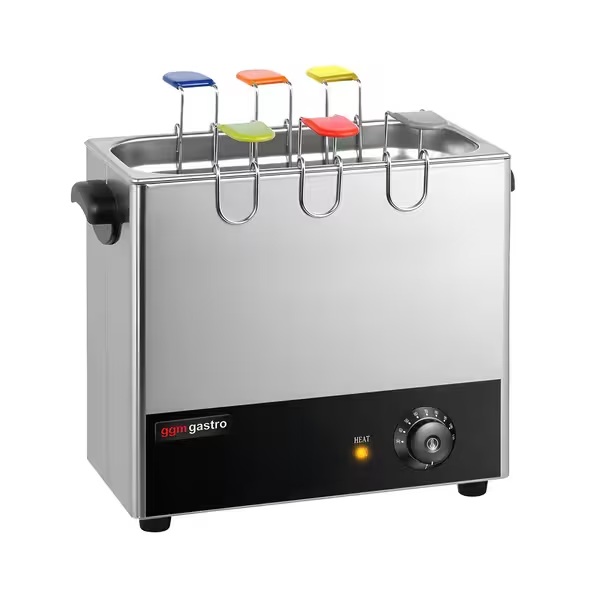
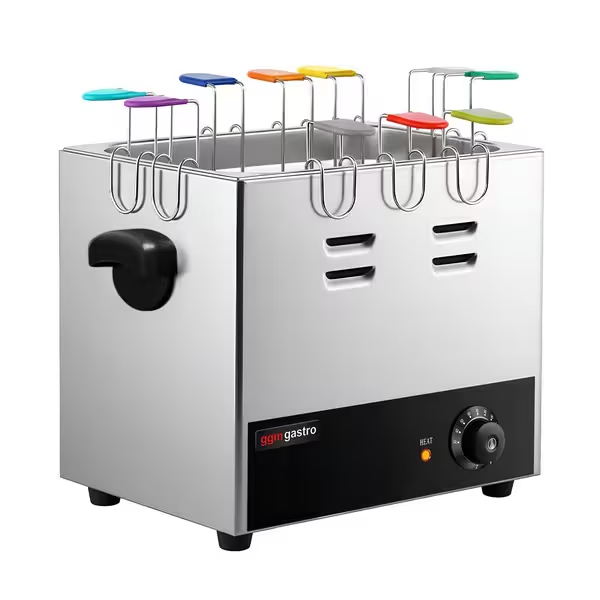
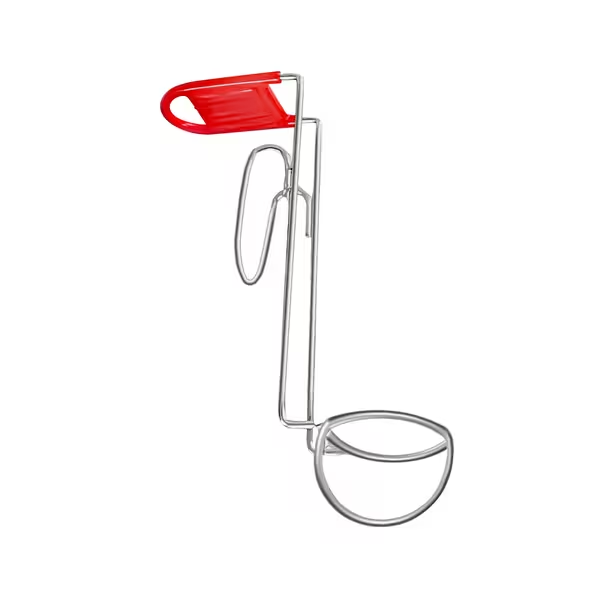
Egg Cooker in a Professional Breakfast Service
Egg cookers are professional electric appliances designed for preparing multiple eggs simultaneously in the foodservice industry, hospitality sector, and institutional food service. They are particularly useful for breakfast service and buffet operations when different levels of doneness need to be reliably managed with a manageable staff workload.
In everyday use, the maximum daily volume is less important than the volume during the busiest breakfast period. A small café with few simultaneous orders has different needs than a hotel where many guests have breakfast within a short period of time. The current GGM category includes models for six or ten eggs. This allows the capacity to be tailored directly to the expected peak without unnecessarily tying up floor space or power capacity.
Choose Capacity and Power to Match Peak Demand
When selecting a unit, operators should pay particular attention to capacity, power, connection type, temperature control, and available floor space. Current models range from 2.2 to 2.6 kW and operate at 230 V. This makes it easier to integrate the unit into many existing breakfast and food preparation setups, but it does not replace the need to check the intended electrical circuit. Models with adjustable temperatures up to 110 °C allow the cooking process to be tailored to the specific application.
A good comparison therefore doesn’t start with the purchase price, but with the workflow: How many eggs are needed in a short period of time, who will be operating the unit, and how quickly do you need to restock? A model with insufficient capacity can become a bottleneck during peak hours. Oversized equipment, on the other hand, ties up space and power without automatically providing any additional benefit in daily operation.
Integrating an egg cooker seamlessly into your kitchen and buffet area
An egg cooker can be placed where it can be filled, emptied, and cleaned without requiring additional trips. In a small kitchen, a compact location near the breakfast preparation area makes sense. In a buffet setting, however, guest flow can be a key factor: Separate egg baskets allow for the individual allocation of eggs and can simplify self-service.
It is important that the operating surface, water reservoir, and retrieval area remain easily accessible. A stable base—for example, with rubber feet—reduces accidental slipping during frequent use. At the same time, there should be sufficient counter space around the unit so that baskets aren’t placed on makeshift surfaces and the breakfast service remains orderly even during peak guest traffic.
Stainless Steel, Cleaning, and Operational Safety in Everyday Use
Moisture, heat, and regular cleaning are all part of the normal operating conditions for an egg cooker. Stainless steel surfaces are ideal for everyday commercial use because they are durable and easy to clean. The current 10-egg model uses AISI 430 stainless steel; in addition, an operation indicator light and overheat protection ensure clear and safe operation.
During the cleaning process, water and limescale residues should be removed regularly, and the egg baskets should be cleaned separately. What matters is not only how quickly a machine is ready for use in the morning, but also how easily it can be cleaned and made ready for operation again after use. Especially with daily use, this effort has a greater impact on actual cost-effectiveness than rarely used additional features.
Quick Checklist for Selection
-
Select the capacity based on simultaneous demand: 6 or 10 eggs.
-
Check the power rating and the available 230-V outlet.
-
Consider the required floor space and the safe removal of the egg baskets.
-
Adapt the temperature control and ease of use to your operational workflow.
-
Evaluate cleaning accessibility and the materials used for daily operation.
Where the egg cooker is cost-effective
A properly sized egg cooker can streamline the breakfast process because multiple eggs can be cooked at the same time, and employees don’t have to monitor each portion individually. The economic benefit doesn’t come from the appliance alone, but from its integration into a clear workflow: short distances, appropriate capacity, simple operation, and predictable cleaning reduce friction in day-to-day operations.
Availability also plays a practical role when replacements are needed. If a breakfast appliance breaks down, a solution that can be procured quickly and is technically suitable is often more valuable than more extensive equipment that does not better meet actual needs. Expert advice can be particularly helpful when capacity, power connection, or placement within the existing workspace need to be clarified before purchase.
A cohesive breakfast area instead of individual pieces of furniture
For a functional breakfast area, the egg cooker should be placed on a suitable countertop. Stainless steel furniture provides a sturdy, easy-to-clean base for this. Depending on your breakfast setup, toasters can complement simultaneous food preparation, while dishwashing equipment is important for the quick return of baskets, containers, and other work equipment. These components should not be arranged in the greatest possible number, but rather in such a way that employees do not get in each other’s way during peak hours.
An egg cooker is a particularly sensible choice when its capacity, performance, and operating concept match the actual breakfast volume. For businesses, this means: don’t base your decision on maximum capacity, but rather on peak demand, available space, cleaning routines, and how reliably the appliance can be integrated into existing workflows.