


Butter wheels for the food service industry and professional kitchens
Butter wheels allow for the quick and even application of melted butter to burger buns, rolls, toast, and bread. Manual and heated models are available to suit your throughput, workspace, and workflow. Butter Wheel Guide »
Price
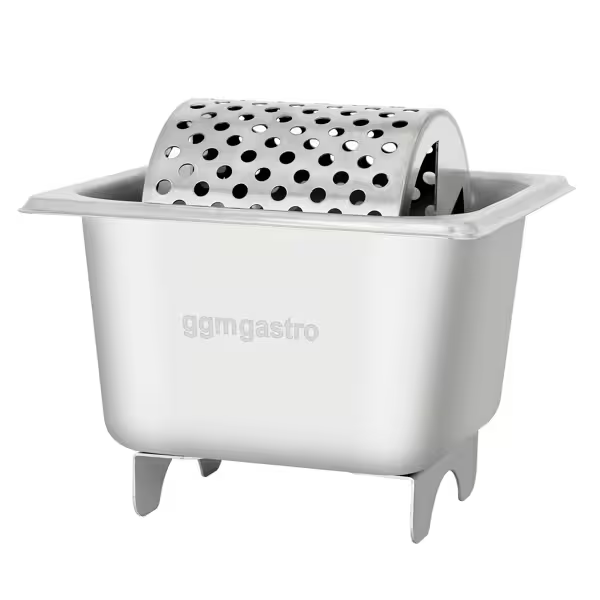
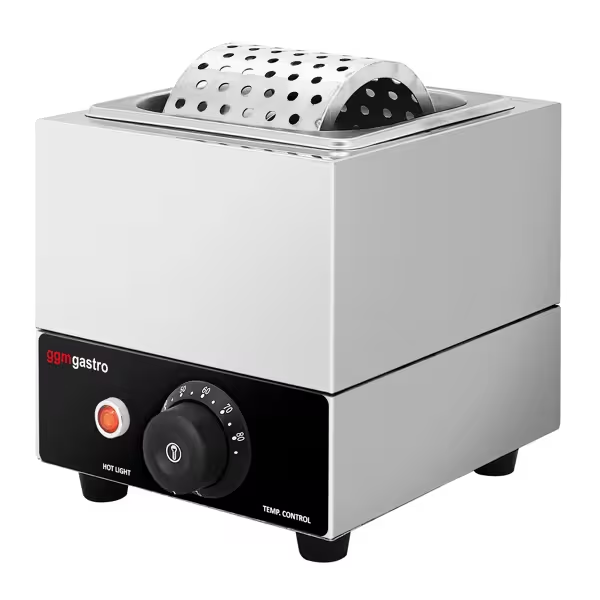
Butter wheels ensure even application in fast-paced kitchen operations
Butter wheels are compact kitchen tools designed for quickly and evenly applying melted butter to rolls, burger buns, toast, or slices of bread. The perforated wheel rolls through the butter in the container; the baked goods are passed over the wheel, coating them with an even layer of butter.
This method is particularly useful in burger restaurants, fast-food joints, snack bars, breakfast areas, and other establishments where large quantities of baked goods are prepared in quick succession. Instead of spreading butter individually with a knife or brush, this step can be integrated directly into the prep or grilling station. This helps maintain a steady pace during peak hours when multiple buns are being topped, toasted, or served one after another.
Correctly classify a heated butter wheel or a manual model
When making your selection, the first consideration is how the butter is kept liquid during operation. The manual butter wheel from GGM Gastro uses a GN 1/6 container that is 100 mm deep and has a capacity of 1.75 liters. It is designed to hold about two to three pieces of butter and is suitable for workstations where no built-in heating is required.
The heated butter wheel comes with its own built-in heat source. With 500 watts of power, a 230-V connection, and an adjustable temperature range of 30 to 85 °C, the butter can be kept at the right temperature right at the workstation. Both models use a butter wheel that is 100 mm wide and 109 mm in diameter. This keeps the unit compact and tailored to typical roll and bread dimensions.
Space Requirements and Commute to the Butter Station
Butter wheels are most useful when placed where buns or slices of bread are prepared anyway. The manual model measures 175 x 160 x 160 mm, while the heated version measures 195 x 230 x 225 mm. Especially at small grilling or prep stations, this difference determines whether there’s still enough counter space next to the unit for baked goods, tongs, and containers.
It makes sense to position it near toasters or grills, without creating cross-paths with raw ingredients, return routes, or dishwashing paths. At a burger station, for example, a bun can be taken from the stock, passed through the butter wheel, toasted immediately, and then topped. The shorter this sequence is, the fewer unnecessary steps are required.
Stainless Steel, Hygiene, and Cleaning in Everyday Use
On the GGM Gastro models, the GN containers and wheels are made of stainless steel. This is practical for components that come into contact with food, because smooth surfaces can be easily integrated into established cleaning routines and are suitable for regular exposure to grease and moisture.
Regular cleaning remains important, especially during extended periods of use. This prevents butter residue from remaining in the unit unnecessarily over several service cycles. For the heated model, the electrical components must also be included in the cleaning plan: Before cleaning, the unit must be turned off and unplugged. A clearly designated area for clean and used parts simplifies the routine at the end of the shift.
Quick Checklist for Selecting Butter Wheels
- Is manual temperature control suitable for the existing workspace, or would a heated model be more practical?
- Is a GN 1/6 container with a depth of 100 mm and a volume of 1.75 liters sufficient for the expected throughput?
- For the heated model, is there a 230-V outlet in the immediate vicinity?
- Do the dimensions and working height fit the available prep area?
- Can the butter wheel be easily integrated into the daily cleaning routine?
Steady Order Flow as an Economic Lever
A butter wheel doesn’t replace the entire preparation process, but it can standardize a frequently repeated step. Especially when producing a high volume of buns, applying butter evenly helps make workflows more consistent and minimizes unnecessary variations in butter application. This can make inventory management more predictable and ease the workload on the team during peak hours.
To create a cohesive workspace, the butter station can be combined with matching stainless steel furniture. What matters is not so much the number of devices as their sequence: prepare baked goods, apply butter, toast or grill, top, and serve. This keeps the butter station clearly focused on its task and complements the process without creating additional steps.
Choose butter wheels that are suitable for your operation
For smaller quantities and workstations that do not require their own temperature control, the manual version may be sufficient. For regular use and when controlled temperature regulation is desired, the heated version offers additional process control. Key factors include throughput, footprint, connections, cleaning procedures, and how the unit will be integrated into the actual workflow.