


Coffee Makers for the Food Service and Commercial Sectors
Coffee makers are ideal for reliably brewing and serving large quantities of coffee in restaurants, hotels, catering services, and institutional food service settings. The key factors to consider when selecting a coffee maker are, above all, the required capacity, the location where it will be used, and operational workflows. Coffee Maker Guide »
Product type
Power Connection
Capacity liters
Capacity
Width
Depth
Height
Price
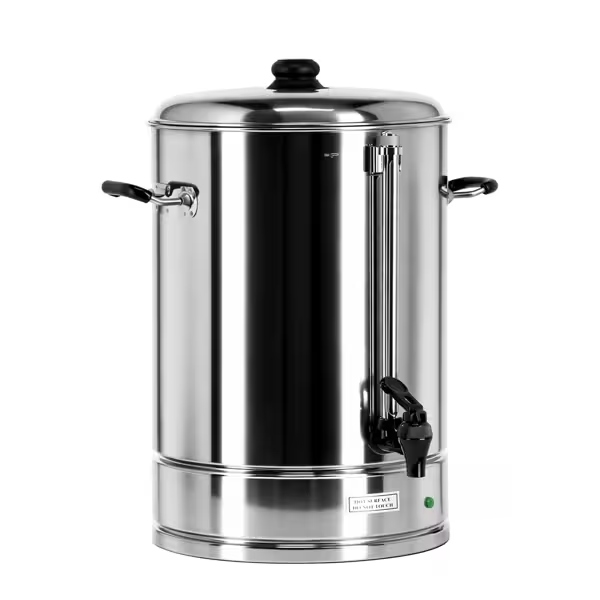
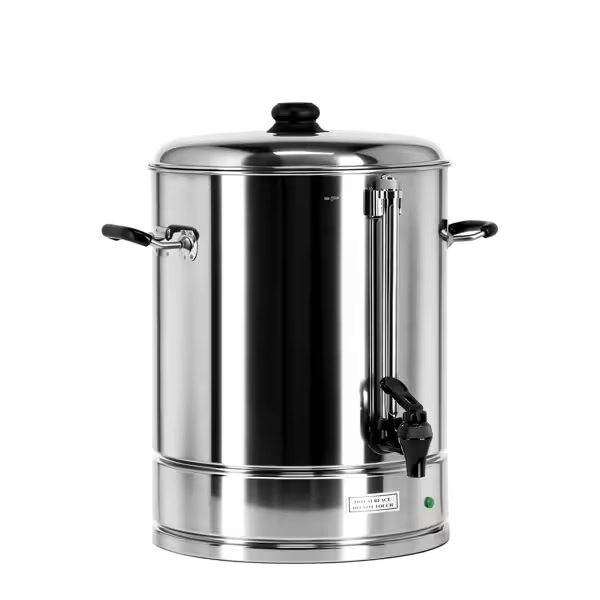
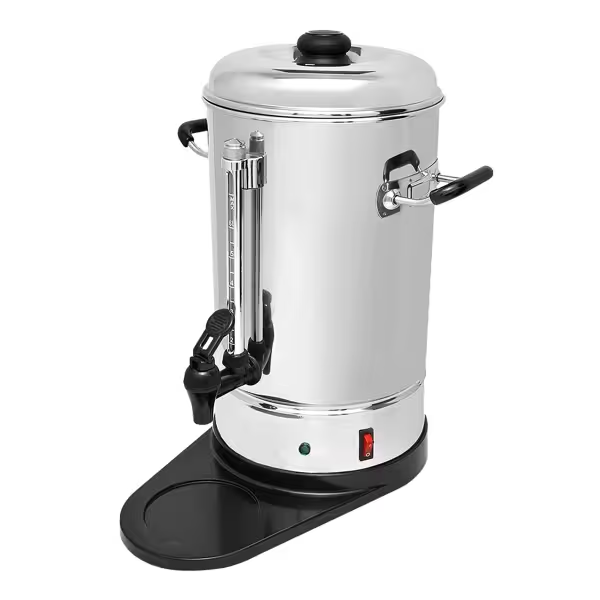
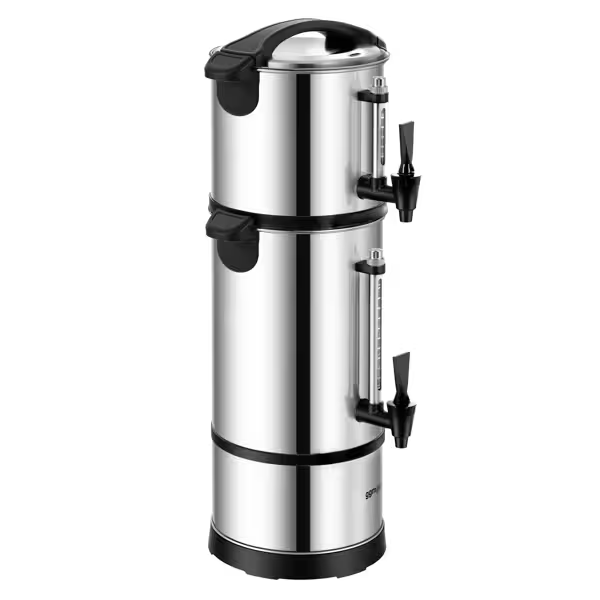
Coffee makers for predictable quantities in everyday restaurant operations
Coffee makers are designed for commercial establishments that want to reliably brew standard quantities of coffee and serve it over a defined period of time. They are particularly useful at hotel breakfasts, at buffets, in catering, in cafeterias, at conferences, or anywhere else where multiple guests are served one after another and the serving process needs to be organized efficiently.
Unlike individual cup service, the focus here is on volume and a smooth, uninterrupted flow. Models with capacities of 6, 7, 10, or 15 liters can be selected based on actual needs. For smaller breakfast areas, a more compact capacity may be preferable; at events or during peak hours, a larger capacity reduces the number of refills and brewing cycles.
Balancing Capacity, Performance, and Footprint
The most important factor in making a selection is capacity. It is not daily consumption alone that matters, but rather the amount needed within a short period of time. Anyone who serves many guests in the morning within a limited time frame should therefore plan based on peak demand. A unit that’s too small ties up staff with frequent refills, while an unnecessarily large solution takes up space and ties up capital.
Performance, dimensions, and connection type should also be factored into the decision. The available units operate on 230 V and can therefore be integrated into many commercial environments without requiring special high-voltage electrical planning. Width, depth, and height should be compared with the intended buffet, counter, or work surface before purchase. The operating space above the unit and unobstructed access to the tap should also be factored into the planning.
Quick Check Before Selecting:
-
Base capacity on actual peak demand.
-
Check the installation dimensions, including space for operation and cleaning.
-
Ensure a 230-V connection is available at the intended location.
-
Select the material and filter type appropriate for the intended use.
-
Verify accessibility to the tap and filling area during the setup process.
Materials, Hygiene, and Cleaning in Daily Use
In everyday commercial use, durable, easily accessible, and easy-to-clean surfaces are essential. Stainless steel is therefore a practical choice for coffee makers: The material is easy to keep clean and fits into many professional buffet and work areas. The more frequently a machine is used, the more important it is to have smooth surfaces, an easily accessible interior, and components that can be cleaned without unnecessary steps.
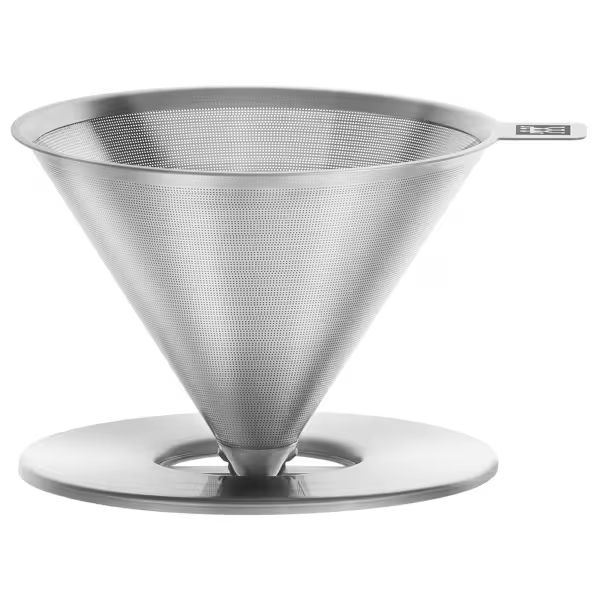
Depending on the model, a permanent filter simplifies repeated brewing, while a spout allows for direct dispensing. For daily operation, it’s crucial that the filter, lid, spout, and container can be cleaned regularly without blocking the workspace for long periods. When the unit is integrated into an existing beverage station, matching stainless steel furniture provides a durable and hygienically organized surface area.
Integrating a coffee maker effectively into your workflow
A coffee maker is most effective when its location is suited to the actual workflow. During breakfast service, the machine should be positioned so that refilling, serving, and cleaning can be done without getting in the way of service staff or guests. In catering, on the other hand, flexible placement may be more important so that coffee is available right where it’s actually served.
The layout can also be practically planned in conjunction with adjacent functional areas. If cups, pots, or accessories are needed right at the same spot, a clearly organized station reduces unnecessary trips. For establishments with additional automated coffee dispensing systems, the parent category Fully Automatic Coffee Machines and Coffee Makers may offer complementary solutions; however, the coffee maker itself remains in the category designed for larger, traditional coffee volumes. For the subsequent cleaning process, a conveniently accessible rinsing system can support the return of containers and accessories.
Cost-effectiveness results from proper sizing
A coffee maker makes economic sense when its capacity, frequency of use, and operational workflow are well-matched. Larger machines can reduce the need for refills during peak hours, while more compact models save space when demand is lower. Therefore, the decisive factor is not the maximum possible size, but rather a robust design tailored to real-world operations.
Well-integrated equipment supports smooth operations, facilitates teamwork, and helps prevent unnecessary interruptions. At the same time, the purchasing decision should take into account the product’s lifecycle, cleaning requirements, available floor space, and the availability of replacement parts and service in the future.
Browse coffee makers at GGM Gastro
When selecting equipment from GGM Gastro, operators should primarily compare volume, location, 230-V connection, unit dimensions, and the desired model. By aligning these factors with actual peak demand, operators can find a solution that seamlessly integrates into breakfast service, buffets, catering, or institutional food service and provides structured support for coffee service.