


Lava Rock, Water, Gas & Electric Chargrills for Commercial Kitchens
Professional lava rock, water, gas and electric chargrills support the fast preparation of meat, fish and vegetables. Different designs and power levels let you equip commercial grill stations to match your needs. Find out which grill suits your menu in our buying guide »



Product type
Building depth
Width
Operation type
Design/Equipment
Capacity
Grill Plate Surface
Number of Burners
Maximum Temperatur
Power
Power Connection
Price
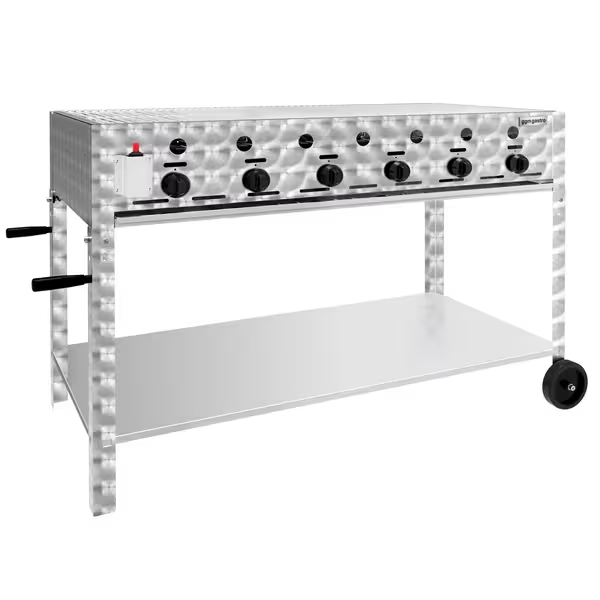
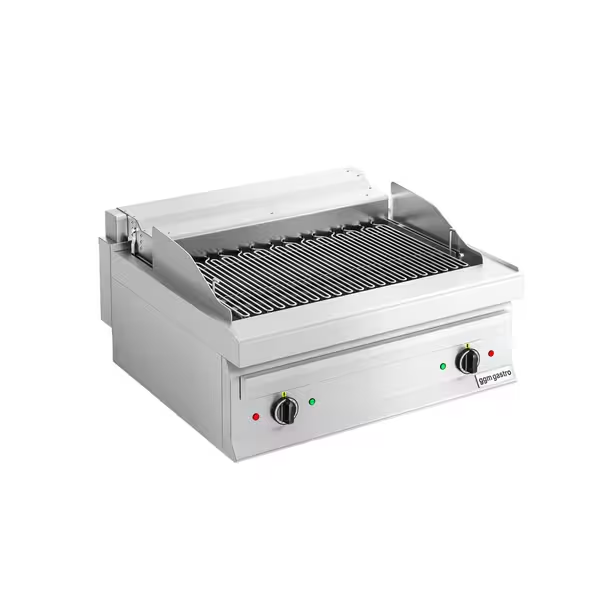
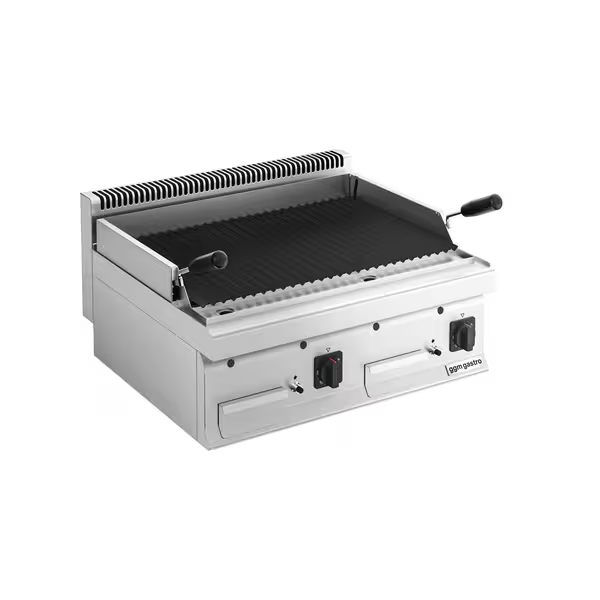
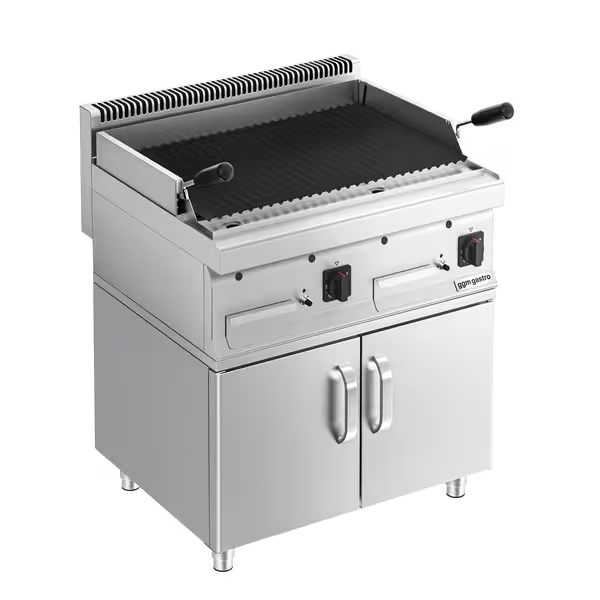
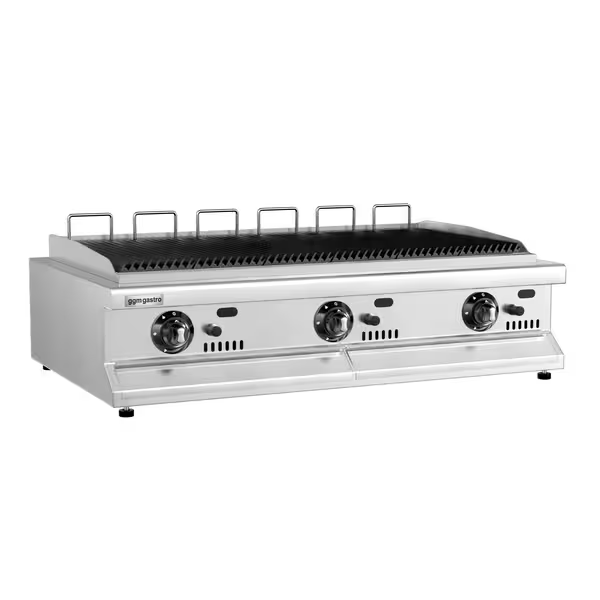
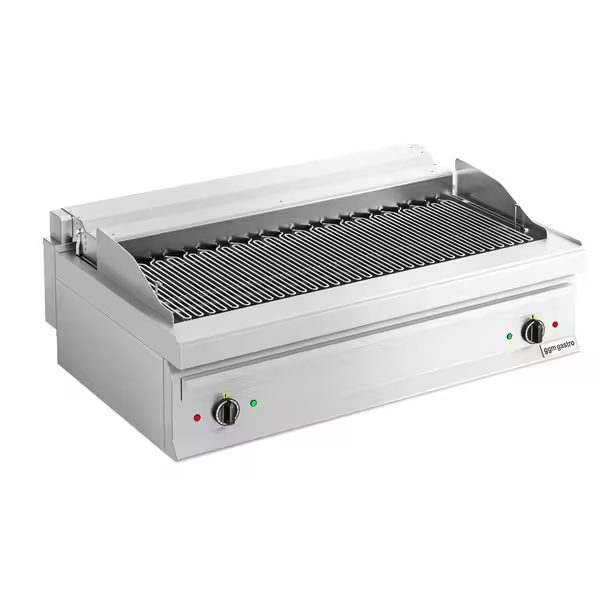
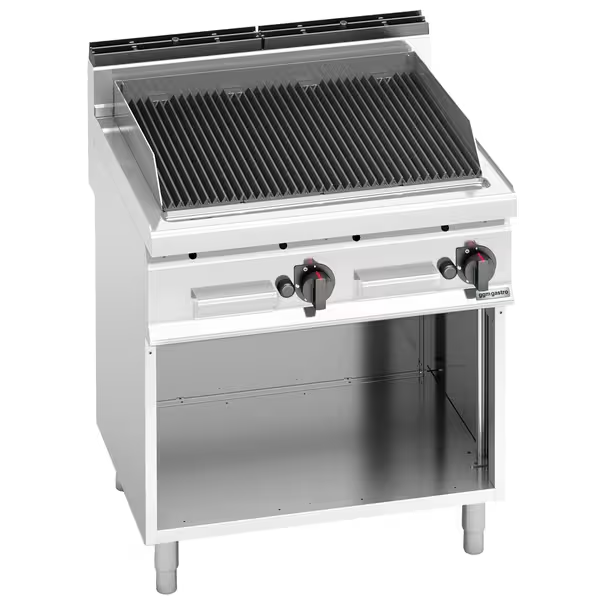
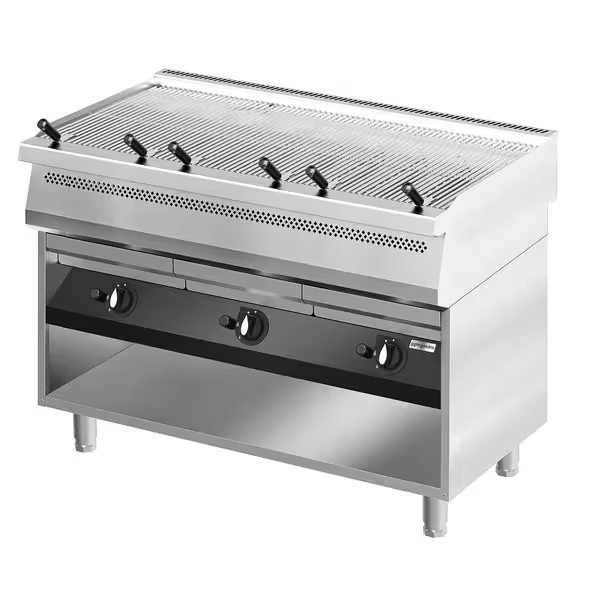
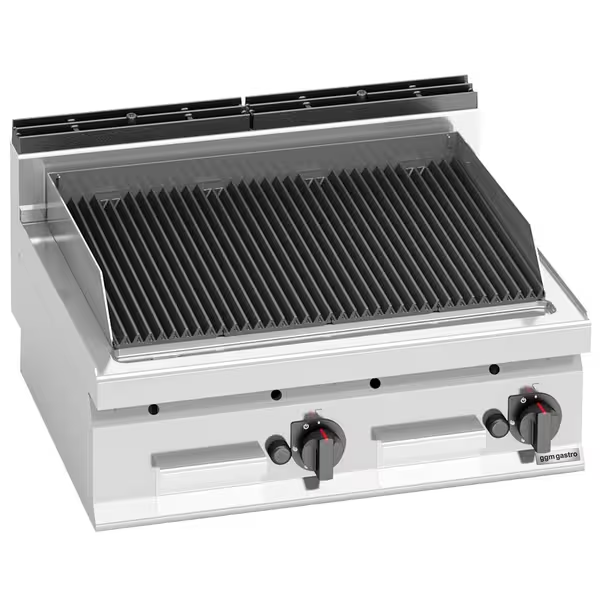
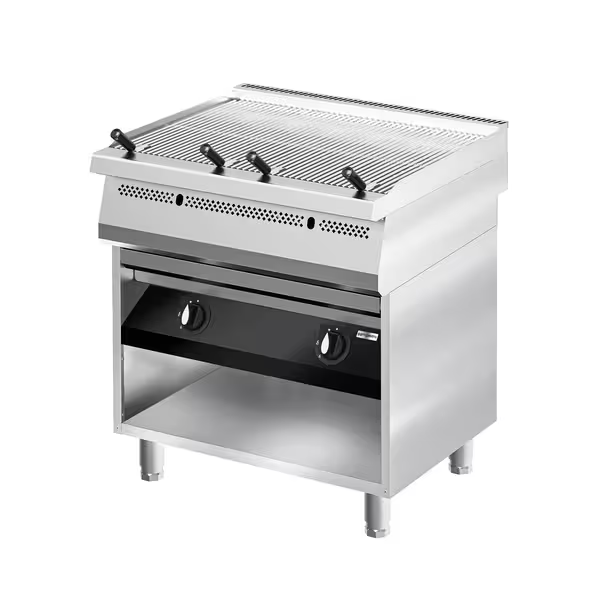
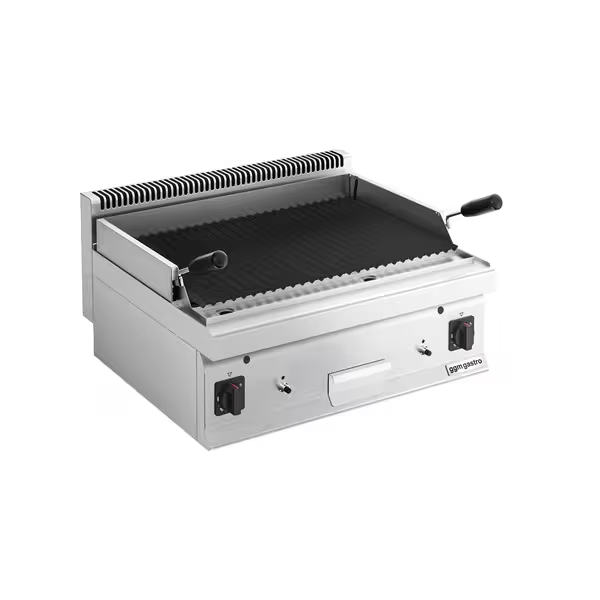
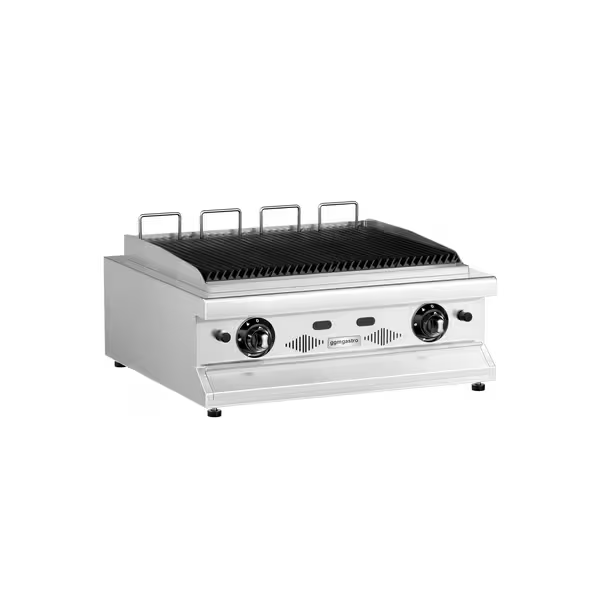
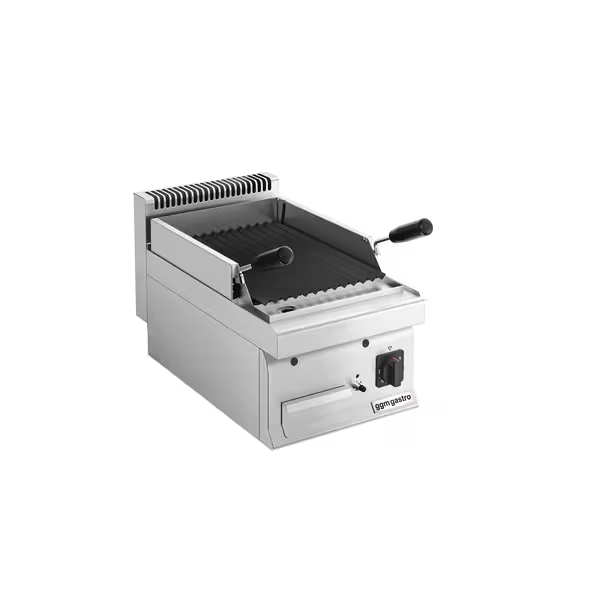
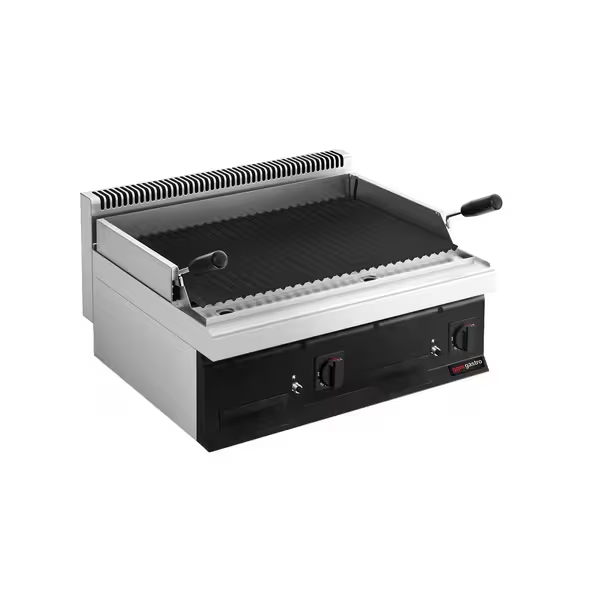
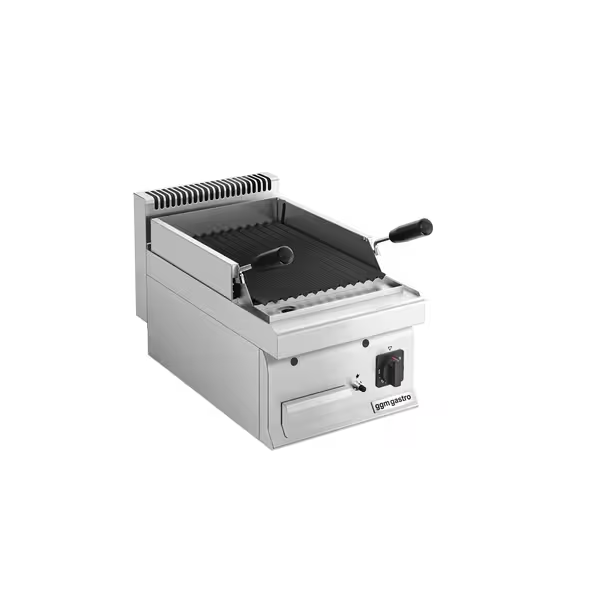
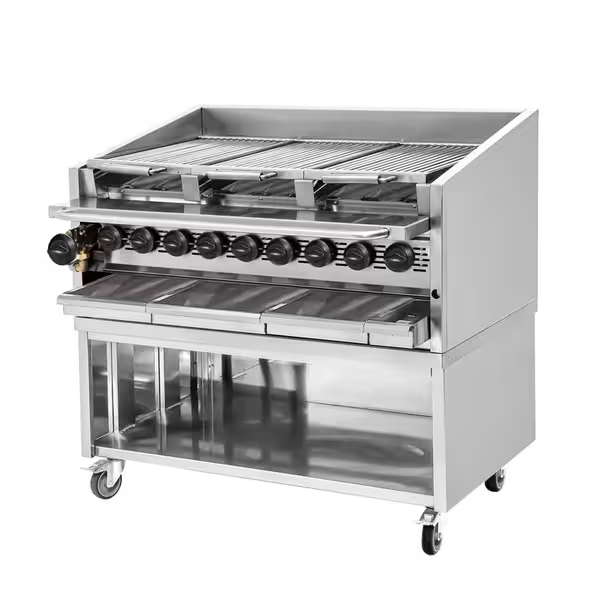
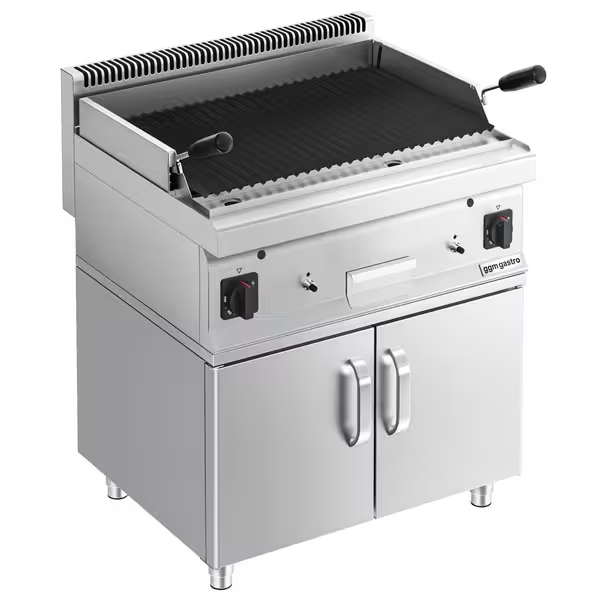
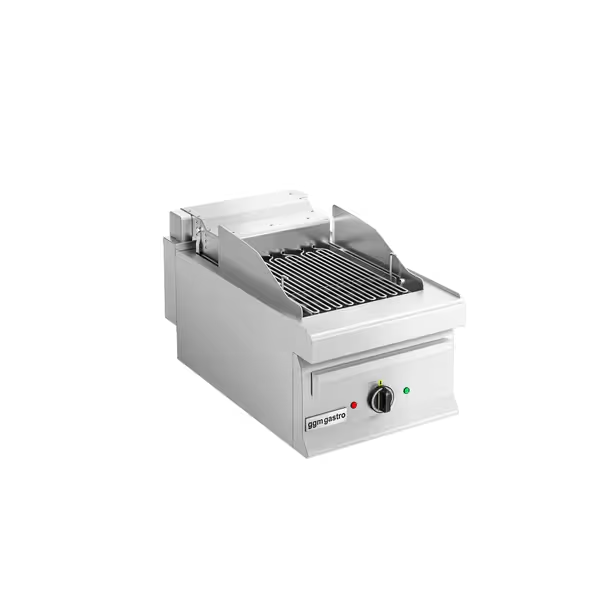
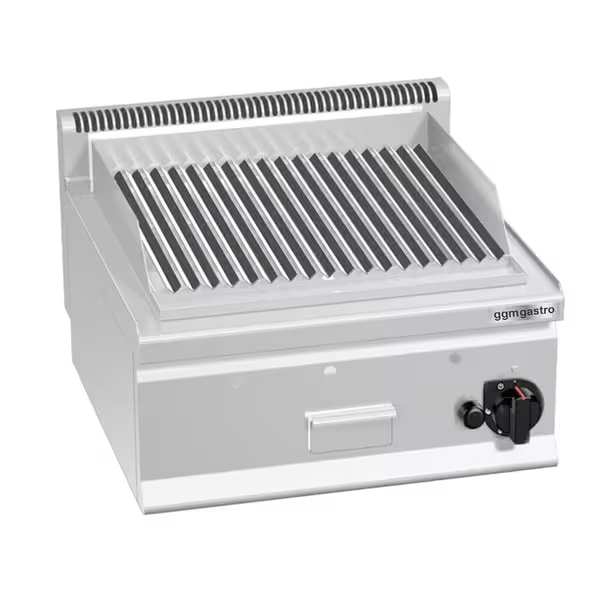
Professional grilling equipment for different business concepts
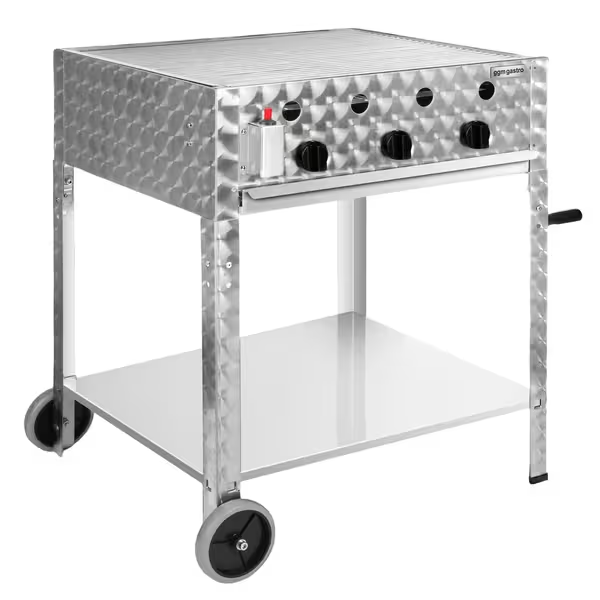
Lava rock, water, gas and electric chargrills are commercial grills for cooking meat, fish, vegetables and other grilled dishes directly. They are used in restaurants, hotels, takeaways, steakhouses, catering businesses and for live cooking.
Which model fits depends on your menu, peak demand and existing infrastructure. A compact countertop unit can reliably cover a small grill menu. For high throughput, wider freestanding units offer more grill area and often several separately controlled grilling zones. This lets you cook different items in parallel without running the entire surface at the same temperature.
Lava rock, water, gas or electric grill: understanding the differences
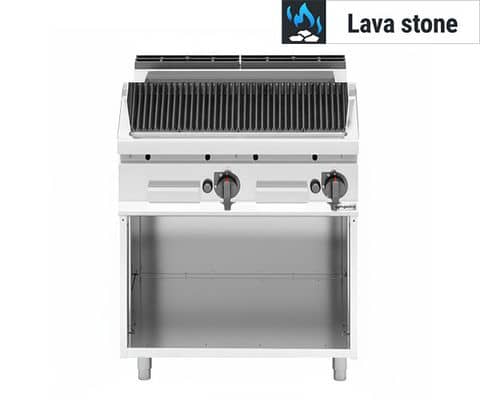
In a lava rock grill, the heated lava rock distributes the heat beneath the grill grate. Dripping juices can enhance the typical chargrilled flavour and pronounced searing. The condition, distribution and regular maintenance of the lava rocks affect day-to-day operation.
Water grills work with a water tray or water area beneath the grill surface. This catches grease and grill residue and can make subsequent cleaning easier. The water level must be easy to check during operation and the tray easily accessible.
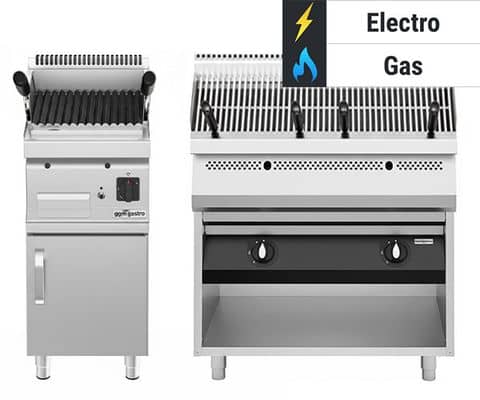
Depending on the unit, gas models offer outputs ranging from compact single-digit kW ratings to over 30 kW for wide freestanding units. Electric versions require 230 V or 400 V depending on the model. What matters is not just the fuel type, but also whether the electrical capacity, gas installation and extraction at the intended location are sufficient.
Matching grill area, output and design to your service
A 400 mm wide countertop unit takes up little space and is suitable for limited volumes or as an additional grill station. Versions 800 or 1,200 mm wide provide more grill area for busy periods. Unit depths of around 600, 700 or 730 mm make it easier to line up with existing modular cooking suites and worktops.
Countertop units can be placed on suitable stainless steel furniture or bases. Freestanding units form a fixed station and, depending on the model, provide additional storage. Built-in grills are suitable for bespoke cooklines or visible live cooking areas. Sufficient distance from prep, the pass and refrigeration keeps routes short without raw and cooked food crossing paths unnecessarily.
Quick check for choosing equipment
-
define what you grill, portion numbers and your busiest service period
-
compare required grate width, heat zones and kW output
-
confirm gas, 230 V or 400 V supply at the installation site
-
match countertop, freestanding or built-in unit to working height
-
check access to grate, water tray and grease collection area
A tilting grate can help you control heat exposure and grease run-off. The number and layout of the burners affect how flexibly the grill surface can be used. For intensive use, robust controls, heavy-duty grates and a housing that copes with frequent temperature changes also count.
Planning for cleaning and operational safety
Stainless steel surfaces, removable grates and accessible collection areas simplify the daily cleaning routine. With lava rock grills, the rocks also need attention: greasy or damaged lava rocks are cleaned or replaced depending on how intensively the grill is used. Water trays must be easy to empty and clean hygienically.
Grease, heat and grill residue put the unit under strain during every service. Suitable extraction and ventilation removes heat and fumes from the work area. Gas appliances require professional installation; with electric grills, circuit protection and available electrical capacity must match the unit.
Building a cost-effective grill station
Sufficient output supports short ticket times, while an oversized grill surface ties up space and energy unnecessarily. Easy-to-reach controls, clearly separated temperature zones and simple cleaning routines take the pressure off the team, especially when staffing changes.
A complete station includes prep within easy reach, chilled ingredients, heat-resistant landing space and a clear route to the pass. This turns a single grill into a dependable work area that brings together your grill menu, available space and actual throughput.