


Kebab Shop Equipment for Professional Restaurants
From the döner grill to the refrigerated sandwich station to the serving counter: Well-coordinated döner shop equipment supports fast workflows, short distances, and a controlled production flow. When planning, therefore, it’s not just about individual pieces of equipment, but above all about capacity and the transitions between grilling, slicing, assembling sandwiches, preparing sides, and sales. Kebab Shop Guide »
Basic equipment







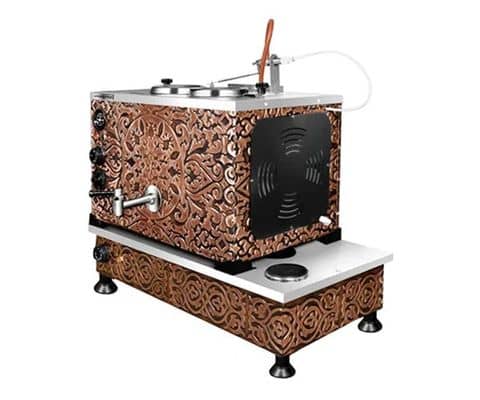






Setting Up a Kebab Shop: Planning Equipment Based on the Workflow
Professional kebab shop equipment includes the appliances, work surfaces, and functional areas needed for storage, preparation, grilling, assembly, serving, and cleaning. The extent of this equipment depends primarily on the product range, order volume, available space, and the mix of dine-in, takeout, and delivery business. The typical production process is highly repetitive: meat is cooked on a skewer and sliced, bread is prepared, ingredients and sauces are added, and the order is then served or packaged. During peak hours, multiple orders are often processed simultaneously. Even small interruptions or unnecessary trips quickly add up. That’s why a high-performing döner operation isn’t built solely on a powerful grill. The key is whether the grilling station, refrigeration, assembly area, bread preparation, and serving all operate in a coordinated workflow.
The kebab grill as the centerpiece—but not as a standalone unit
Gyros/Döner Grills are the centerpiece of many döner shops. Factors to consider when selecting a grill include planned sales volume, skewer size, connection type, available floor space, and the layout around the unit. Depending on the infrastructure, either gas or electric models may be suitable. Rather than a blanket assessment of the respective technology, the key consideration is which solution can be meaningfully integrated into the existing operation. Electricity or gas supply, heat generation, ventilation, and required working space are therefore all part of planning the grill station. Capacity should also be based more on peak times than on the daily average. A business with heavy lunchtime traffic or high evening demand requires different capacity reserves than a small location with evenly distributed sales. Right at the grill, easy access to döner knives or electric döner slicers, tongs, drip pans, and work surfaces is also crucial. When cutting, portioning, and passing food along are clearly organized, there is less movement around a station that is already under heavy strain.
Saladette and Prep Area: Keep ingredients cool right where they're needed
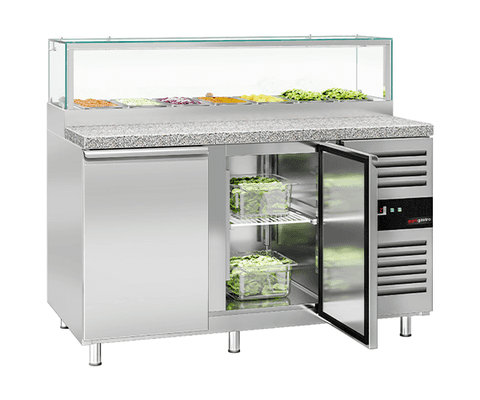
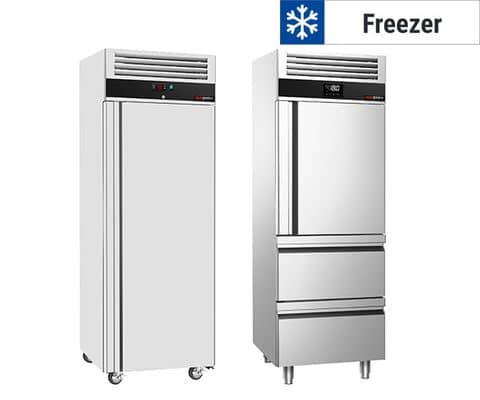
After the meat, the assembly station sets the pace. Lettuce, tomatoes, onions, cabbage, sauces, and other ingredients must be quickly accessible without requiring employees to go to the cold storage room for every order. Saladettes combine refrigeration close to the production area with organized access to prepped ingredients. GN containers allow for a clear separation of components, while the refrigerated base can hold additional supplies right at the workstation. This is particularly relevant for short, recurring order cycles. When several kebabs, dürüm, or plated dishes are assembled in just a few minutes, the arrangement of the ingredients determines how many steps and movements are required per order. Storage refrigeration and workstation refrigeration serve different purposes. Refrigerators or cold rooms store larger inventories. Refrigeration at the production line ensures that the ingredients needed during service remain readily available without having to travel long distances.
Quick Checklist for Choosing the Right Equipment for Your Kebab Shop
Five key operational factors can help with planning:
- Peak volume: How many orders are placed during the busiest 30 to 60 minutes?
- Grilling station: What skewer capacity and connection type are best suited to your business and location?
- Menu: Will the focus remain on doner and dürüm, or will fries, grilled dishes, lahmacun, and other items be a regular part of the menu?
- Prep station: How many ingredients and sauces need to be refrigerated and readily available at the same time?
- Sales Channels: How are orders distributed among dine-in, takeout, and delivery?
Based on these points, you can determine which equipment supports the core process and which additional equipment makes sense to include.
Incorporate french fries, grilled dishes, and flatbread without creating a new bottleneck
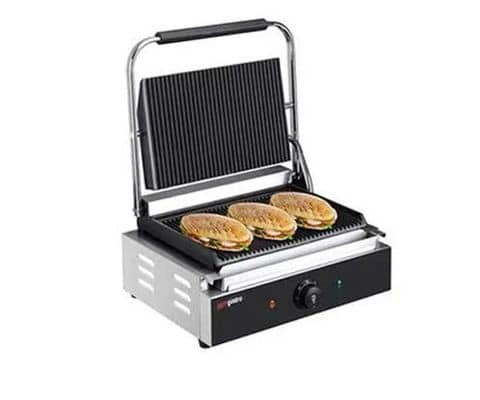
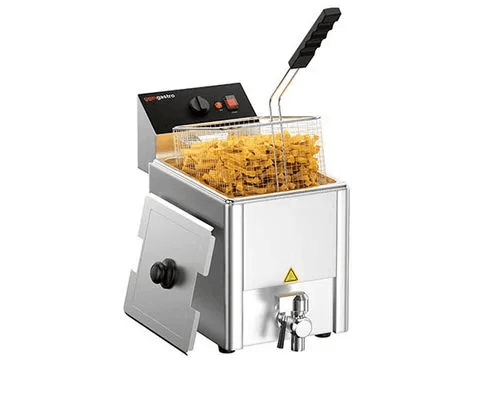
Many kebab shops today sell much more than just the classic kebab sandwich. French fries, dürüm, lahmacun, grilled dishes, and various meal combos expand the menu—and, with that, the production requirements. A deep fryer, for example, can constitute its own high-traffic station. If it’s located inconveniently relative to the assembly and serving areas, work paths will cross. The same applies to contact grills or other grilling equipment. When flatbread is made in-house or freshly baked, an additional process is created involving dough or bread, baking techniques, temporary storage, and serving. The key is to ensure that the additional offerings do not slow down the core process. A wide menu does not therefore automatically require as many appliances as possible. It makes sense to have equipment where the individual product groups can follow the same production logic, so that an additional workflow isn’t created for every new dish.
Planning Workspaces and Routes for Rush Hour
Doner shops often operate in relatively compact spaces. This makes every meter of workspace count. Between the grill, cutting area, salad bar, and serving counter, short distances help staff assemble orders with minimal movement. At the same time, the team needs enough space so that grilling, assembling sandwiches, frying, and packaging don’t get in each other’s way. Prep tables and stainless steel work surfaces create designated areas for preparation, temporary storage, or packaging. Base cabinets can accommodate additional ingredients, containers, or equipment directly at the workstation. The most practical placement depends on the frequency of each task: Items needed for nearly every order should be within immediate reach. Rarely used items can be stored further away from the main production line.
Treat takeout and delivery as separate steps
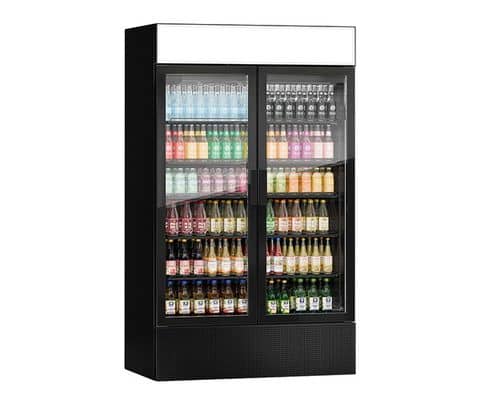
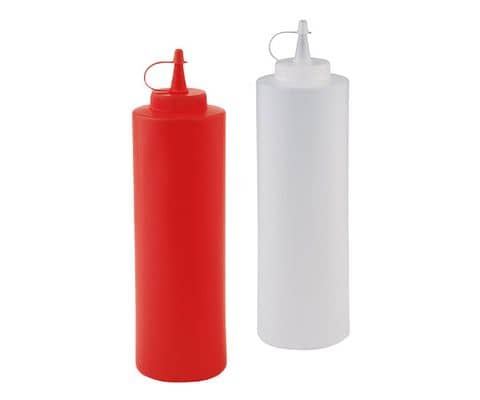
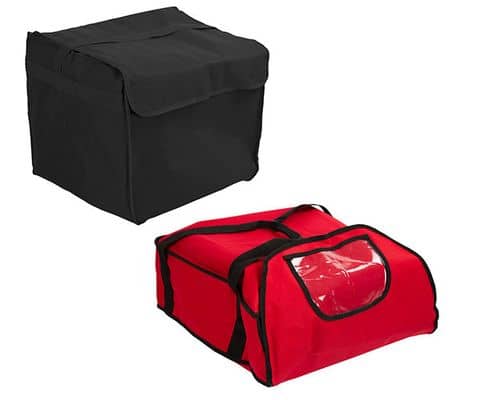
At a kebab shop, the proportion of takeout business is often particularly significant. This adds extra steps after the actual preparation: checking the order, packaging it, adding sides and drinks, and handing the finished order to the customer or delivery driver. Boxes, bags, sauce containers, napkins, and other takeout supplies therefore need a designated spot. If packaging is left directly on the main work surface or in front of the salad bar, serving interferes with food preparation. A separate handoff and packaging zone can reduce this conflict. For delivery operations, thermal boxes and appropriate transport solutions help keep ready-to-go orders organized and out of the production zone. Beverage refrigeration can also be effectively integrated into the sales workflow. If beverages are frequently sold alongside food, an easily accessible beverage refrigerator takes the pressure off the actual production line.
Thinking Ahead About Hygiene, Ventilation, and Cleaning in a Kebab Shop
Doner shops combine multiple challenges in a confined space: heat from the grill, grease and meat juices, exposed ingredients, deep-frying areas, and frequently used work surfaces. Cleaning and hygiene are therefore not afterthoughts, but rather an integral part of daily operations. Smooth, easily accessible work surfaces, as well as clearly organized GN containers and storage areas, facilitate regular cleaning routines. Around the kebab grill, easily accessible grease collection areas and sufficient space for cleaning equipment play an important role. Ventilation must also be suited to the actual heat and grease load generated by the grilling and cooking equipment. Especially when multiple heat sources are concentrated in a small area, the design of this area affects working conditions, cleaning, and the practical usability of the kitchen. Added to this is the return of knives, tongs, GN containers, dishes, and prep equipment. A well-organized dishwashing system prevents used utensils from blocking the production areas.
Prioritizing Kebab Shop Equipment Based on Cost-Effectiveness
When opening a new location, it is not necessary to fully equip every possible product category right away. It makes more economic sense to prioritize the processes that generate the majority of daily sales. For a traditional kebab shop, the focus is often on the grill station, production-adjacent refrigeration, preparation, and serving. Fryers, additional grilling equipment, ovens, or other specialty appliances become more important as soon as the corresponding product category accounts for a significant portion of business. When modernizing, it also helps to identify the actual bottleneck. If service regularly slows down, it doesn’t necessarily mean the kebab grill is too small. Perhaps the salad bar is overcrowded, the counter space is too limited, the deep fryer is poorly positioned, or the packaging station is blocking the way. An investment makes particular sense when it reduces precisely these daily friction points: shorter distances, better accessibility, more appropriate capacity, or a clearer separation of work areas.
Equip Your Kebab Shop Professionally with GGM Gastro
The requirements vary significantly, ranging from classic doner kebab stands to establishments with an extensive grill menu, all the way to businesses with a strong takeout and delivery focus. The right equipment, therefore, results from the interplay of product selection, sales volume, floor space, staff, and existing infrastructure. GGM Gastro offers catering equipment for these needs, ranging from kebab grills and kebab slicers to salad stations, prep tables, and deep fryers, as well as refrigeration, baking equipment, work surfaces, to-go equipment, and cleaning solutions. This allows you to resolve individual bottlenecks during daily operations as well as coordinate equipment selections for new openings, renovations, or expansions.