


Ice Cream Shop Equipment for the Professional Food Service Industry
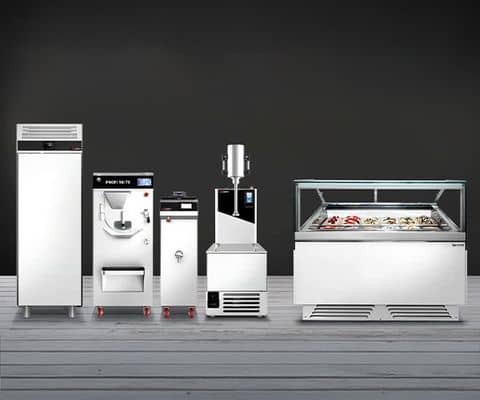
From ice cream production and frozen storage to display in the ice cream counter and quick portioning and serving: Well-designed ice cream shop equipment integrates refrigeration technology, work areas, and sales into a cohesive, functional concept. The equipment needed depends primarily on whether the ice cream is made in-house, the planned range of flavors, and the volumes that must be handled during peak sales times. Ice Cream Parlor Guide »
Basic equipment








Other Equipment








Setting Up an Ice Cream Shop: From Business Concept to the Right Equipment
Professional ice cream shop equipment includes the technology and work areas for production or stocking, refrigerated or frozen storage, presentation, portioning, serving, and cleaning. Additional offerings such as coffee, waffles, crêpes, or slushies can add further production areas. As a result, the requirements of different ice cream shops vary significantly. A shop with its own ice cream production requires a different technical setup than a retail location that purchases ready-made flavors and focuses primarily on storage, presentation, and serving. The production logic is therefore the first crucial factor. Which flavors are offered? How much inventory is needed? How often is stock replenished? Which additional products are sold alongside the ice cream? Only then can it be determined what equipment is actually needed for daily operations.
In-house ice production or sales: Two different equipment configurations
When producing in-house, the work process begins right behind the sales counter. Ice cream machines play a central role in the production process. Depending on the specific production concept, additional equipment such as pasteurizers or ice cream mixers may be required. In addition to the actual production, this area of the business needs sufficient counter space, suitable containers, and a well-organized refrigeration or freezing system. Produced ice cream must be stored in an organized manner and transported to the sales counter without unnecessarily interrupting ongoing service. Those who source ice cream externally, on the other hand, can place greater emphasis on storage capacity, presentation, and sales. This reduces the need for production equipment, while the ice cream counter and backup refrigeration become all the more important. Both models thus have different investment priorities. When selecting equipment, the goal is not to cover as many equipment categories as possible, but to fully and reliably support the chosen operational workflow.
The Ice Cream Counter and Product Display as the Center of Sales
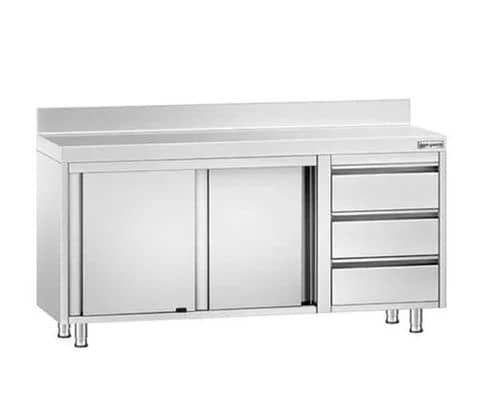
The ice cream counter is one of the most defining areas of a traditional ice cream shop. It combines product presentation, refrigerated or frozen storage, and direct access during serving. Several factors therefore come into play during planning: the desired number of flavors offered simultaneously, the size of the ice cream containers, available floor space, and accessibility for staff. A larger selection of flavors requires more display space, but also means more containers, more inventory, and more work organizing restocks. A smaller selection can be managed more compactly and is easier to keep organized, especially in limited spaces. The area behind the counter is also crucial. Ice cream scoops, cups, cones, napkins, toppings, and other frequently needed items should be within reach where they are needed during the workflow. Every unnecessary movement is repeated many times during a busy sales day.
Organizing Reserves and Replenishments Properly
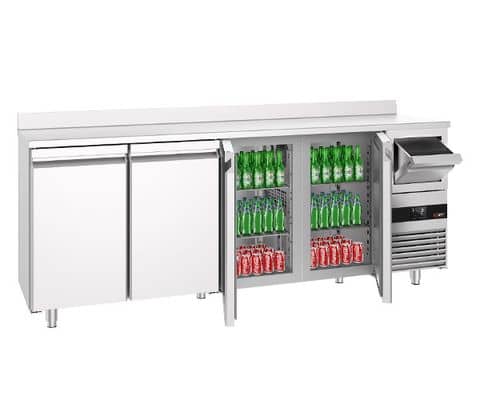
The visible ice counter accounts for only a portion of the required cooling capacity. Especially when sales volumes are high, the business needs sufficient additional reserve capacity. Ice cream freezers can be used to keep additional ice cream containers on hand near the production or sales areas. Larger storage and refrigeration facilities also handle the stockpiling of raw materials or other temperature-sensitive products. It is important to separate the display area from the reserve area. The sales counter should remain attractive to guests and easily accessible to employees. In contrast, inventory, replacement containers, and production quantities require their own organizational system. A clear restocking process is particularly helpful during peak hours. If restocking each container requires traveling a long distance or rearranging items first, the bottleneck occurs not during portioning but during restocking.
Quick Checklist for Choosing the Right Ice Cream Shop Equipment
Five points provide a good framework for planning:
- Production model: Will the ice cream be made in-house or purchased ready-made?
- Assortment size: How many ice cream flavors should be offered and displayed at the same time?
- Peak volume: How many servings need to be served during peak hours?
- Additional offerings: Are waffles, crêpes, coffee, slushies, or other desserts an integral part of the concept?
- Space layout: How can the ice cream counter, storage area, preparation area, and serving area be arranged to minimize walking distances?
These factors determine which equipment forms the core of the operation and which items are merely useful additions.
Fast serving, even with long lines
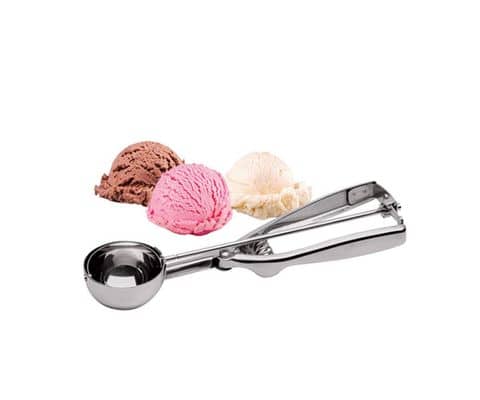
Ice cream shops often experience periods of very high volume. During these times, it’s not just about having enough inventory—it’s especially important to have a clearly organized workspace. Ice cream scoops, cups, cones, napkins, and frequently used toppings should be within easy reach. Ice cream scoops & dippers as well as suitable washing and rinsing solutions can be integrated into the workstation. The sequence of steps is also important. Taking an order, selecting a flavor, scooping, topping, processing payment, and handing over the order should involve as few cross-movements as possible. When multiple people are working behind the counter at the same time, the width and layout of the workspace become even more important. One person must be able to complete an order without automatically blocking a second person’s access to frequently used flavors or work tools. A well-structured sales area thus not only promotes speed; it also makes it easier to train new employees because the necessary utensils and work steps are clearly arranged.
Waffles and Crêpes as a Separate Production Division
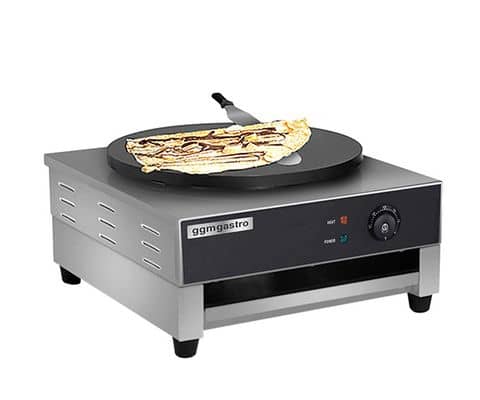
Many ice cream shops are expanding their offerings to include hot desserts. Waffle irons & crêpe makers open up new possibilities for this, but at the same time change the workflow behind the counter. Unlike a scoop of ice cream, a freshly baked waffle or crêpe requires its own preparation and cooking time. Batter or ingredients must be prepared, the item baked, topped or decorated, and then served. This area should therefore not be located right where ice cream is being served. Otherwise, during peak demand, the two processes can interfere with each other. The amount of counter space needed also increases with the expanded menu. Ingredients, toppings, plates, packaging, and cleaning supplies all require designated spots. Especially in small ice cream shops, it’s therefore worth selecting additional products based on how well they can be integrated into the available space and staffing structure.
Organize Cream, Toppings, and Desserts Efficiently
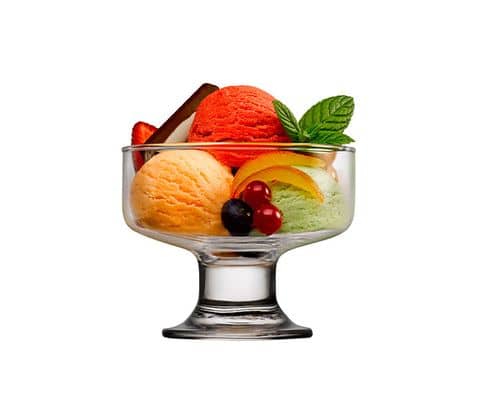
Ice cream sundaes and dessert offerings involve more steps than the classic serving of a scoop in a cone. Fruit, sauces, sprinkles, nuts, whipped cream, and other toppings must be within easy reach and neatly organized during service. A topping station helps keep these components separate from the actual ice cream scooping process. This allows multiple orders to be processed simultaneously without cluttering the main work surface with all the ingredients. Depending on the menu, whipped cream machines or similar dispensing systems can also be an integral part of this station. Here, too, the logic behind the product selection is crucial: every additional topping requires storage space, preparation, and a system for restocking. A well-organized selection can therefore be more efficient in day-to-day operations than a very large number of components that are rarely used.
Pairing Coffee and Cold Beverages Wisely
For many ice cream shops, coffee is a valuable addition because it allows them to expand their offerings beyond traditional ice cream orders. However, portafilter machines & coffee machines involve a separate workflow. Beans or ground coffee, milk, cups, glasses, and cleaning supplies require a well-organized workspace. If used frequently, it’s therefore advisable not to simply set up the coffee station in a spare corner of the ice cream counter. The same applies to cold beverages, milkshakes, or slushies. Bar refrigerators, blenders, or slush machines expand the product range but also require counter space and clearly defined responsibilities. Additional offerings work particularly well when they complement the main sales without restricting access to the ice cream counter or serving area.
Take Seasonal Peaks into Account When Planning Capacity
When planning the capacity of an ice cream shop, it’s better to base it on peak sales periods rather than an average operating day. On warm days, weekends, or during certain times of the day, demand can spike significantly. At such times, several areas must function smoothly simultaneously: enough ice cream ready for sale, sufficient reserves, quick serving, available cups and cones, and a reliable restocking system. A very large ice cream counter alone cannot solve this problem if there are insufficient reserves behind it or if staff have to walk long distances to restock. Similarly, high production capacity is of little use if the finished ice cream cannot be stored properly or dispensed quickly at the point of sale. Capacity must therefore be viewed as a continuous chain: production or delivery, storage, presentation, restocking, and sales.
Integrating Cleaning and Hygiene into the Process
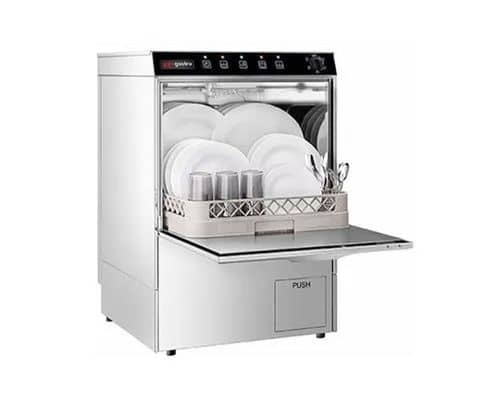
Ice cream, whipped cream, dairy products, fruit, sauces, and batter each have different cleaning requirements. At the same time, ice cream scoops, containers, work surfaces, and equipment are used frequently throughout a day of business. Easily accessible surfaces and clearly defined cleaning zones make it easier to maintain order and hygiene, even during peak hours. Dishwashing technology also plays a role here. Ice cream sundaes, glasses, cups, GN containers, utensils, and accessories must be returned to the workflow quickly, depending on the operation. The area involving waffle and crêpe equipment also requires its own cleaning protocol. Dough residue, toppings, and heavy use create different challenges than simply serving ice cream. Taking these processes into account during the initial setup prevents cleaning tasks from blocking valuable sales or work surfaces later on.
Prioritizing Ice Cream Shop Equipment Based on Cost-Effectiveness
Not every ice cream shop needs all the available equipment right from the start. Priorities are determined by the business model. For a traditional ice cream shop that purchases its ice cream, the focus is on presentation, frozen storage capacity, portioning, and serving. If the shop produces its own ice cream, a larger portion of the investment shifts toward ice cream machines, production equipment, and the necessary storage capacity. Those who also offer waffles, crêpes, coffee, or slushies can then expand their equipment to include the areas that regularly contribute to business. This prioritization is especially important when space is limited. An additional piece of equipment is only helpful if it is used sufficiently and does not simultaneously hinder a more important work process. When modernizing, it’s therefore worth asking where friction actually arises in daily operations: Is there a lack of display space? Is the supply insufficient? Does restocking take too long? Do coffee and waffle production block ice cream service? Or is there a lack of space for cups, toppings, and packaging? The right investment addresses precisely this bottleneck.
Equip Your Ice Cream Shop Professionally with GGM Gastro
Whether it’s a traditional ice cream shop, a gelateria with its own production, or an establishment offering additional coffee, waffles, and desserts: The right equipment depends on the production model, product range, sales volume, and available space. GGM Gastro offers catering equipment ranging from ice cream counters, ice cream machines, and ice cream freezers to portioning and garnishing solutions, as well as waffle, crêpe, coffee, and refrigeration technology. This allows you to tailor your setup to the central work areas of a new location as well as individual stations during a renovation or product line expansion.