


Bakery Retarder Provers
Bakery retarder provers control the fermentation of dough pieces through temperature, humidity and time, making production easier to plan. They suit bakeries, patisseries and production facilities that need to prepare batches in advance and have them consistently ready for baking at a scheduled time. Find the right model for your bakery in our buying guide »
Capacity
Price
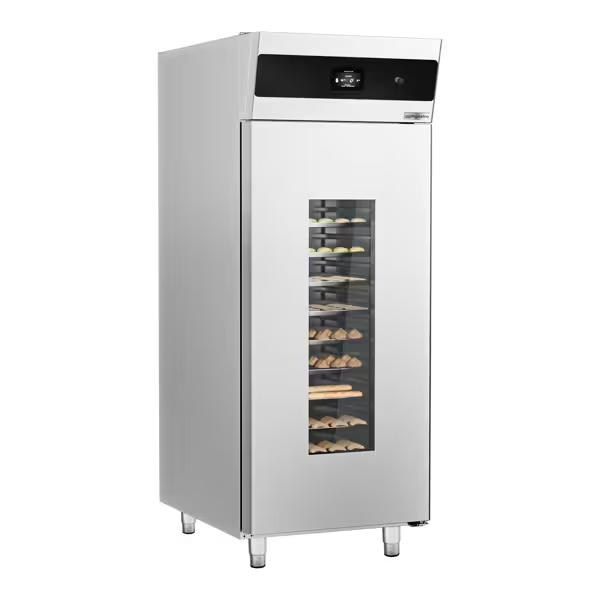
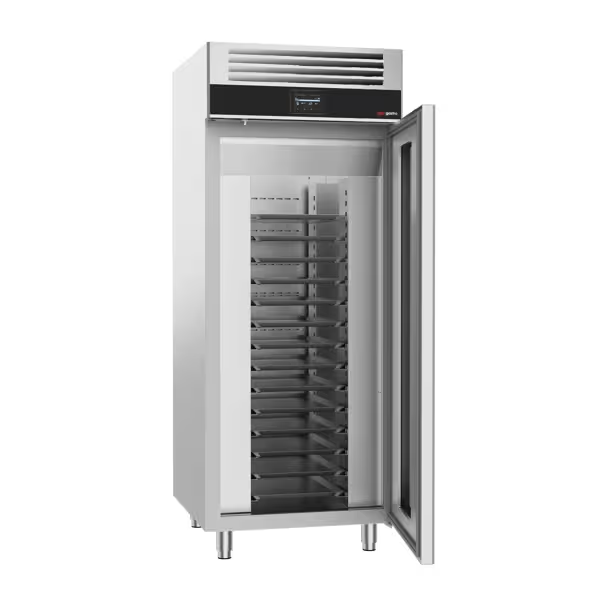
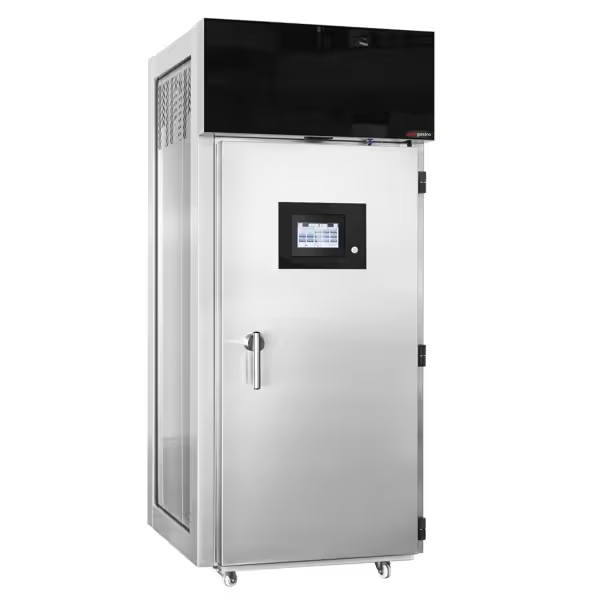
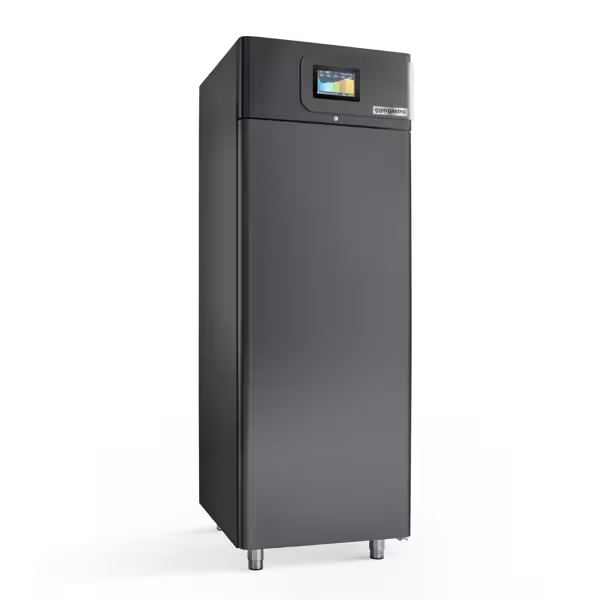
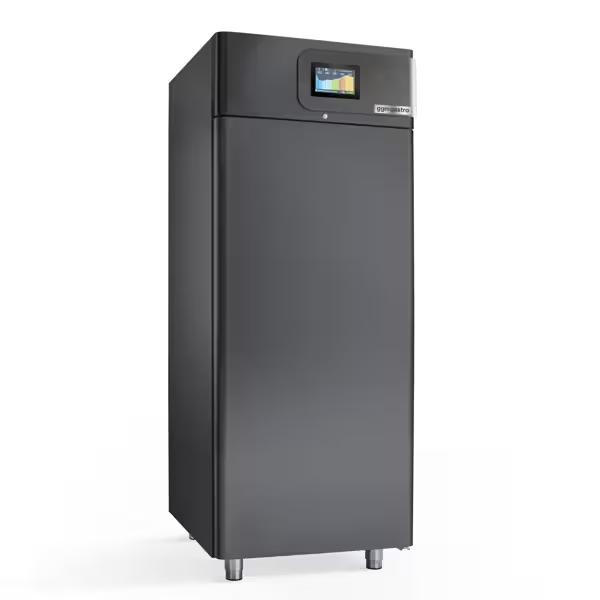
Bakery retarder provers make dough production easier to schedule
Bakery retarder provers are refrigeration and proving systems for controlled dough fermentation. They can slow, interrupt and restart the proving process at a set time by controlling temperature, humidity and time within a programmed cycle.
In daily operation, this allows dough production to be scheduled more independently of baking times. It is particularly useful when preparing batches the day before, covering weekends or bank holidays, or organising the morning rush with fewer manual interventions. For regularly produced ranges, programmed dough management also supports more consistent routines across different shifts.
Match capacity, tray size and temperature range to production
Start with your actual batch size when choosing capacity. The category includes models taking 20 or 40 EN 600 x 400 mm bakery trays, with individual versions offering 605 or 901 litres. This covers smaller production volumes as well as larger batches for busier bakeries.
Consider the installation space early in the selection process. Depending on the model, external dimensions range from approximately 700 to 960 mm wide, 825 to 1,100 mm deep and 2,070 to 2,140 mm high. Before ordering, check access routes, working aisles and distances to the preceding and following workstations.
Temperature ranges also vary: examples include -5 to +40 °C, -10 to +40 °C and -20 to +35 °C. A lower minimum temperature is particularly relevant when using the retarding function for longer, delayed production schedules.
Compare humidity control, programmes and electrical requirements
Temperature is only one factor in fermentation quality. Depending on the model, relative humidity can also be controlled, with some units offering a range of 55 to 95 per cent. Touchscreen displays, automatic and manual cycles, and memory for 10 or up to 100 programmes make defined routines easier to repeat.
The electrical supply must also match your existing infrastructure. Depending on the version, the category includes 230 V units and models with a 230/400 V connection. The examples considered have connected loads ranging from 568 W to 2 kW.
Quick selection check:
-
Establish your batch size and the number of EN 600 x 400 mm trays required.
-
Match temperature and humidity ranges to your planned dough process.
-
Choose programme capacity and controls to suit your product range and shift pattern.
-
Check floor space, door clearance and delivery access against the machine dimensions.
-
Check voltage and connected load before installation.
Plan for hygiene and integration into the bakery
Smooth, durable and accessible surfaces are essential in daily use. Models with an AISI 304 stainless steel interior, body or door, rounded internal corners and removable tray runners make regular cleaning easier. Fan-assisted refrigeration distributes the temperature inside the cabinet, while automatic defrost reduces manual intervention. Several versions use R290 refrigerant.
These units sit between dough preparation and baking. Dough mixers handle the initial mixing, while bakery deck ovens cover the baking stage. Bakery fridges and freezers form a separate category for temperature-controlled storage without programmed proving; basic proving cabinets focus on active proving rather than timed interruption across an extended temperature range.
Financial value comes from the right production process
A retarder prover is particularly worthwhile when it resolves a specific bottleneck in your production schedule. Prepared batches can be staggered more effectively, baking start times planned more reliably and recurring processes standardised. This can reduce pressure during early shifts and production peaks without adding complexity to the product range.
Correct sizing remains essential. Too little capacity puts pressure on replenishment; too much ties up floor space and capital. Matching tray capacity, temperature control, humidity control, programmes, electrical requirements and cleaning effort to your actual daily and weekly routine supports stable production.
Match proving equipment to your actual workload
Bakery retarder provers combine controlled fermentation with scheduled production. Considering capacity, temperature range, humidity control, dimensions and power supply together makes it easier to find a model suited to your bakery, product range and actual peak demand.