


Bain-Maries & Hot Pots – Countertop Appliances for the Food Service Industry
Countertop bain-maries and hot pots keep sauces, soups, side dishes, and prepared foods at serving temperature right at the workstation. A variety of GN tray sizes, pot sizes, and connection types allow for a customized solution for restaurants, snack bars, catering, buffets, and institutional food service. Bain-Maries & Hot Pots Guide »
Product type
Width
Operation type
Design/Equipment
Capacity
Maximum Temperatur
Power
Power Connection
Price
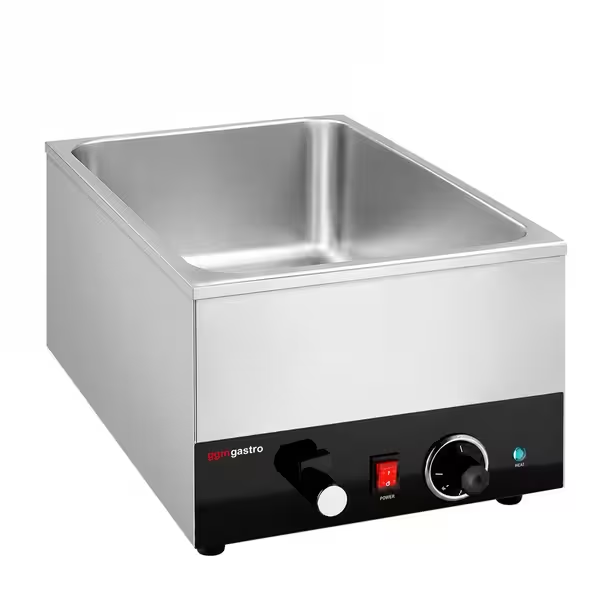
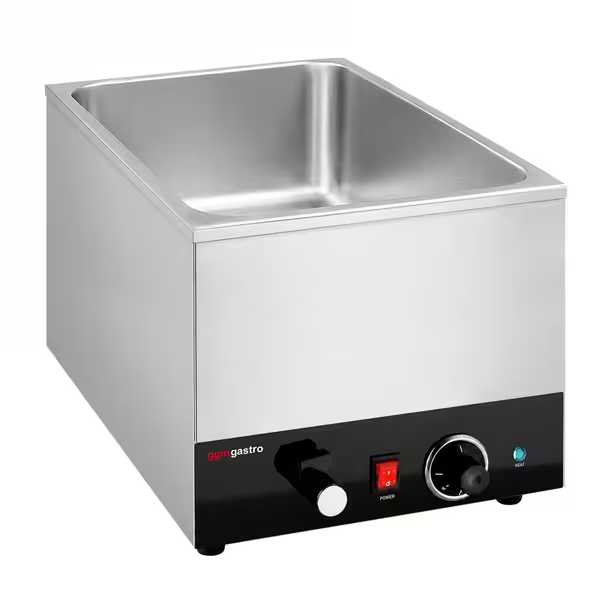
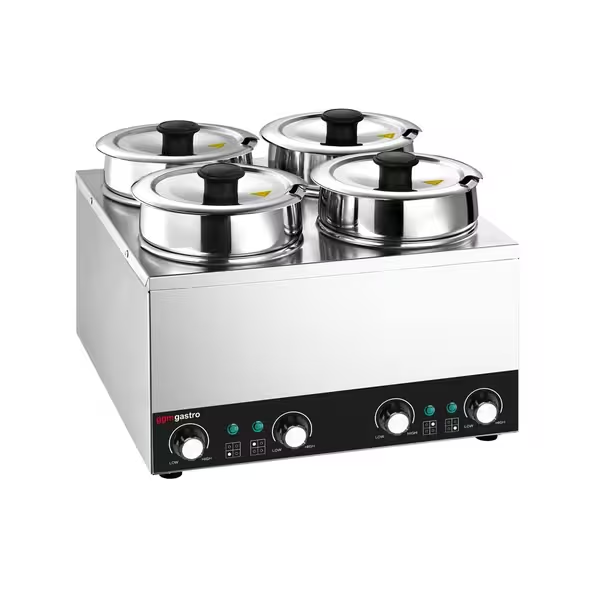
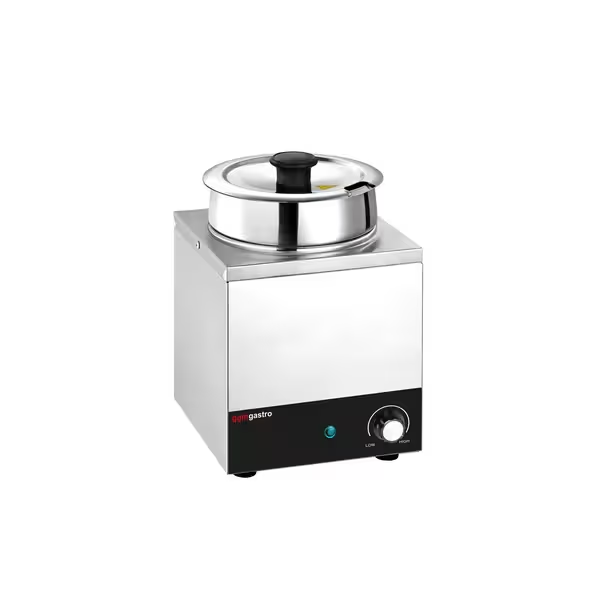
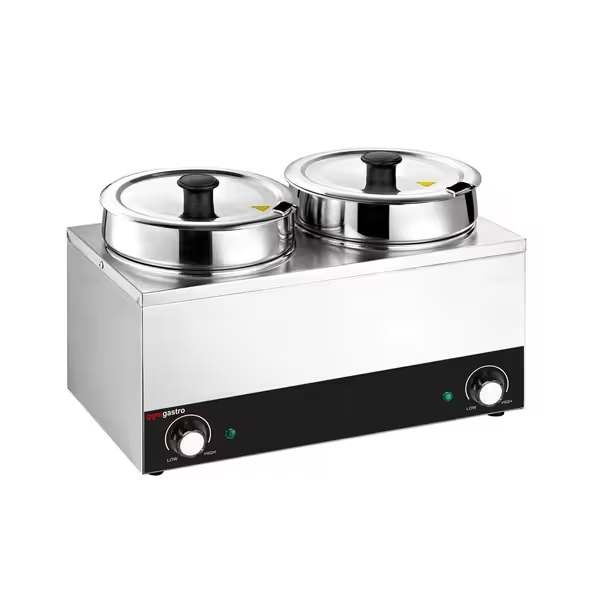
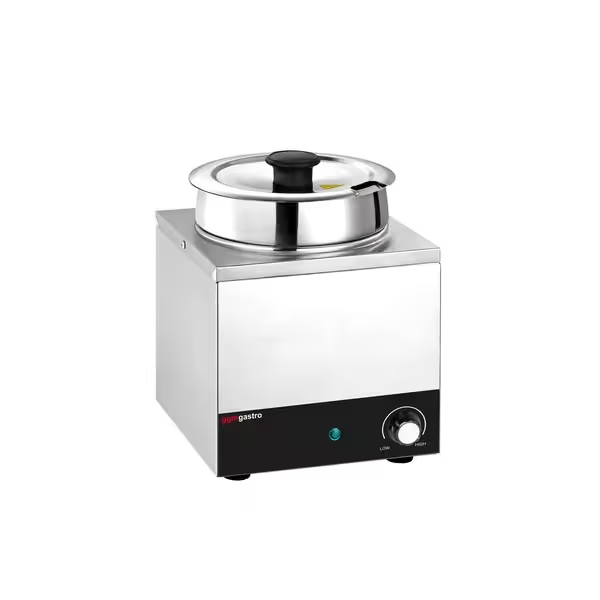
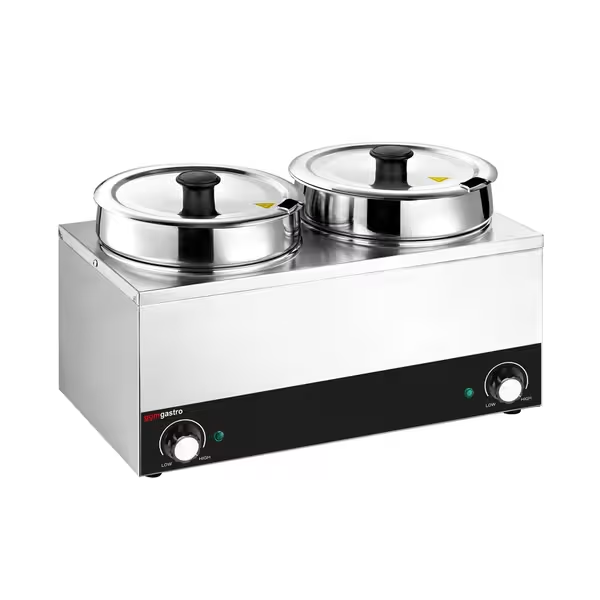
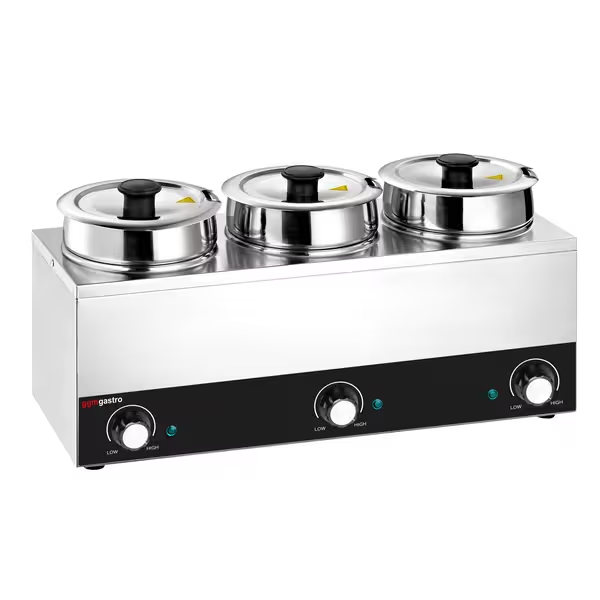
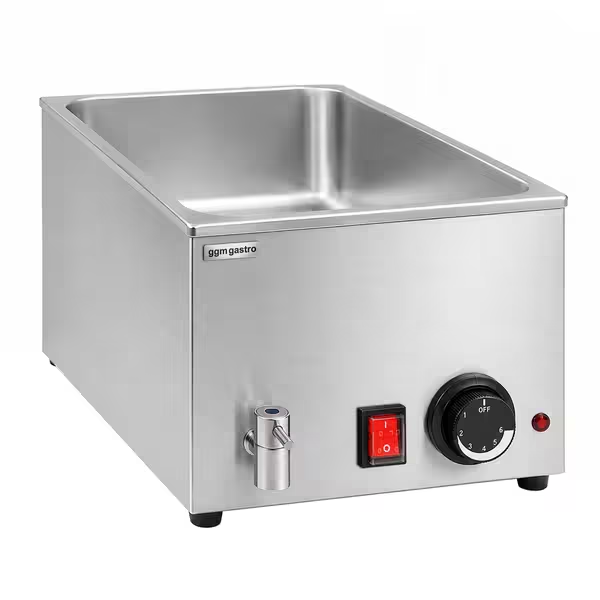
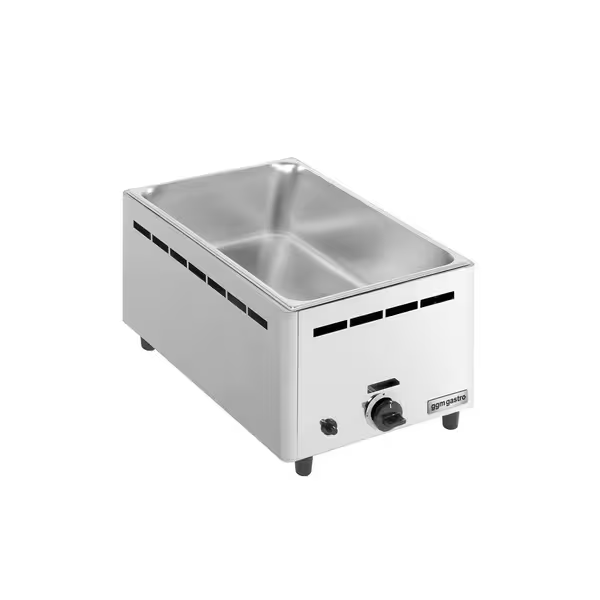
Bain-Maries & Hot Pots – Countertop Units for Organized Food Service
Bain-Maries & Hot Pots – Tabletop models are compact food-warming devices for pre-prepared dishes. Traditional bain-maries use a heated water bath and often accommodate Gastronorm containers, while hot pots hold individual pots for soups, sauces, or liquid ingredients.
In professional settings, their main benefit lies in controlled serving. Side dishes, sauces, and soups are readily available right at the serving station or production area without having to be reheated for each portion. This supports smooth operations in restaurants, fast-food outlets, hotels, cafeterias, catering companies, and buffet setups.
A tabletop bain-marie complements existing cooking appliances without requiring a permanently installed warming station. This makes it suitable for smaller kitchens, seasonal offerings, or work areas that are used differently depending on the time of day.
Select the appropriate model, capacity, and container
The most important decision concerns the type of food and the quantity needed. A bain-marie with a GN-1/1 tray provides a flexible foundation for larger quantities of side dishes. At the same time, smaller GN containers allow the basin to be divided into several separate sections. Hot pots with one, two, three, or four pots, on the other hand, are particularly well-suited for various sauces, soups, or stews.
In addition to the number of containers, depth and volume are important factors. Models with container depths of approximately 150 or 200 millimeters differ significantly in terms of capacity and how often they need to be refilled. Individual hot pots, for example, have a total volume of about 3.5 to 14 liters. The decisive factor is not just daily demand, but the amount that must actually be readily available during peak hours.
Footprint is also a factor in the selection process. Compact units can be integrated into existing stainless steel cabinets, whereas wider multi-pot models require a clearly defined serving or preparation area.
Quick Checklist for Selecting Equipment
- Food type: GN bain-marie for flexibly divided side dishes, hot pot for individual liquid components
- Capacity: Select the number of containers and volume based on portion size and refill interval
- Connection: Check whether a 230-volt unit or a gas-powered model is suitable for the location
- Dimensions: Allow for sufficient floor space and room to move when filling and portioning
- Features: Evaluate temperature control, drain valve, and removable containers based on daily cleaning requirements
Integrating benchtop devices effectively into the workflow
In the lunch service, a properly sized bain-marie can shorten the distance between the cooking line, temporary storage, and portioning. Prepared side dishes are ready right at the pass while the team prepares the main components fresh. At a snack bar or food truck, a hot pot can consolidate multiple sauces into a single station and eliminate unnecessary walking.
The unit must not block the workspace. Ample counter space for ladles, lids, and container changes makes operation easier. When combined with refrigerated counters, a clear process sequence is established: chilled preparation, reheating, holding, and serving remain spatially organized.
In this category, bain-maries are primarily used for keeping food warm and maintaining the correct temperature. They do not replace a high-performance cooking station and should not be equated with fixed or mobile food serving stations.
Stainless Steel, Water Bath, and Cleaning in Daily Use
Stainless steel is advantageous in everyday restaurant operations because its smooth surfaces are durable, moisture-resistant, and easy to clean. With frequent use, water, food scraps, heat, and cleaning agents regularly come into contact with the surfaces. Easily accessible sinks and removable basins help reduce unnecessary steps.
A drain valve makes it easier to empty the water basin, especially on larger units. Before purchasing, check whether there is enough space below or to the side for the water to drain. Electric models also require a suitable, easily accessible outlet. Gas appliances require a suitable connection and operating environment.
The keep-warm time should be adjusted to the specific dish. Smaller batches and a consistent refilling schedule help to better control consistency, temperature, and appearance.
Plan economically rather than basing decisions solely on equipment size
A warming station that is too small leads to frequent refilling and additional food production. An oversized unit, on the other hand, ties up space, energy, and capital without automatically improving workflow. The most economically sensible option is a model that is tailored to the menu, peak demand, and available counter space.
When combined with suitable GN containers, sturdy work surfaces, and high-performance dishwashing technology, this creates a seamless solution for filling, holding food warm, serving, and cleaning. In this way, the equipment supports the team, reduces avoidable interruptions, and ensures more reliable daily operations.
Using Bain-Maries and Hot Pots as Needed
Bain-maries with GN inserts offer great flexibility for changing side dishes and different container sizes. Hot pots provide a clearly structured solution for multiple sauces or soups. Key factors include the type of food, required capacity, connection type, unit dimensions, and cleaning requirements.
GGM Gastro offers a variety of tabletop units for compact workstations as well as for busier serving and production areas. This allows you to select a warming solution that suits your operation, available space, and actual workload.