


Spice Shelves for the Food Service Industry
Spice shelves keep spices and frequently used ingredients neatly organized in GN containers within easy reach. A variety of GN sizes and widths help you choose the solution that best fits your workstation, the quantity of ingredients, and the available space. Spice Shelving Guide »

Width
Price
Spice Shelves as an Organized Mise-en-Place Solution
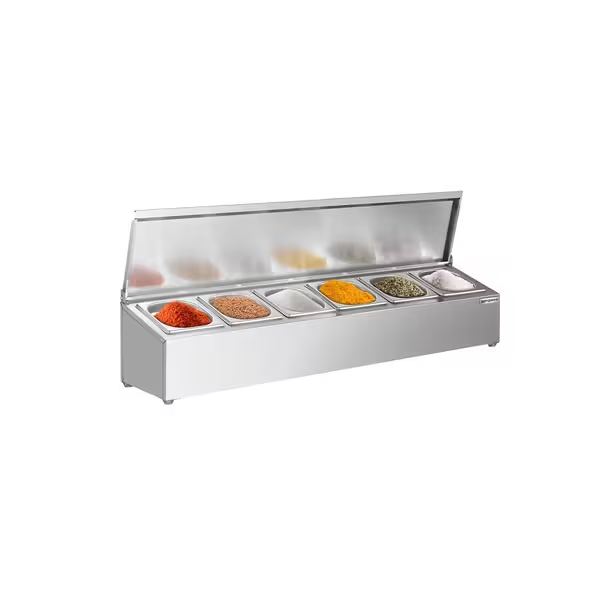
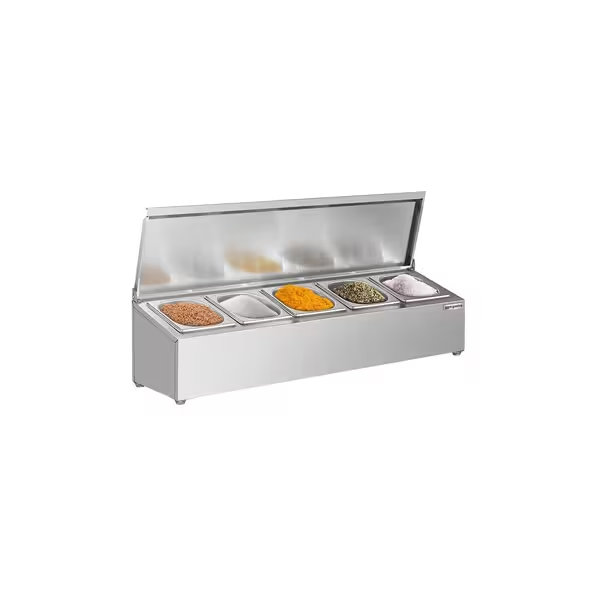
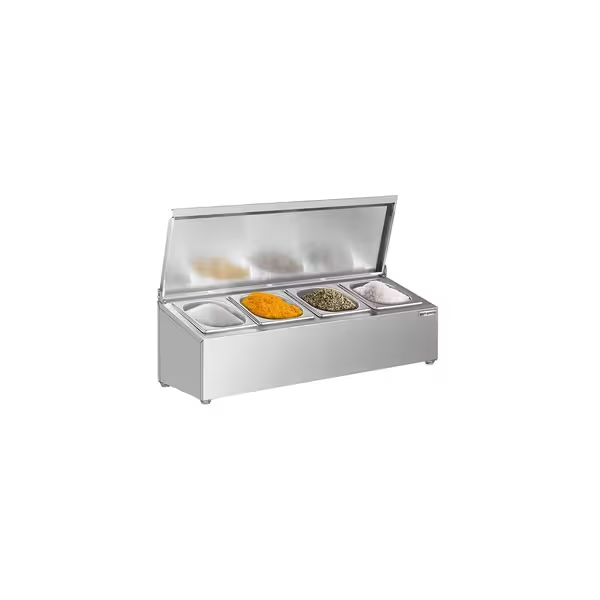
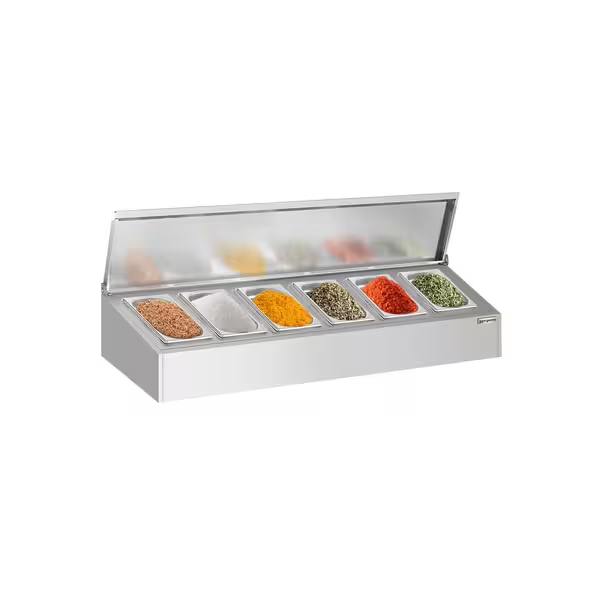
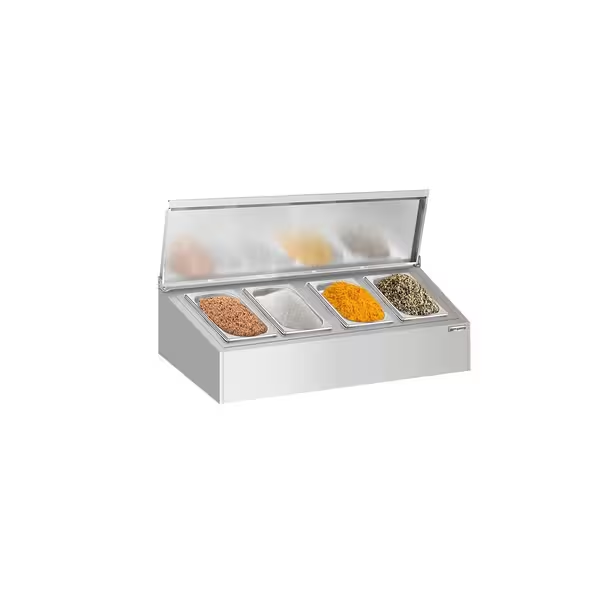
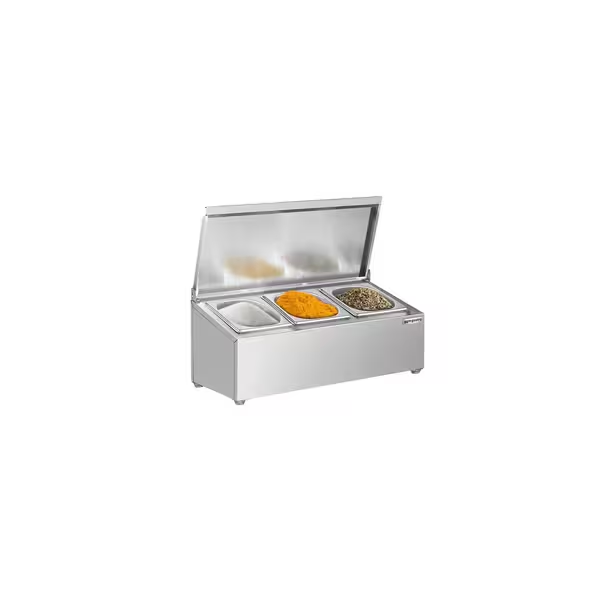
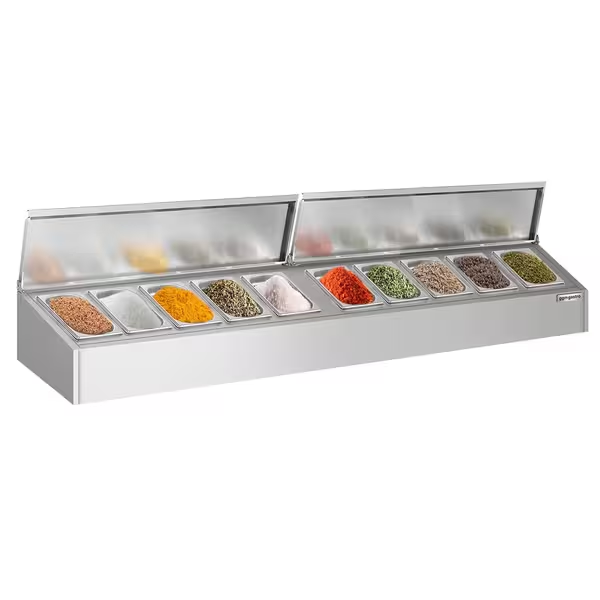
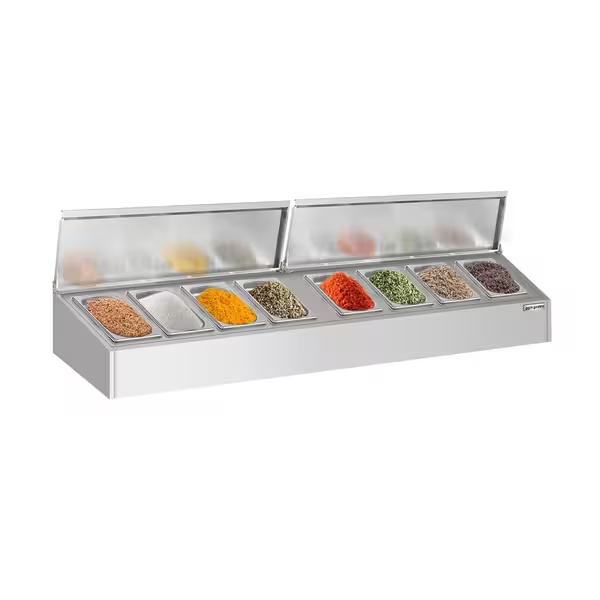
Spice Shelving Units are stainless steel add-ons designed to neatly organize spices, sauces, herbs, or other frequently used ingredients in GN containers right at the workstation. They are particularly useful for restaurants, snack bars, pizzerias, grill kitchens, and other establishments where multiple ingredients must be accessible quickly, consistently, and hygienically.
The operational benefit lies less in the additional storage space than in the placement: Ingredients are kept in designated locations at the workstation, reducing search times and keeping the work surface more organized. This supports a smooth mise en place, especially during peak hours, because employees don’t have to switch between storage, refrigeration, and the cooking line for every seasoning or garnish.
Selecting the Correct GN Size, Capacity, and Dimensions
Four criteria are key when making a selection: GN size, number of containers, external dimensions, and placement within the process. This category includes more compact models for GN 1/6 with 3, 4, 5, or 6 containers, as well as larger models for GN 1/4 with 4, 6, 8, or 10 containers. The GN 1/6 models range from 515 to 990 mm in width, with a depth of 250 mm and a height of 210 mm. GN 1/4 models range from 800 to 2,000 mm in width, with a depth of 311 mm and a height of 264 mm.
GN 1/6 is suitable when many smaller components need to be kept within easy reach in limited quantities. GN 1/4 offers more volume per compartment and is better suited for stations with higher consumption. Before making a purchase, therefore, you should not only count the number of spices: what matters most is which ingredients are actually needed simultaneously during a typical peak period. The right GN containers facilitate a consistent approach to portioning and restocking.
Space Requirements and Access During the Workflow
A spice shelf should be placed where food is seasoned, topped, plated, or finished. When used in conjunction with work tables or [preparation tables](https://www.ggmgastro.com/cooling/prep tables), it can bring frequently used ingredients within easy reach without completely taking up the central work surface. At the same time, the shelf should not obstruct walkways, handoff areas, or cleaning routes.
The models offered feature hinged stainless steel lids. Therefore, there should be sufficient clearance above the shelf to allow for opening. In a small snack kitchen, a compact 3- or 4-compartment solution often makes more sense than a wide counter that holds rarely used ingredients. In a heavily trafficked grill or pizza station, on the other hand, a larger capacity can reduce the need for restocking during peak hours.
Stainless Steel, Hygiene, and Daily Wear and Tear
Stainless steel is ideal for professional kitchens because its smooth, durable surfaces make regular cleaning easier. Especially near the grill, stove, or food preparation station, spice shelves are exposed to grease mist, splatters, moisture, and frequent hand contact. Therefore, lids, container holders, and adjacent surfaces should remain easily accessible and be included in the daily hygiene routine using cleaning agents compatible with the materials.
The lid also protects the work area from exposed ingredients, but it does not replace necessary refrigeration. Temperature-sensitive items belong in appropriate refrigerated storage solutions. This keeps the distinction clear: The shelf organizes access; refrigeration technology ensures proper temperature control when needed.
Quick Checklist for Selection
-
Does GN 1/6 or GN 1/4 better suit the quantities and portioning logic?
-
Are 3 to 6 ingredient slots sufficient, or are 4 to 10 needed at the same time?
-
Do the width, depth, and height match the available counter space?
-
Can the stainless steel lid be opened freely and the station cleaned thoroughly?
-
Is the unit within easy reach without blocking serving, cooking, or walking paths?
Combine spice shelves effectively and use them efficiently
A cohesive workspace is created when the workbench, storage units, and work surface are designed as a single unit. When combined with matching stainless steel furniture, a repeatable workstation layout can be created that allows even rotating staff to quickly find their way around. This is particularly helpful in multi-shift operations or at standardized locations.
The purchase becomes economically viable where it reduces daily friction: less searching, less rearranging, clearer restocking points, and a workstation that’s easier to manage. Therefore, the right size is not automatically the largest. The best option is the one that meets the workstation’s actual ingredient needs, remains hygienically accessible, and can be integrated into the process without taking up unnecessary space.
Conclusion: Choose spice shelves that are suitable for the process
The key factors in the purchasing decision are the GN size, capacity, available floor space, clearance above the lid, and ease of cleaning. By checking these points at the actual workstation, you can create a clearer mise en place structure and avoid having a tray that’s too large or too small create new bottlenecks in the workflow.