


Wall-mounted cabinets for the food service industry
Stainless steel wall-mounted cabinets provide additional storage space for dishes, containers, and kitchen utensils in professional foodservice kitchens. They make use of existing wall space and help keep the kitchen organized and space-efficient. Wall-Mounted Cabinets Guide »
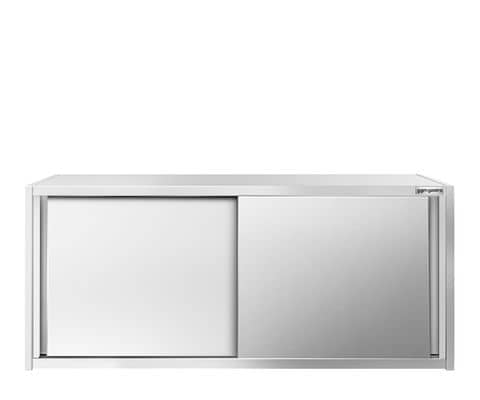
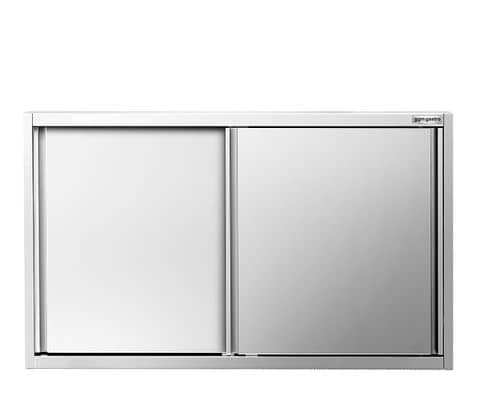
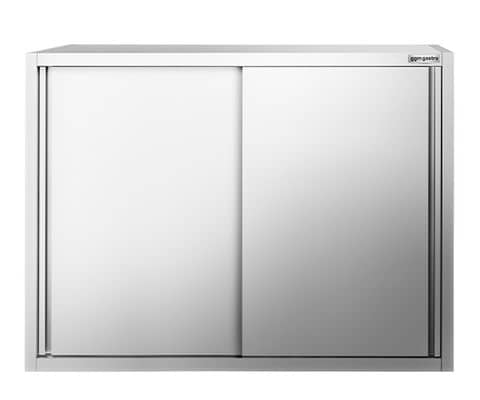
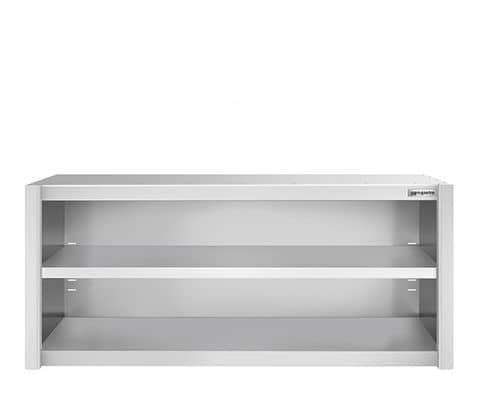
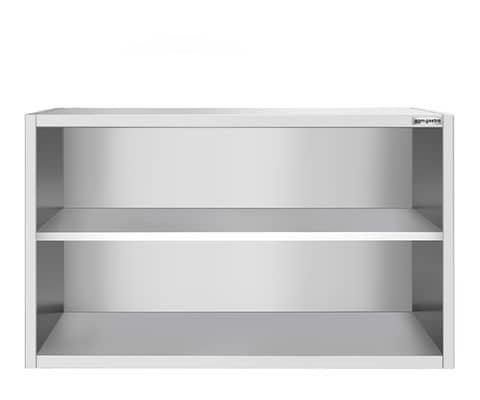
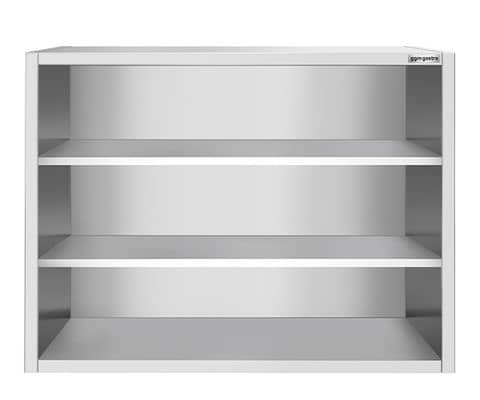

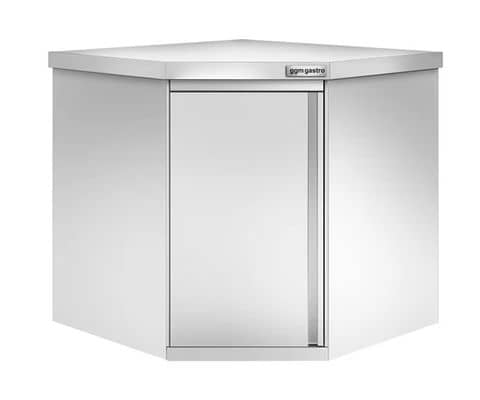
Wall-mounted cabinets provide storage space without taking up additional floor space
Wall-mounted cabinets are storage cabinets attached to the wall in commercial kitchens. They keep dishes, containers, and appropriate kitchen tools within easy reach without taking up floor space.
In snack bars, restaurants, hotel kitchens, and institutional food service, they relieve the strain on heavily used prep and serving areas. When frequently used utensils have a designated spot, the service team spends less time searching for or rearranging items. Especially during shift changes, a fixed layout helps ensure that new employees can find what they need without a lengthy search. A key requirement is a layout that fits the actual workflow: Additional storage space is of little use if the contents are difficult to access.
Align Dimensions and Mounting Position with the Work Process
Before making a selection, you should check the wall width, cabinet depth, and available mounting height. At GGM Gastro, wall-mounted cabinets are categorized by heights of 650, 800, and 1000 mm, among others. Many models have a depth of 400 mm; however, the dimensions of the specific item are always the deciding factor. Also check whether there is sufficient clearance beneath the cabinet.
Placing frequently used plates or utensils above a prep station can help minimize reaching distances. In a small pizzeria, it’s especially important that the work tables underneath remain unobstructed. In a larger production kitchen, cabinet doors and open workstations must not obstruct each other, even when several employees are working at the same time.
Choosing the Right Open or Closed Wall-Mounted Cabinets
Open designs provide immediate access to frequently used items. Closed designs allow for organized storage behind doors. Sliding doors do not require additional space in front of the cabinet for swinging open and are therefore particularly suitable for narrow walkways. Hinged doors, on the other hand, require space to open; this must be taken into account during the planning phase.
Wall-mounted cabinets with glass doors allow you to see the contents without having to open the door. Corner models can make use of unused wall space. Also pay attention to the number and arrangement of shelves: Stackable plates have different requirements than containers of varying heights. The appropriate design depends on how often items are accessed, what is being stored, and the available space.
Stainless Steel, Hygiene, and Secure Mounting for Everyday Use
Stainless steel surfaces are generally easy to clean and therefore meet the requirements of professional kitchens. Grease and steam can accumulate near cooking areas; at sink stations, moisture and frequent cleaning are added to the mix. It is important to have accessible interior surfaces, easily reachable corners, and cleaning agents that are suitable for the respective surface according to the manufacturer’s instructions.
The mounting must be appropriate for the wall type and the intended load. The unit’s weight, permissible load capacity, and suitable fasteners must be determined before installation. Heavy dishes should not be placed based on guesswork. Also check the delivery condition: Depending on the model, cabinets may be delivered fully assembled or for self-assembly. The position must not block important maintenance access points or make it difficult to clean the work area under the cabinet. In the area of sink cabinets, care must also be taken to ensure separate paths for clean and used dishes.
Quick Check: Choosing the Right Wall-Mounted Cabinets
-
Dimensions: Do the width, depth, and height match the available wall space?
-
Access: Does the door type suit the traffic flow and frequency of use?
-
Interior Space: Are the shelves and usable storage space sufficient for the items to be stored?
-
Installation: Can the wall and mounting hardware support the weight of the cabinet and its contents?
-
Maintenance: Will the doors, interior surfaces, and adjacent areas remain easily accessible?
Integrating Wall-Mounted Cabinets into the Kitchen Cost-Effectively
When making an investment decision, it’s not just the purchase price that matters. A properly placed wall-mounted cabinet can reduce the need to search for items and minimize interruptions, keep the work surface clear, and simplify cleaning routines. A cabinet mounted too high or that’s difficult to access, on the other hand, requires extra steps. An oversized cabinet also ties up budget without automatically improving the workflow.
Therefore, coordinate the position with the other workstations. If refrigerated counters are located under or next to the cabinet, access points and work paths must remain clear. Add-ons from the stainless steel furniture accessories should only be considered if they are compatible with the specific model and the intended use.
Buy wall-mounted cabinets from GGM Gastro to meet your needs
At GGM Gastro, you can compare wall-mounted cabinets based on their height and design. In addition to the dimensions, you should also consider the materials, door system, weight capacity, delivery condition, and current availability. Expert advice is available to help with questions about selection and kitchen planning. This leads to a decision that makes smart use of the available space, supports daily operations, and fits within the business’s budget.