


Work Cabinets for the Food Service Industry & Commercial Kitchens
Work cabinets combine durable work surfaces with enclosed storage space for professional kitchens and food preparation areas. A variety of sizes and configurations allow them to be integrated into existing workflows as needed. Work Cabinets Guide »



Building depth
Door type
Number of Doors
Number of Drawers
Quality
Design/Equipment
Product material
Load Capacity
Width
Price
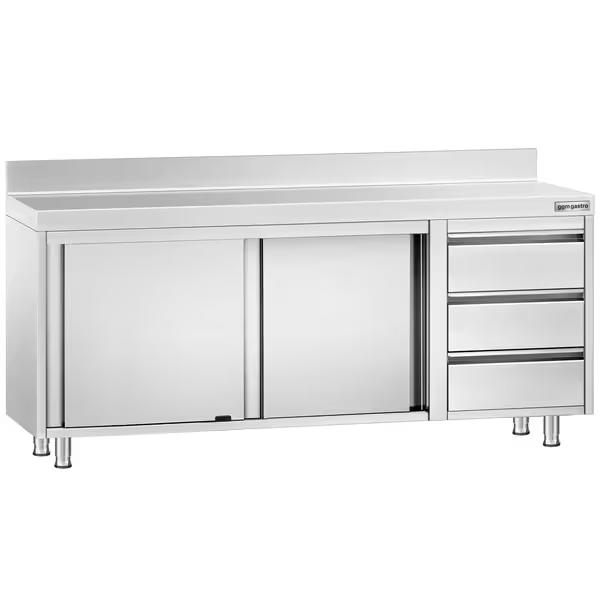
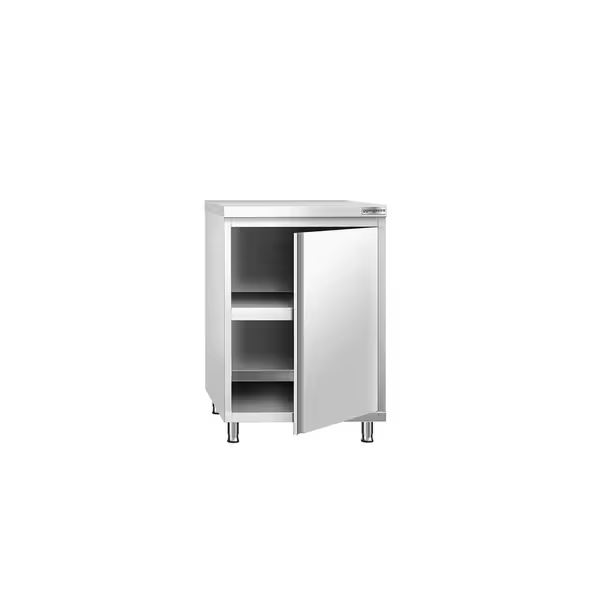
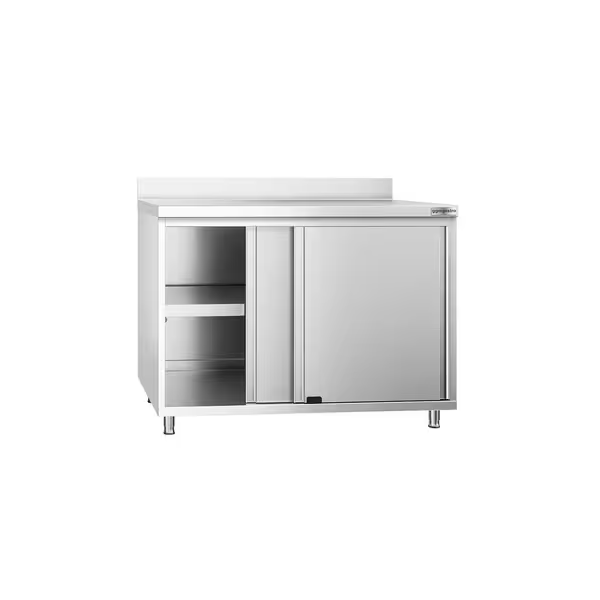
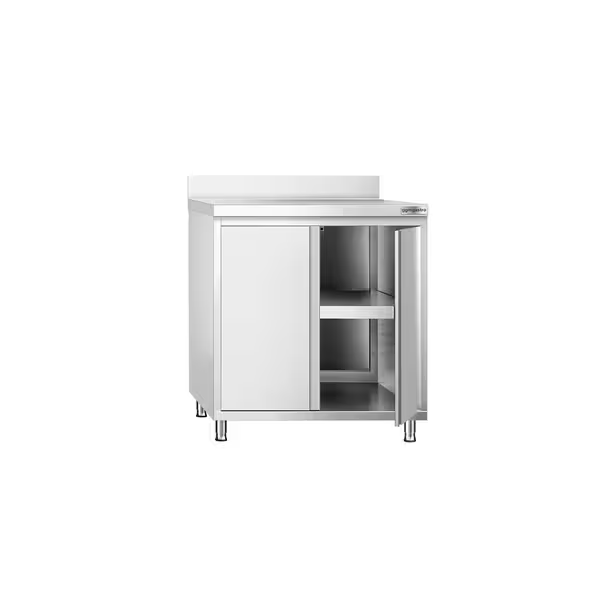
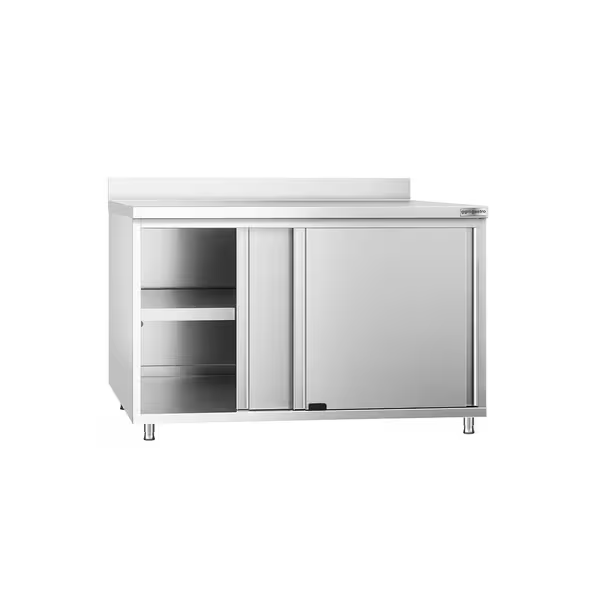
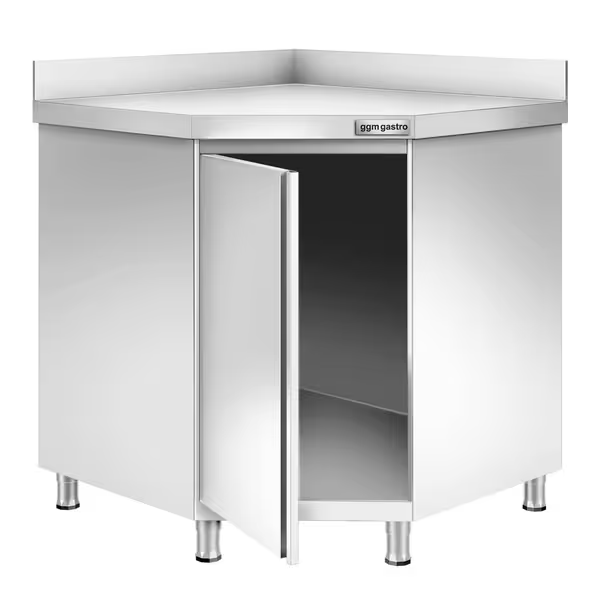
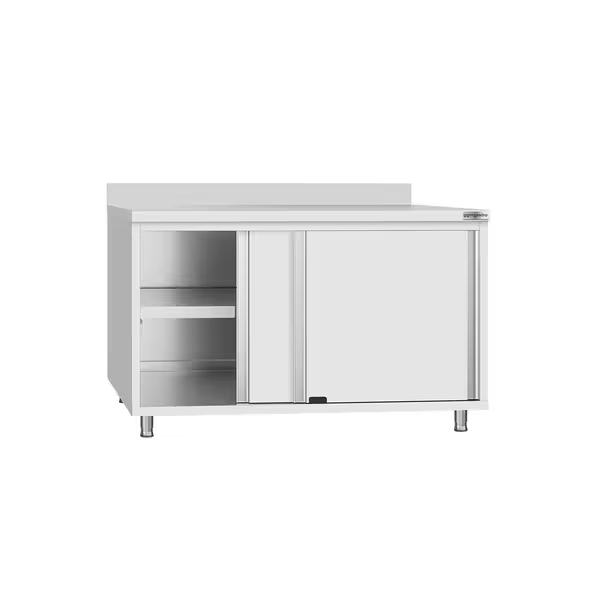
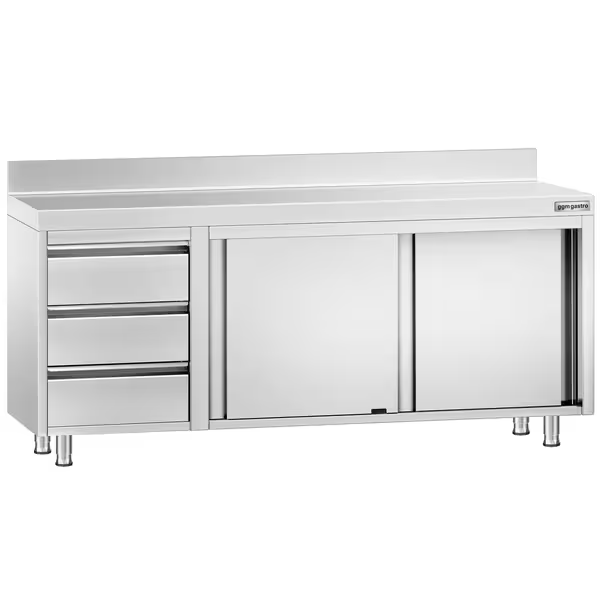
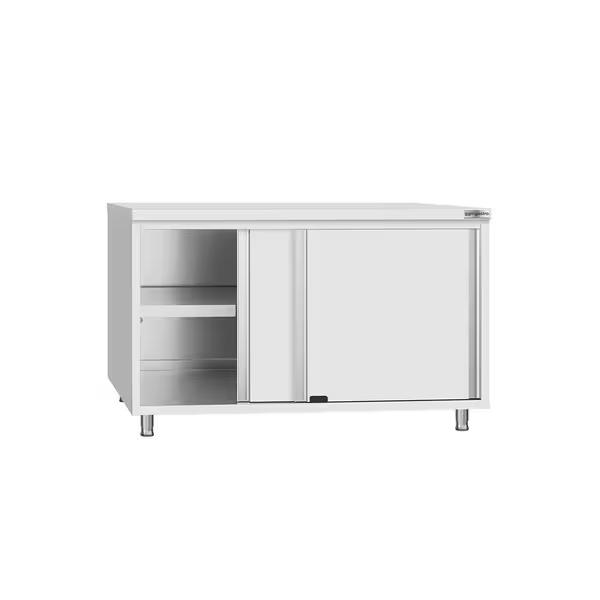
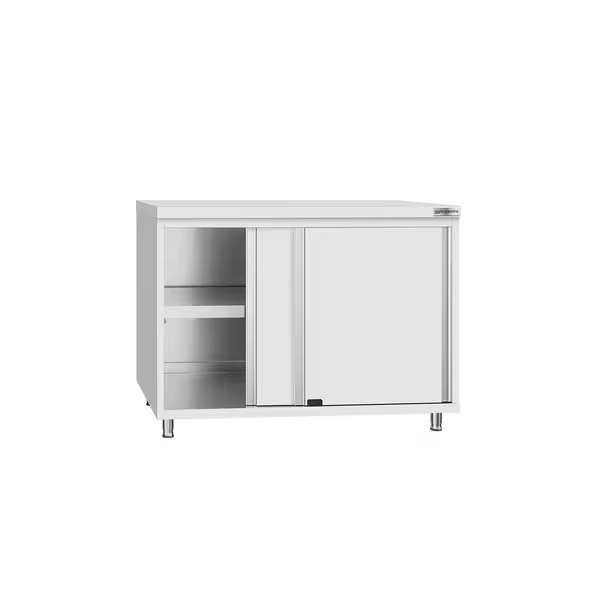
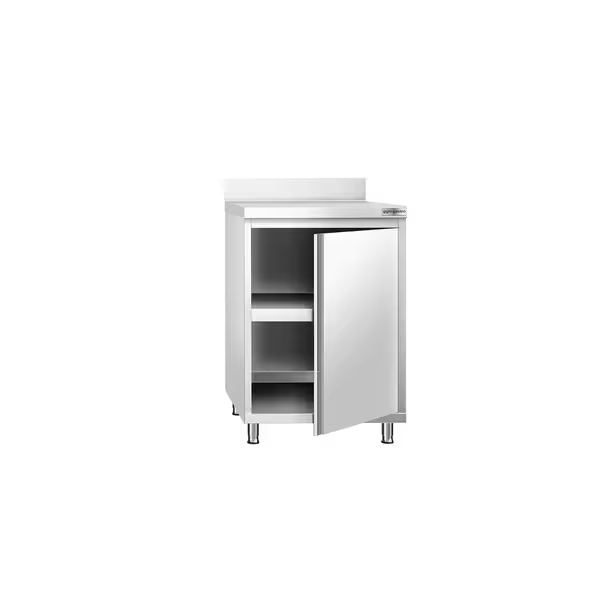
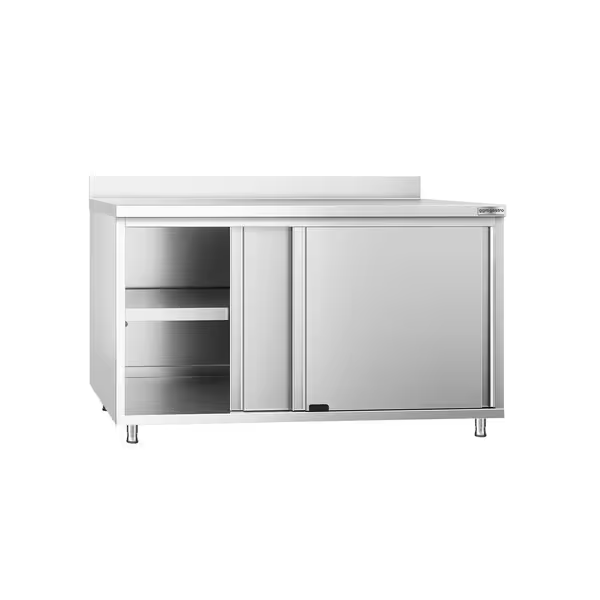
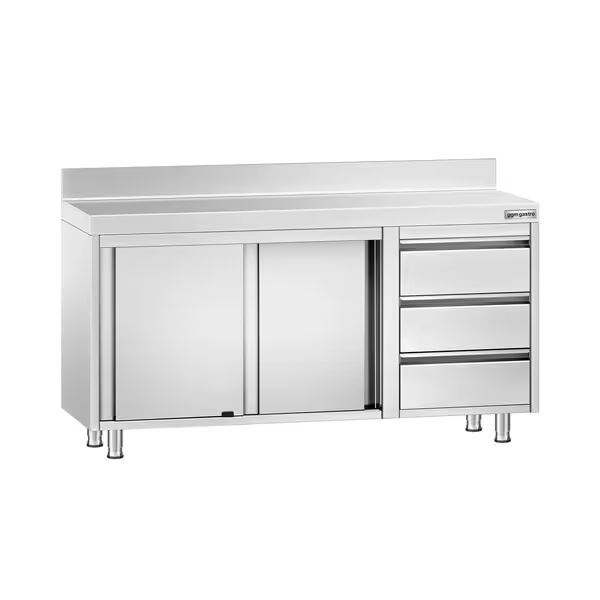
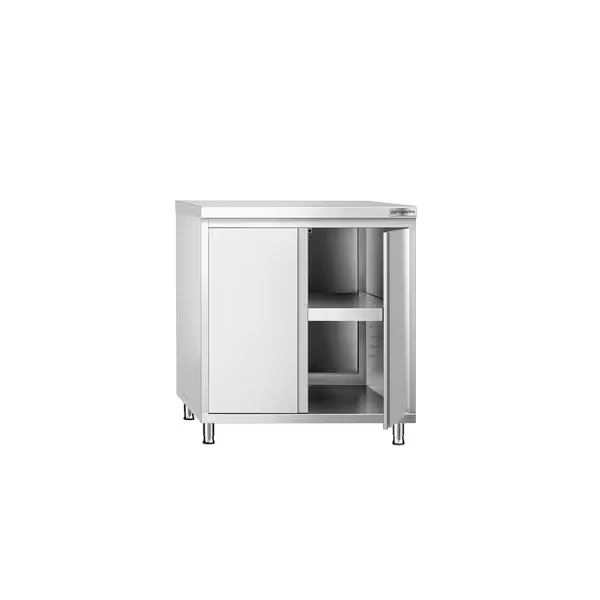
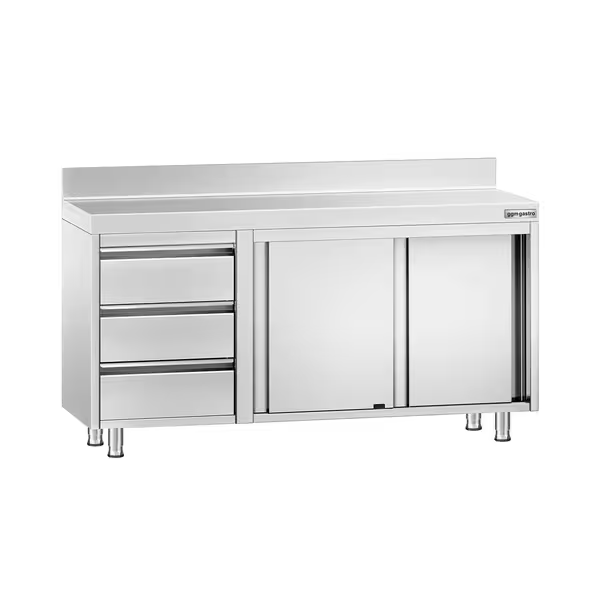
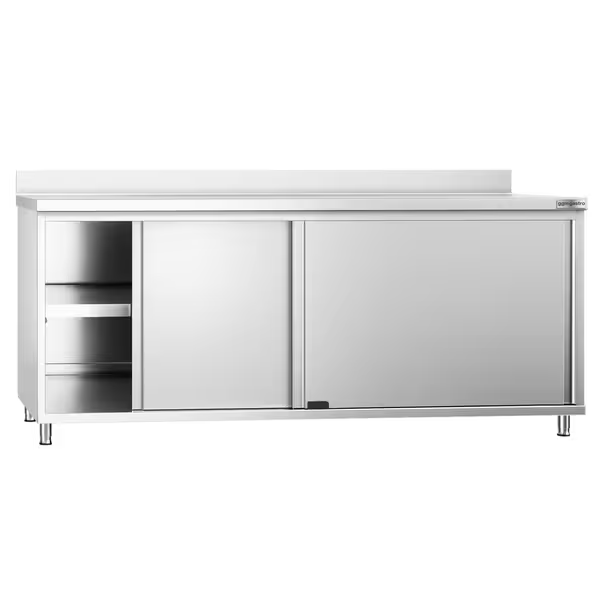
Work Cabinets as Work Surfaces and Storage Space in Food Service Establishments
Work cabinets combine a sturdy work surface with enclosed storage space, making them one of the basic functional elements of professional kitchens. They are used in restaurants, snack bars, hotels, catering kitchens, and institutional food service—anywhere work equipment needs to remain within easy reach without taking up additional floor space for separate cabinets.
Choose work cabinets that fit the available space and workflow
The most important decision starts with the available dimensions. Depths of 600, 700, or 800 mm affect how much work and storage space is created and how wide the walkways between opposite stations remain. In compact kitchens, a shallower depth may be practical; in larger preparation or production areas, greater depth provides additional usable space.
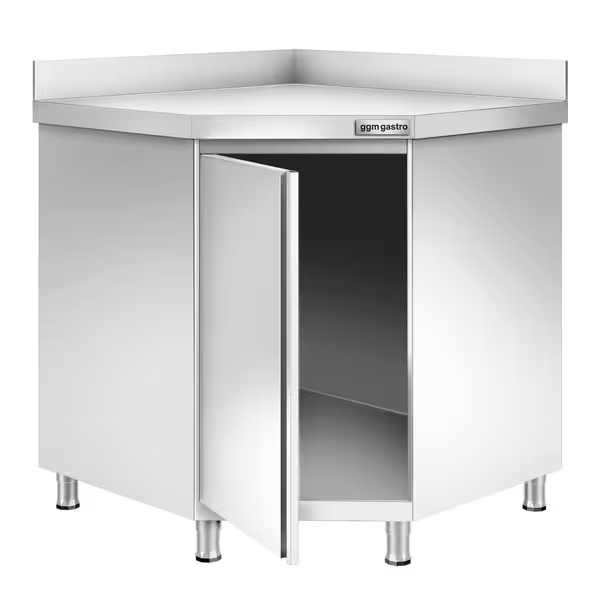
Width is equally important: It should not only fit into the available space but also suit the specific task at hand. Those who portion food, plate dishes, or prepare ingredients on the cabinet need a different surface area than a station that primarily serves as storage. Corner work cabinets can help integrate room corners functionally into a continuous workflow.
Sliding doors, hinged doors, or drawers: Plan storage space based on ease of access
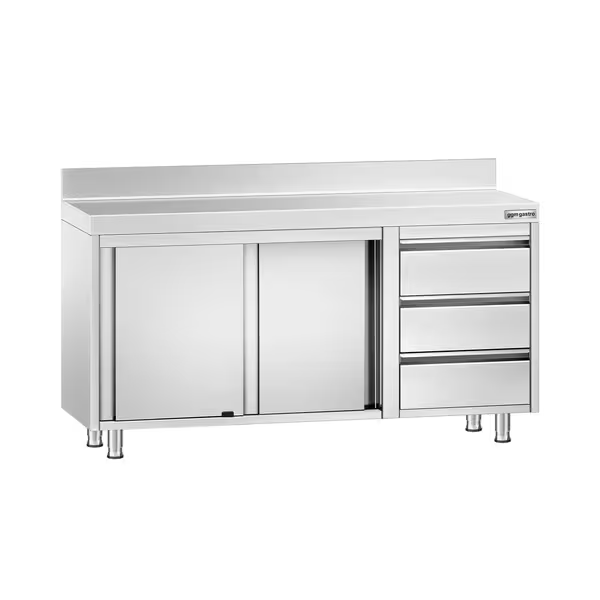
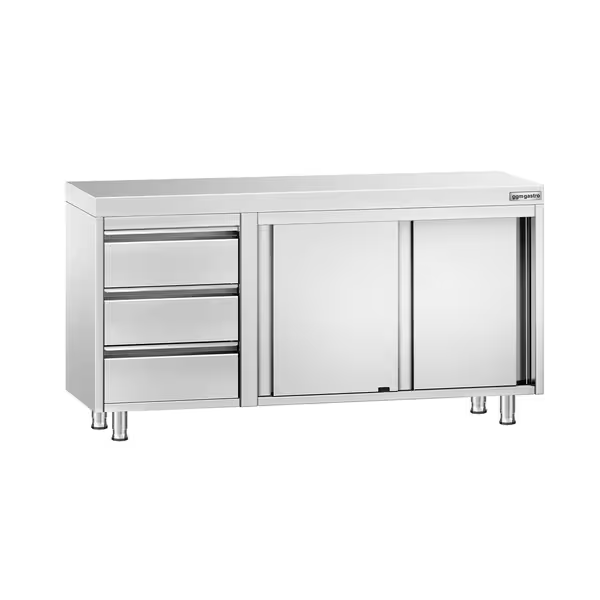
The type of door should be chosen based on available space and how often it will be used. Sliding doors do not require additional swing space when opening and are therefore often practical in narrow aisles or between opposing workstations. Hinged doors are suitable where there is sufficient space and the entire contents of the cabinet need to be visible at a glance. Models with drawers help keep smaller tools, containers, or frequently used items organized.
The interior layout is also crucial. Adjustable shelves make it easier to accommodate containers of varying heights. Models with one, two, or more door panels, as well as versions with one or more drawers, allow the storage space to be tailored to the actual needs of the workstation.
Match the countertop, uperside, and material to the specific application
Work cabinets are available with a variety of finishes and configurations. A raised edge can be useful if the cabinet is placed close to a wall and you want to prevent cleaning water, splashes, or loose ingredients from getting behind the cabinet. Without an upstand, the surface remains more flexible—for example, when multiple units are placed flush next to each other or are used from both sides.
For typical kitchen areas, stainless steel options are available, including AISI 304 and AISI 201 chrome-nickel steel. Depending on the application, models with granite countertops, cutting boards, or serving hatches may also be suitable. It is crucial that the material and surface are suited to the expected wear and tear, cleaning routine, and planned workflow.
Quick Check Before Making Your Selection
-
Do the installation depths of 600, 700, or 800 mm fit within the walkways and adjacent stations?
-
Is the working width sufficient for preparation, portioning, or serving?
-
Are sliding doors, hinged doors, or drawers the best fit for the available space?
-
Is an upstand, cutting board, granite surface, or serving hatch really necessary?
-
Does the load capacity of the selected model match the daily workload?
Load Capacity and Cleaning as Part of Cost-Effectiveness
In everyday commercial use, a work cabinet is regularly loaded, opened, cleaned, and used as a workstation. Depending on the model, the specified load capacities are, for example, 350, 400, or 500 kg. These values should not be considered in isolation: what matters is which equipment, containers, or goods are actually placed on the surface and how long this load is sustained.
Smooth stainless steel surfaces and easily accessible interiors facilitate regular cleaning routines. At the same time, the design should be chosen so that floor areas, bases, and adjacent surfaces can be cleaned without unnecessary detours. This promotes hygiene and reduces daily friction in the work process.
Integrate kitchen cabinets seamlessly into the kitchen layout
A work cabinet is most useful when it complements the rest of the workspace. Where open access is more important than enclosed storage, work tables can complement the design. Additional storage space above the work surface can be created with wall-mounted cabinets, while drawer cabinets can be useful for storing small work items.
For a cohesive design, work height, walking paths, door movements, and cleaning access should all be considered together. This results not in an isolated piece of furniture, but in a workstation that supports preparation, organization, and short distances. A properly sized work cabinet can thus help make better use of work surfaces, reduce the time spent searching for items, and organize daily operations more efficiently.
Planning for Work Cabinets in a Cost-Effective Manner
The right solution is based not on the largest possible cabinet, but on the actual space requirements, workload, and workflow of each station. By evaluating dimensions, accessibility, surface area, and storage space together, you can create a solid foundation for organized workflows and sensible long-term use of space.