


Cocktail Stations for the Professional Foodservice Industry
Cocktail stations enable the structured and efficient preparation of cocktails and mixed drinks in bars, restaurants, and hotels. Whether compact, refrigerated, or modular—they create well-organized workstations for daily restaurant operations. Cocktail Station Guide »

Product type
Building depth
Width
Design/Equipment
Number of Doors
Number of Drawers
Quality
Door type
Product material
Price
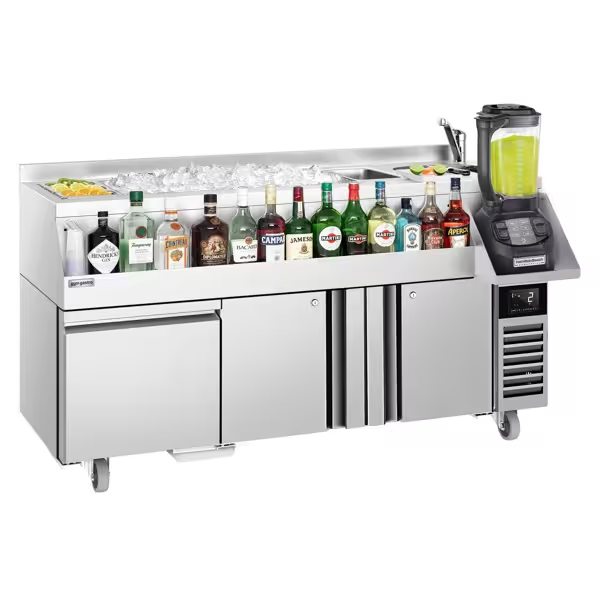
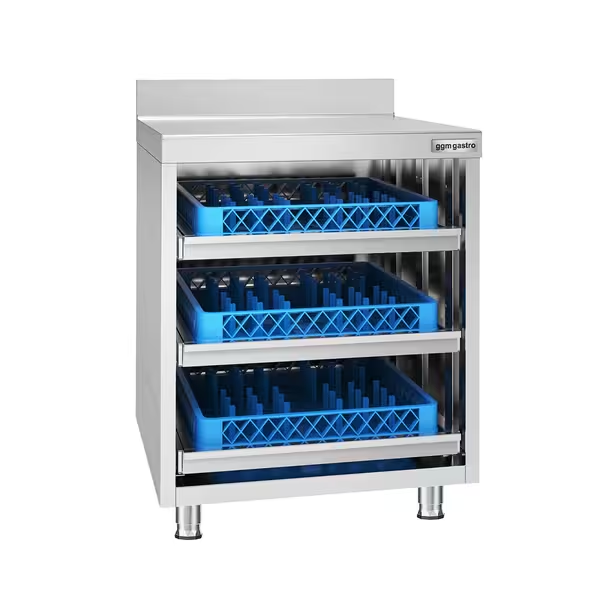
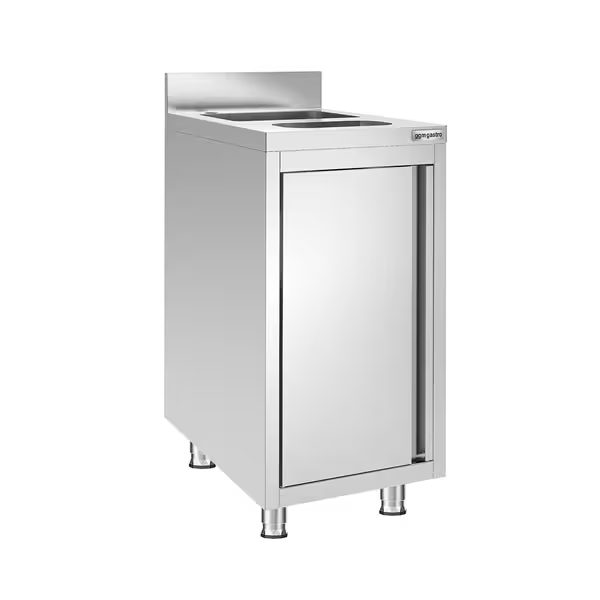
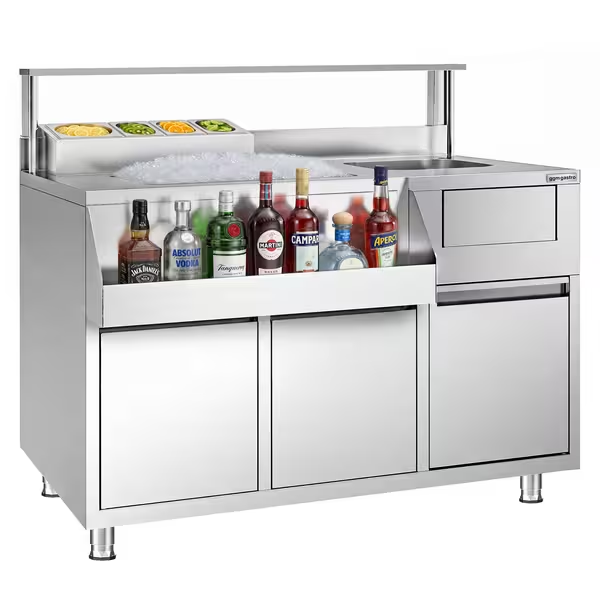

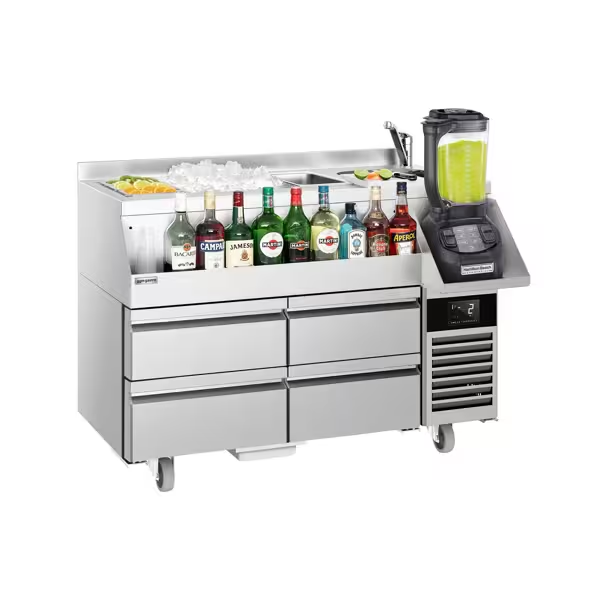
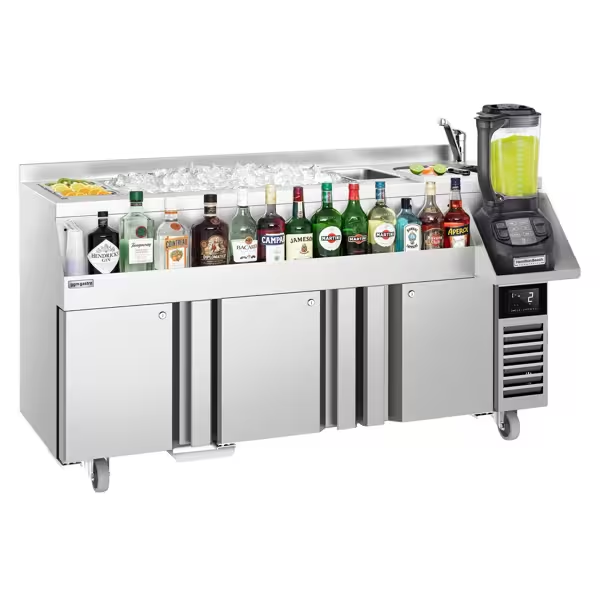
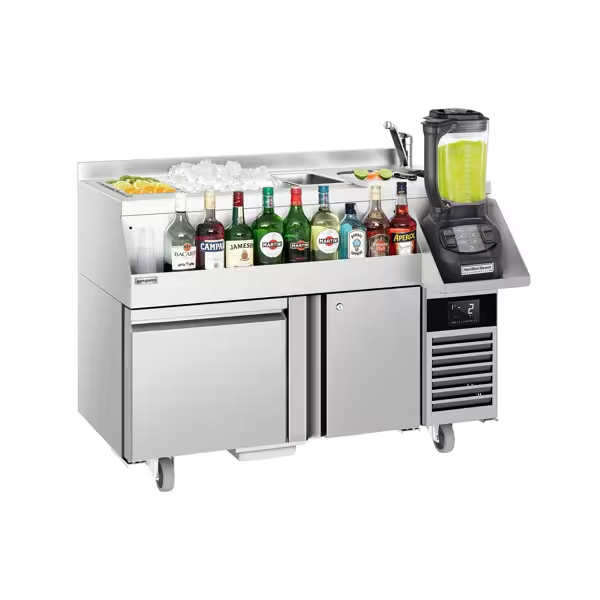
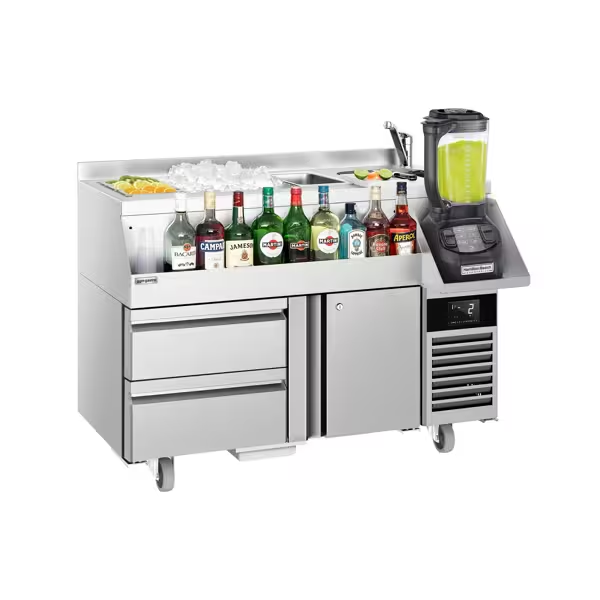
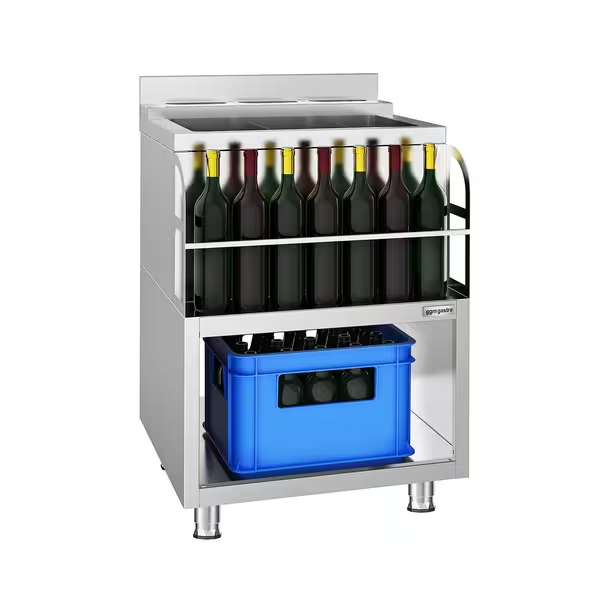
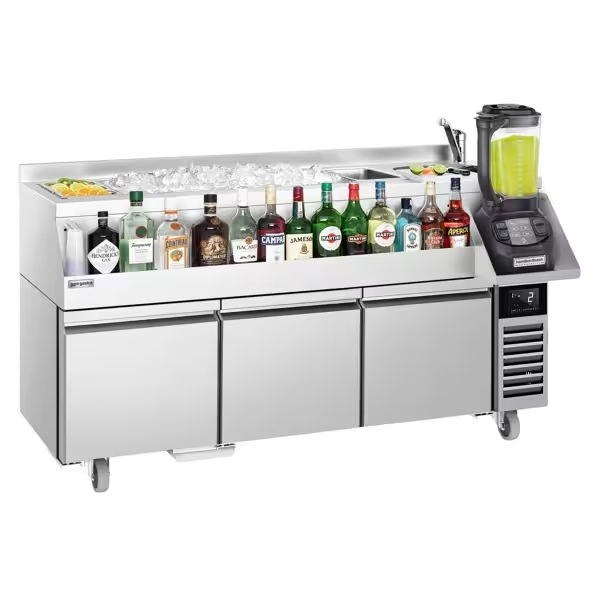
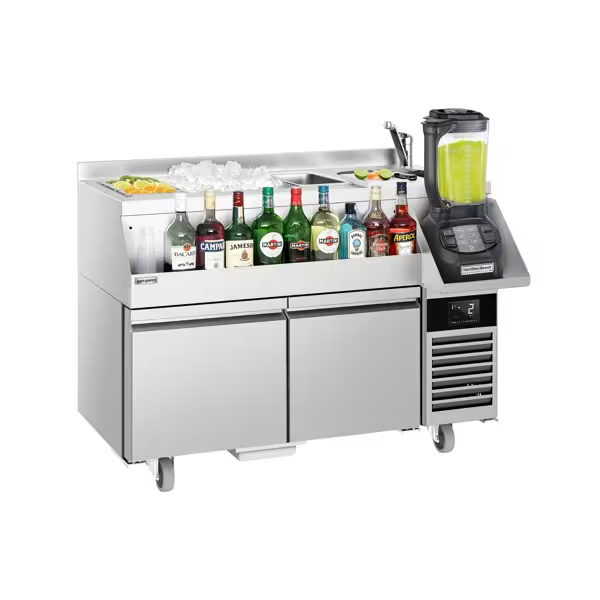
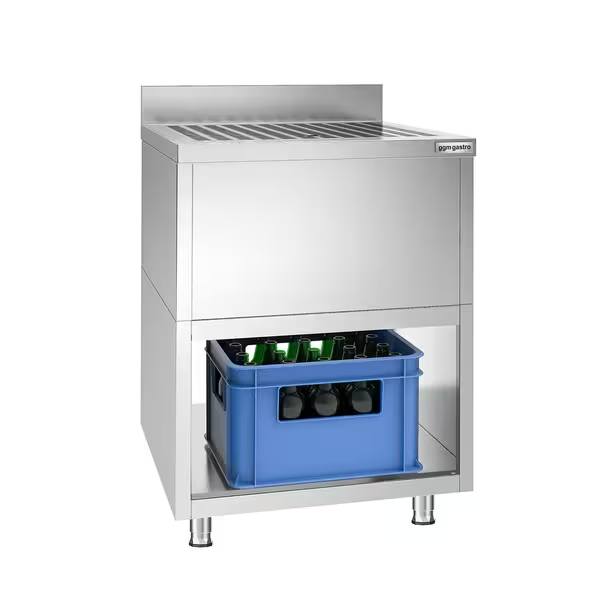
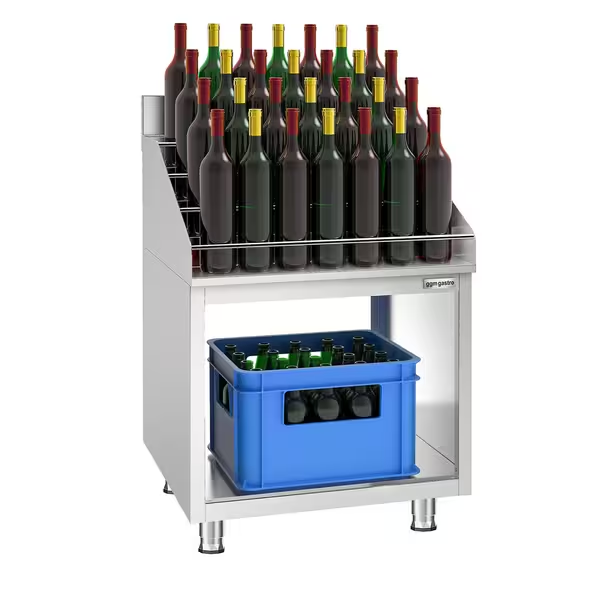
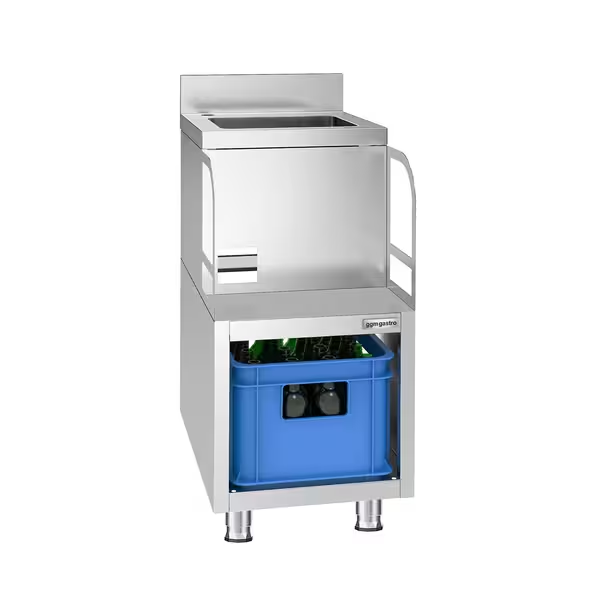
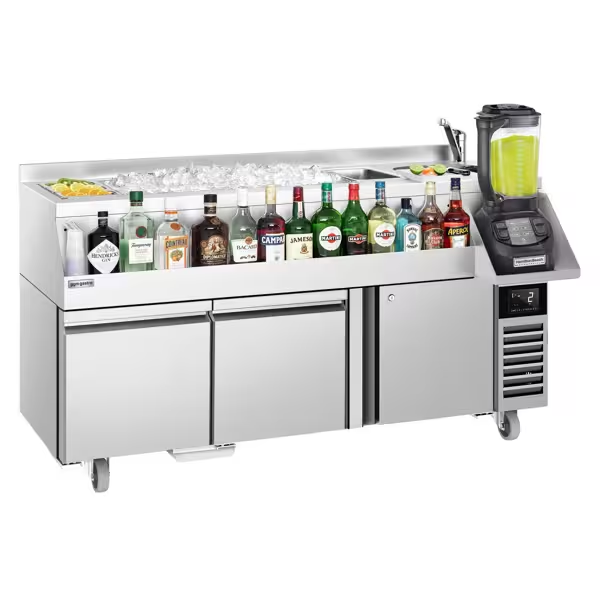
Cocktail Stations for Efficient Operations Behind the Bar
Professional cocktail stations are specially equipped workstations where bartenders prepare cocktails and mixed drinks. They combine a work surface, storage space, and—depending on the model—refrigeration or dishwashing areas into a single functional unit.
Short distances and a well-organized layout are particularly important in cocktail bars, restaurants, hotels, and clubs. Ice, spirits, garnishes, and equipment should be quickly accessible during preparation. A well-designed cocktail station supports consistent workflows and facilitates collaboration among multiple staff members.
This advantage is particularly evident during evening service: When multiple orders come in at the same time, clearly defined work areas can reduce unnecessary searching and interruptions. This creates better conditions for prompt beverage service.
Which cocktail station is right for your restaurant?
The right model depends on the available space, the beverage menu, and the expected volume of orders. GGM Gastro offers a variety of options to suit different business concepts.
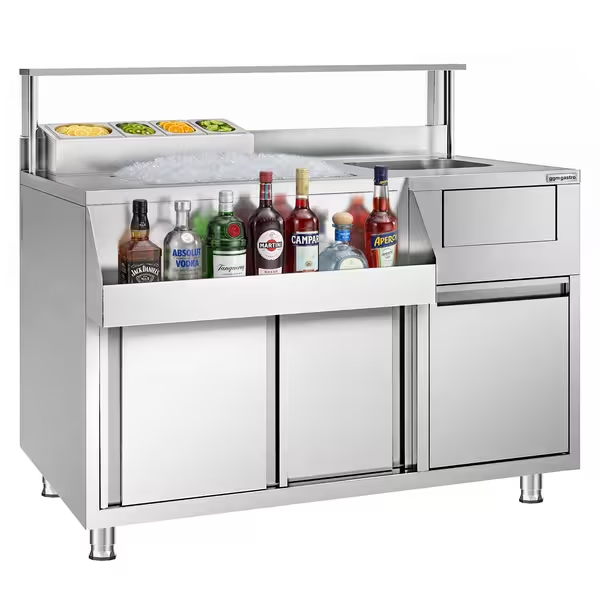
Compact cocktail stations are ideal for smaller bars and restaurants with limited counter space. Larger models offer additional shelves and storage space for frequently used ingredients and equipment.
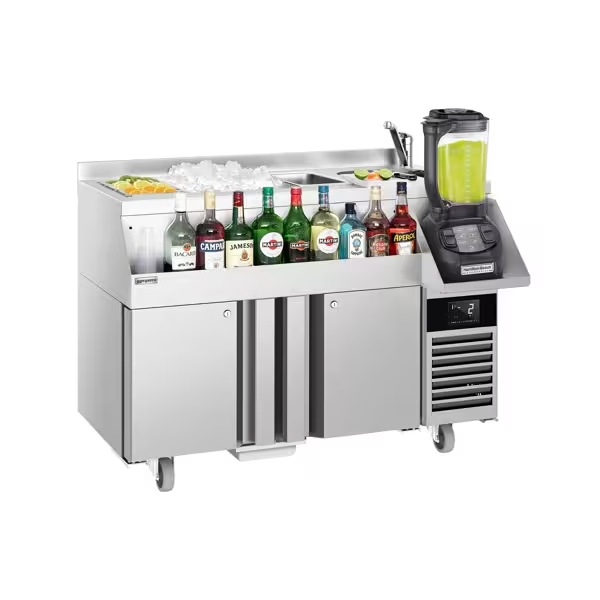
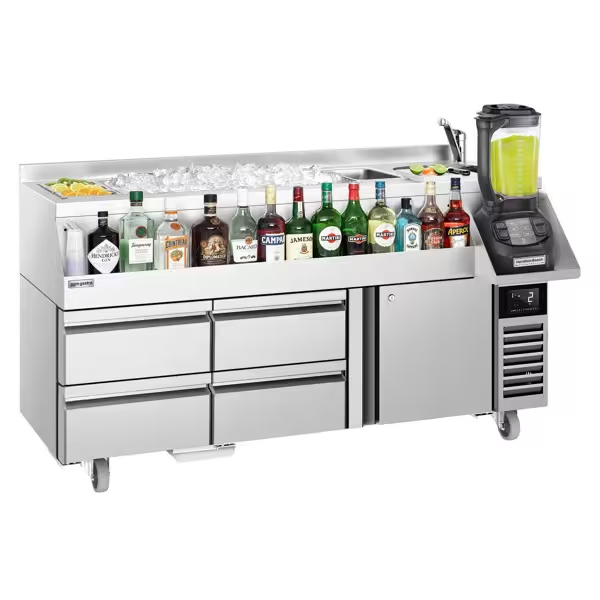
Refrigerated cocktail stations combine beverage preparation with direct refrigeration. Models with widths of, for example, 1200 or 1600 mm, various door and drawer combinations, and temperature ranges specific to each model allow for customization to meet your needs.
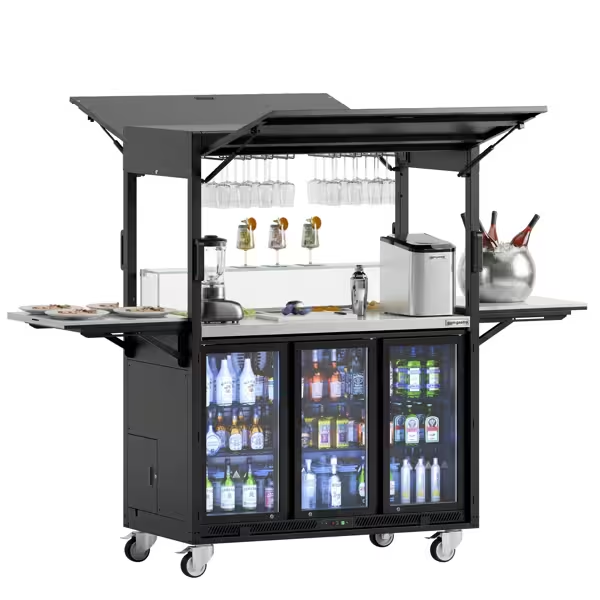
Mobile cocktail stations offer additional flexibility for events, catering, or changing locations. Modular solutions, on the other hand, allow for the individual configuration of separate work areas.
What matters most is not having the most extensive features possible, but rather a station that matches the actual workload.
Planning Bar Stations Properly: Dimensions, Refrigeration, and Ergonomics
When planning, cocktail stations should always be considered part of the overall bar workflow. The placement of ice bins, bottles, work surfaces, and serving areas affects how many steps are required to prepare a drink.
The width and depth must fit the available space. At the same time, staff need sufficient room to move around, especially when multiple bartenders are working simultaneously.
The interior layout is also important: Drawers make it easier to access smaller tools, while doors can provide storage space for larger supplies. For refrigerated models, the cooling capacity and temperature range should be tailored to the products being stored.
Quick Check Before Purchasing:
-
Space Requirements: Do the width, depth, and movement areas fit the bar counter?
-
Refrigeration needs: Are ingredients or beverages refrigerated right at the workstation?
-
Features: Are there enough drawers, doors, and shelving areas?
-
Workflow: Can ice, bottles, and garnishes be reached without unnecessary trips?
-
Connections: Are electricity, water, and drain connections available at the intended location, if necessary?
Stainless Steel, Hygiene, and Cleaning in Daily Bar Operations
Cocktail stations are regularly exposed to moisture, spilled drinks, ice water, and mechanical stress. Stainless steel is therefore a suitable material for professional bar workstations. Its smooth surfaces are easy to clean when properly maintained.
It’s also important to have easily accessible work areas, easy-to-clean transitions, and a logical separation of preparation, draining, and disposal. Especially after a busy evening, the station should be easy to clean without having to rearrange everything.
When selecting a model, it’s worth paying attention to the craftsmanship, accessible interior areas, and care instructions for each model. Regular cleaning with suitable products helps maintain hygiene and preserve the unit’s value over the long term.
Combining cocktail stations effectively and using them efficiently
A cocktail station works most efficiently when adjacent areas are coordinated. For larger beverage stocks, bar and beverage refrigerated counters can supplement the workstation refrigeration. Ice cube machines ensure a continuous supply of ice, while matching sink units make it easier to clean work equipment and glasses.
Complementary stainless steel furniture can provide additional storage and prep surfaces. It’s crucial to design a layout where employees don’t get in each other’s way and frequently used supplies remain close to the workstation.
Needs-based planning also pays off economically: Short distances, well-organized supplies, and easily accessible work equipment can reduce the time required per order. Durable, easy-to-clean equipment also supports reliable routines and predictable staff scheduling.