


Faucets for Restaurants and Commercial Kitchens
Faucets designed for professional use facilitate fast and hygienic operations at sinks, hand-washing stations, and counters. Options include mixer faucets, dish sprayers, sensor faucets, hand-held sprayers, and foot-operated models. Faucet Guide »




Faucets as a Functional Component of Professional Workplaces
Faucets regulate the water supply at commercial dishwashing, cleaning, and hand-washing stations. In restaurants, hotels, snack bars, bars, catering companies, and commercial kitchens, they are used daily for filling, pre-rinsing, cleaning, and handwashing.
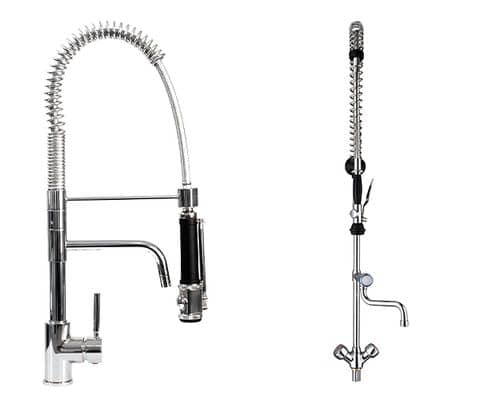
The right model depends on the specific workstation. A compact mixer faucet is suitable for smaller sinks or hand-washing stations. For high volumes of dishes, dish sprayers with flexible hoses provide a larger working radius. Sensor-activated faucets and foot-operated models allow for hands-free use and keep hands free for the actual work at hand.
For faucets to support workflow, the product type, installation method, and dimensions must all be compatible. A model that is too low restricts the ability to fill tall pots. A spout that is too short may not reach far enough into the sink. Models that are too large, on the other hand, may interfere with wall shelves, racks, or limited counter space.
Correctly classify mounting types, connections, and dimensions
The most important decision-making criteria include single-hole or two-hole installation, countertop or wall mounting, water connection, spout height, and reach. It is also important to determine whether a faucet is needed for cold water, hot and cold water, high pressure, or low pressure.
When replacing an existing fixture, existing drill holes and connections often dictate the design. For a new installation, however, the faucet can be specifically tailored to the sink’s width, depth, and intended use. A swiveling spout is particularly helpful when serving two sinks or when large containers are regularly moved. A high-reach dish spray makes it easier to pre-rinse baking sheets, pots, and GN containers.
Quick Checklist for Selection:
- Determine whether to use a single-hole, two-hole, or wall-mounted installation
- Check the water and pressure connections
- Measure the spout height and reach at the sink
- Select the appropriate swivel range or spray hose
- Decide on lever, sensor, or foot-operated controls
For a harmonious installation, the faucet, sink, and [sink cabinet] must be technically and spatially compatible.
Mixer Faucets, Dish Rinsers, and Sensor Faucets in Everyday Operations
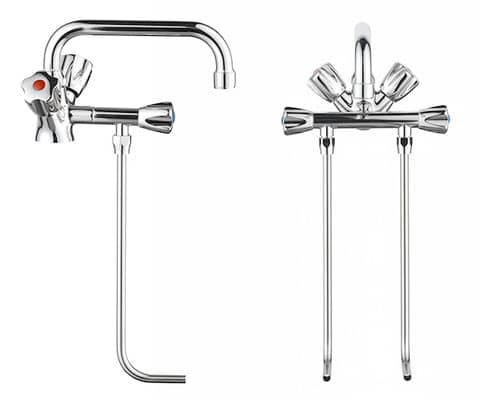
Mixing faucets are suitable for workstations where water needs to be precisely metered and regularly directed into containers or sinks. Single-handle faucets are quick and easy to operate. Two-handle models allow for separate control of hot and cold water and often fit existing two-hole installations.
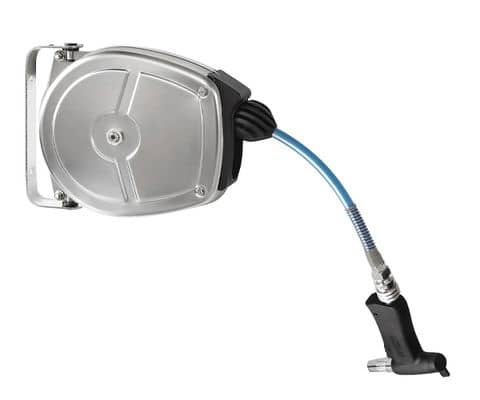
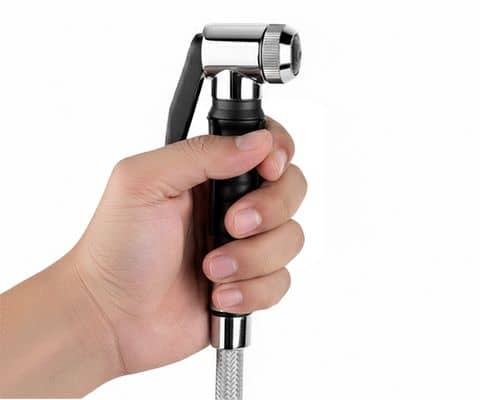
Dishwashing spray heads really shine when there’s a high volume of dishes to wash. The movable spray head reaches different areas of the sink and makes it easier to remove food scraps before running the dishwasher. During peak hours, an appropriate working radius reduces unnecessary turning, lifting, and moving of heavy containers. For larger cleaning areas, handheld sprayers or hose reels are also options.
Sensor faucets and foot-operated controls are particularly suitable for workstations where contact points need to be minimized. This applies especially to hand-washing stations or areas where employees frequently switch between handling raw food, cleaning, and other work steps. When combined with suitable handwashing sinks, this creates a clearly structured hygiene station.
Consider Load Capacity, Cleaning, and Maintenance
Faucets in the food service industry are exposed to moisture, frequent temperature changes, cleaning chemicals, and mechanical stress. Handles, hoses, showerheads, and swivel spouts are often moved several times an hour. Robust construction and easily accessible surfaces therefore make daily use easier.
When cleaning, joints, controls, and hose areas are particularly important. Smooth, easily accessible surfaces can be cleaned more quickly and reduce hard-to-reach areas where dirt can accumulate. For dishwashing spray heads, the hose should be routed without kinks and allow sufficient freedom of movement without constantly rubbing against edges.
The availability of gaskets, showerheads, and other wear parts also affects the product’s service life. An easily replaceable component can prevent the need to replace the entire faucet and minimize downtime.
Integrating Faucets Thoughtfully into Sink and Sanitary Areas
A faucet works best as an integrated part of the workspace. In dishwashing stations, the sink height, drainboard, dish spray, and the position of the dishwashers should all be coordinated. The pre-rinse station should be arranged so that dishes can be passed along without unnecessary changes in direction.
At hand-washing stations, short reach distances to soap dispensers, paper towels, and trash cans are important. At beer counters, on the other hand, a compact design, targeted water flow, and a well-organized work area are key. Appropriate plumbing accessories complement the installation without cluttering the actual workspace.
A properly selected faucet supports smooth workflows, facilitates cleaning, and reduces the burden on employees during frequently repeated tasks. What matters is not having as many functions as possible, but rather a design that matches the sink, the frequency of use, and the existing plumbing system.