


Grease Traps for the Food Service Industry
Grease traps separate fats and oils from commercial dishwashing water and help ensure proper wastewater flow. Choose compact stainless steel models for up to 50, 100, or 200 servings per day—optionally with an additional sludge trap. Grease Trap Guide »
Capacity
Product material
Width
Depth
Height
Price
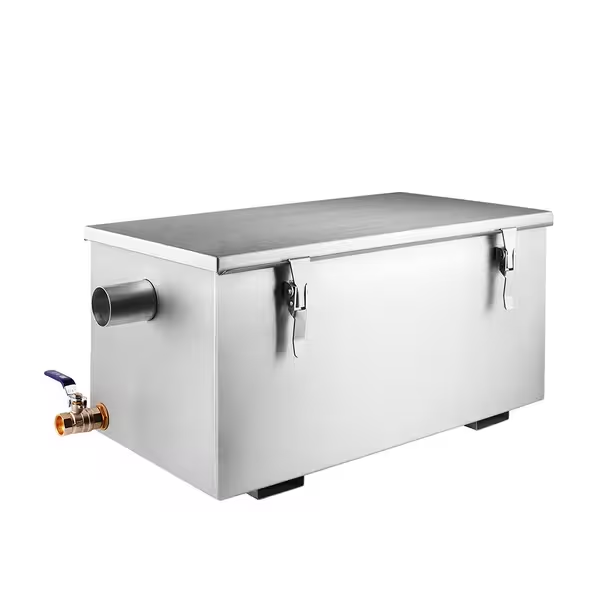
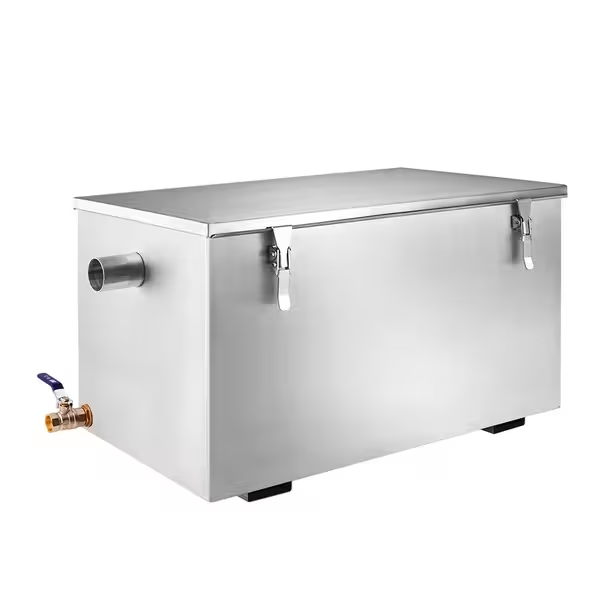
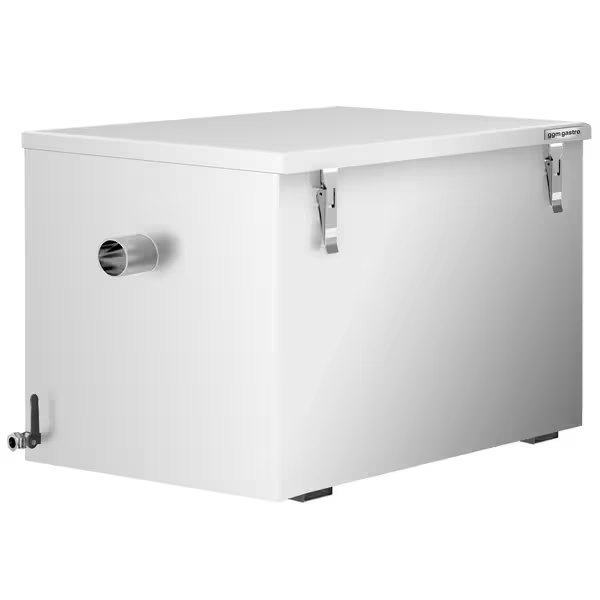
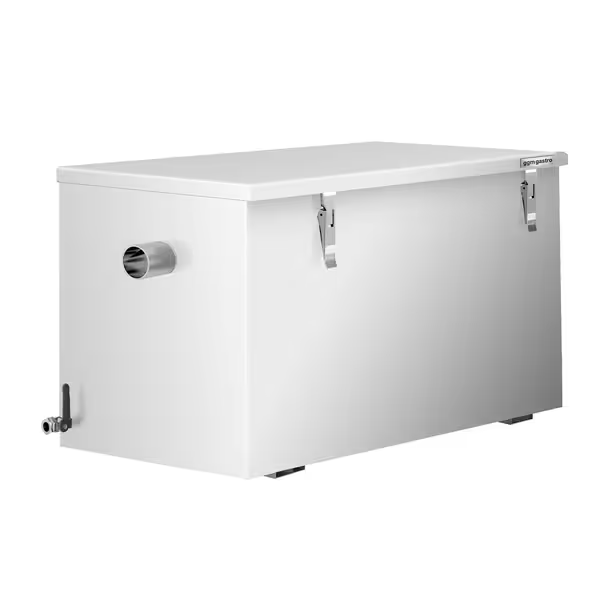
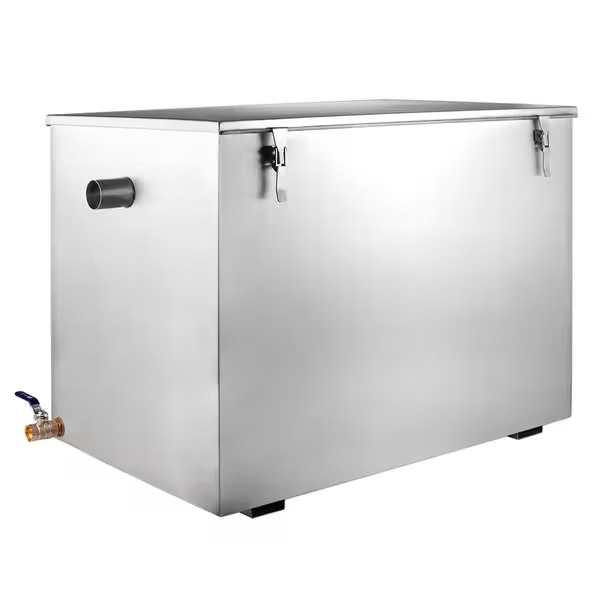
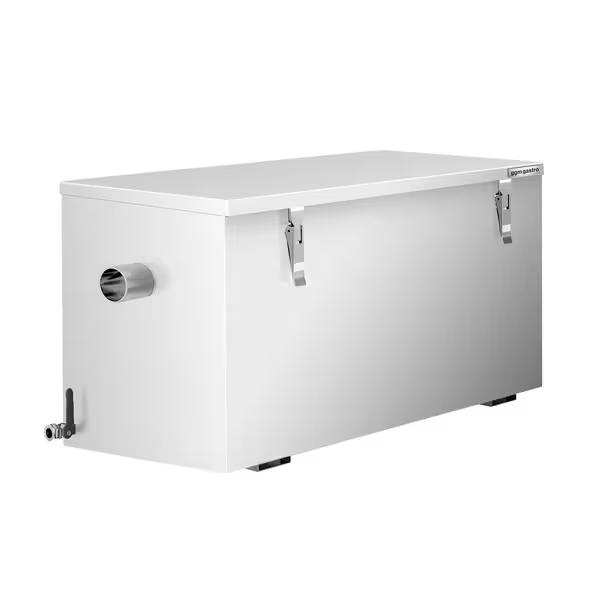
Choose a Grease Trap Based on the Size of Your Business
Grease traps separate fats, oils, and settleable solids from commercial wastewater before it enters the sewer system. They are particularly important in places where greasy residues are regularly produced during washing or cleaning, such as fast-food restaurants, restaurants, catering kitchens, or mobile dishwashing stations.
Five factors are particularly important when making a selection: daily volume of food served, tank capacity, design with or without a sludge trap, available floor space, and appropriate inlet and outlet connections. The available sizes—20, 44, or 132 liters—serve as a guide for up to 50, 100, or 200 servings per day. This classification makes comparison easier but does not replace an assessment of the actual wastewater volume and the on-site installation conditions.
Designing the Dishwashing Area: Short Distances and a Smooth Workflow
A grease trap should be integrated into the workflow in such a way that rinse water is directed to it without unnecessary detours and the tank is easily accessible for inspection, emptying, and cleaning. In a small snack bar kitchen, a compact setup is especially important: The separator must not block walkways or hinder the use of sink units or sink cabinets.
In busier establishments, accessibility during and after peak hours is important. If the lid needs to be opened or the drain valve operated, there should be sufficient space to move around. Therefore, it’s worth carefully checking the width, depth, and height—as well as the connection points—before making a purchase. The available models are designed for DN 50 inlet and outlet connections. The piping must be compatible and installed properly.
With or without a sludge trap: It depends on the composition of the wastewater
An additional sludge trap captures solid, settleable particles before they enter the actual grease trap. This design is recommended when food scraps or other solids are regularly present in the rinse water. If the waste consists primarily of liquid grease and oil residues and solids are already being reliably retained, a standard model may suffice.
The difference is relevant for everyday use: A suitable sludge trap can make the separation process clearer and help organize the cleaning routine. However, it does not replace proper preliminary separation of coarse food scraps or regular monitoring of the fill level.
Stainless steel, lid, and drain valve in daily use
Grease traps are installed in damp areas that require frequent cleaning and regularly come into contact with grease, hot dishwater, and cleaning agents. Models made of AISI 304 stainless steel with a 2 mm wall thickness are designed to withstand these conditions and can be cleaned hygienically when properly maintained.
An odor-tight-sealing lid helps keep the dishwashing area tidy. The integrated drain valve facilitates controlled emptying, provided the unit is freely accessible. It is important to regularly inspect surfaces, closures, and the interior, and not to leave residues in the system for longer than necessary. The specific cleaning and emptying intervals depend on usage, fill level, and operational guidelines.
Quick Check Before You Buy
-
Does the capacity for up to 50, 100, or 200 servings match your actual daily operations?
-
Is there enough floor space for containers, connections, and cleaning access?
-
Is an integrated sludge trap required due to solid food residues?
-
Are the DN 50 connections and piping layout at the installation site compatible?
-
Have local requirements and proper installation been clarified in advance?
Cost-effectiveness results from proper sizing
A grease trap that is too small can reach its capacity limit more quickly under heavy loads. A model that is significantly too large, on the other hand, ties up space and budget without automatically improving workflow. A cost-effective solution is one that matches the actual wastewater volume, is easy to operate, and can be cleaned without major interruptions.
During ongoing operations, proper sizing ensures stable workflow: the team has to improvise less, the dishwashing area stays better organized, and maintenance tasks can be scheduled more reliably. Availability is also important for replacement purchases, so that a necessary replacement isn’t unnecessarily delayed.
A harmonious combination in a professional dishwashing system
The grease trap can be considered part of the overall dishwashing and drainage system. Its location, working height, and piping routes must be coordinated with the existing dishwashing units. Faucets and floor drains are not part of the grease trap itself, but they do influence the planning of the wet area and should fit functionally into the layout.
A clear sequence is crucial: Collect dishwater, retain solids as early as possible, separate fats, and ensure easy access for cleaning. By evaluating volume, throughput, sludge trap, dimensions, DN-50 connections, and materials together, you can make a more sound purchasing decision and create a solution that fits real-world daily operations.