


Commercial Ranges, Hobs & Boiling Tops for Professional Kitchens
Professional ranges form the central cooking station in restaurants, hotels, takeaways, staff canteens and large-scale kitchens. Depending on your workflow, you can choose from gas, electric or induction models in different designs, outputs and cooking zone configurations. Find out which range suits your kitchen in our buying guide »
Gas stoves
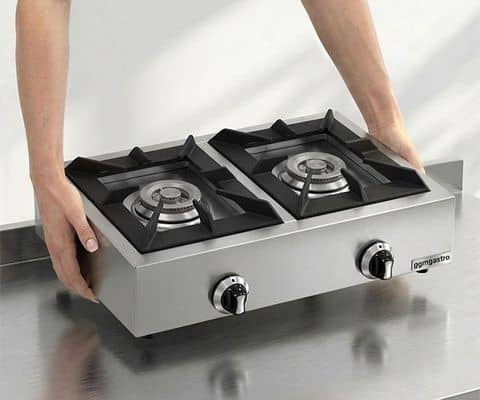
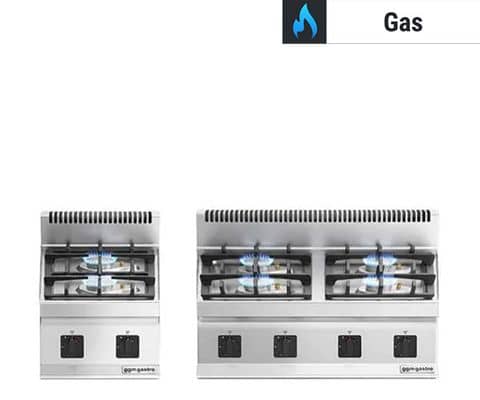
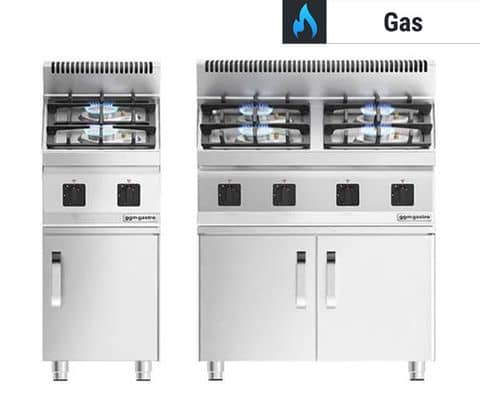


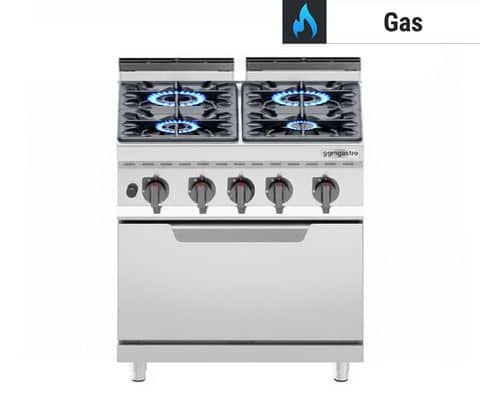

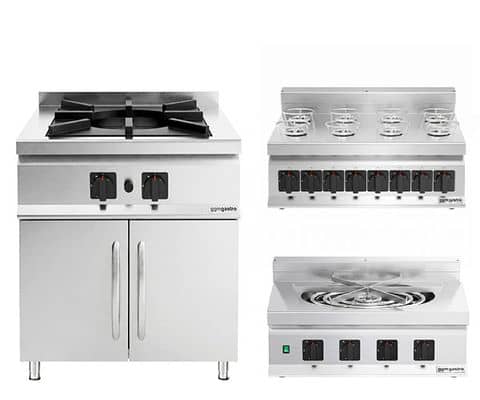
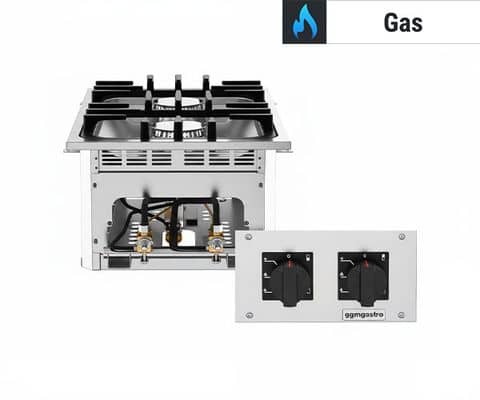

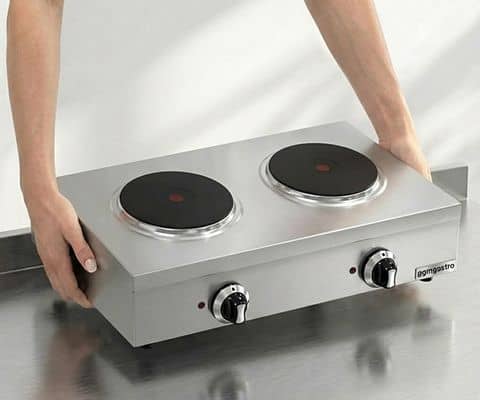
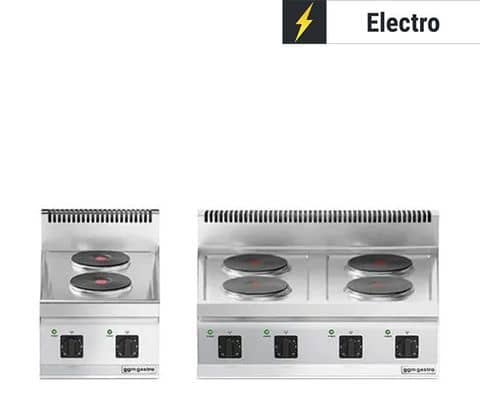


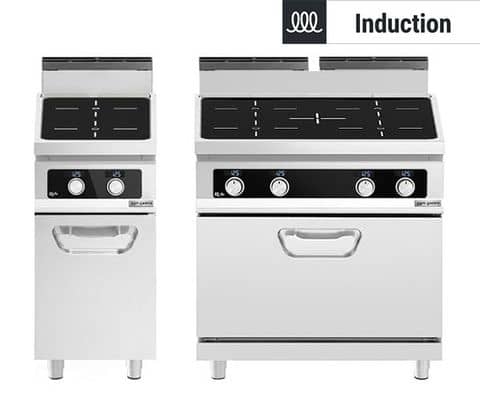

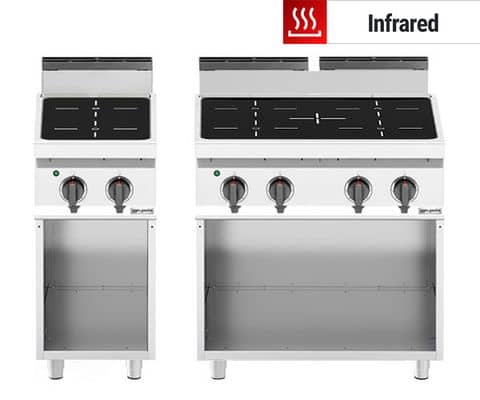
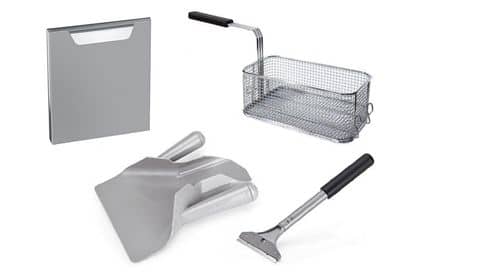
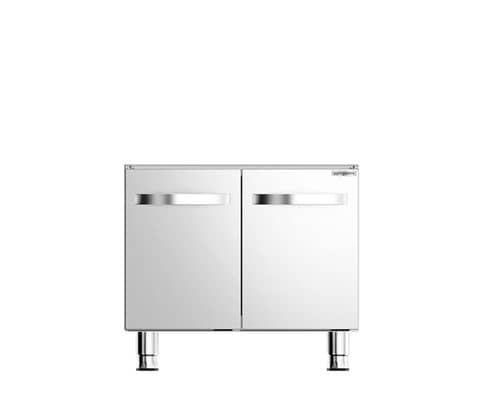
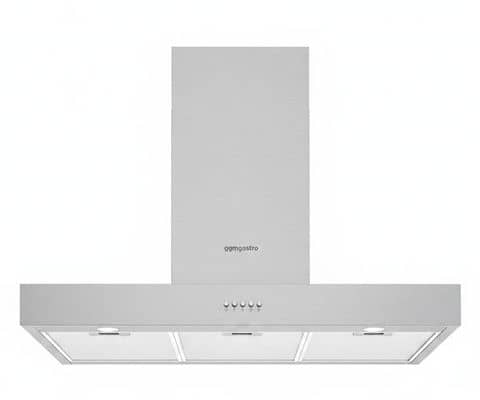
Ranges as the central cooking station in a professional kitchen
Commercial ranges are cooking appliances with several cooking zones, designed for daily food preparation in hospitality and contract catering. They are used wherever several pots and pans need to run at the same time, under control, even at high capacity.
In a restaurant kitchen, for example, sauces, side dishes and pan dishes run on the range in parallel. In a takeaway or staff canteen, on the other hand, a high repeat rate is often the focus. What matters, therefore, is not just the number of cooking zones, but how well output, design and energy type match the actual production workflow.
Our selection extends from compact countertop units to freestanding ranges with an open or enclosed base. Models with an integrated oven combine two functions in a limited space. Boiling-top modules without an oven, on the other hand, can be integrated specifically into existing cooklines.
Choosing gas, electric or induction
The energy type affects response speed, operation, cleaning and technical requirements. Gas ranges allow direct control of the flame and are particularly suited to ways of working where the heat needs to be adjusted quickly and visibly. A suitable gas connection and professional installation are required.
Electric ranges work with cast-iron hotplates or smooth cooking surfaces, depending on the model. They offer clear operating logic and are well suited to businesses without a gas connection. The power rating and existing electrical supply must match the unit’s output.
Induction hobs transfer heat directly to suitable cookware. As a result, they respond quickly to temperature changes and give off comparatively little heat to the surroundings. Besides the connection, induction-compatible pots and pans are also relevant when choosing.
Matching cooking zones, output and dimensions to your load profile
A range is not sized for average daily trade, but for the busiest period. If soups, sauces, side dishes and pan dishes are all on the go during lunch service, there must be enough usable cooking surface.
Key decision criteria include:
-
number and size of cooking zones or burners
-
total output and power rating
-
gas, 230 V or 400 V connection
-
unit width, depth and installation type
-
version with base or oven
The layout of the cooking zones also counts. Large pots need enough space so that several vessels can be handled safely at the same time. In a small kitchen, a compact countertop model can make more sense than an oversized freestanding range. In a busy production kitchen, by contrast, sufficient power reserve is more important than the smallest possible footprint.
Quick check for choosing a commercial range
-
Which dishes are on the range at the same time during peak periods?
-
What energy supply is available at the intended location?
-
How many cooking zones can actually be used with large pots?
-
Does the depth match existing equipment and worktops?
-
Is additional storage space or an integrated oven needed?
Cleaning, safety and durability in everyday kitchen use
Professional ranges are regularly exposed to heat, grease, moisture and intensive cleaning. Stainless steel surfaces make hygienic care easier and are designed for commercial use. Smooth transitions, accessible hobs and removable burner parts can reduce daily cleaning effort.
On gas models, flame failure devices and thermocouples are important features. Electric versions can be fitted with safety thermostats and power indicator lights. Regardless of the energy type, professional installation remains essential. Power ratings, ventilation, safety clearances and service access are therefore taken into account at the planning stage.
Integrating ranges sensibly into the cookline
A range works most cost-effectively when it is part of a clear production flow. Short routes to prep, cookware and ingredients take pressure off the team and avoid unnecessary movement during service. Directly adjacent stainless steel furniture provides landing space for hot pans, tools and prepped components.
In modular kitchens, matching the range to suitable modular cooking suites is important. Uniform depths and working heights support an ergonomic workstation and a closed line concept. Bases can be used for open access, enclosed storage or as an equipment stand. The combination always remains limited to the cooking station and is based on the menu, available space and staffing structure.
Making a cost-effective decision rather than just buying cheaply
The right range supports stable workflows, repeatable cooking processes and predictable output at peak times. Insufficient capacity quickly leads to backlogs, while oversized equipment ties up unnecessary space, electrical capacity and investment budget.
For a sound purchase decision, price and number of cooking zones are therefore not the only factors. Cleaning, ease of use, availability, spare parts supply and the future expandability of the cookline also affect operations. GGM Gastro offers ranges for different business sizes and usage profiles, as well as support in choosing a technically and commercially suitable solution.