


Induction & Infrared Cooking Equipment for Commercial Kitchens
Induction and infrared cooking equipment delivers fast, controlled heating in professional kitchens, takeaways, hotels, staff canteens and catering businesses. Depending on the design, it works as a mobile back-up station, a compact countertop unit or a permanently integrated solution for everyday use. Find out which model suits your kitchen in our buying guide »



Using induction and infrared equipment effectively in your kitchen
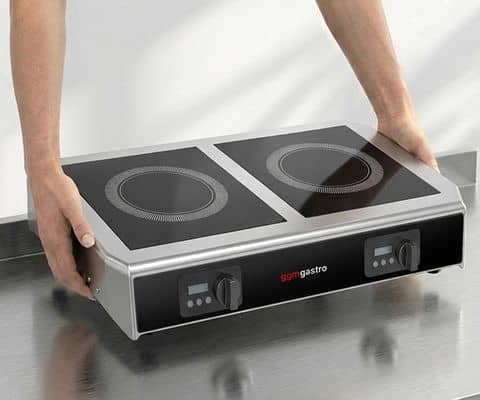
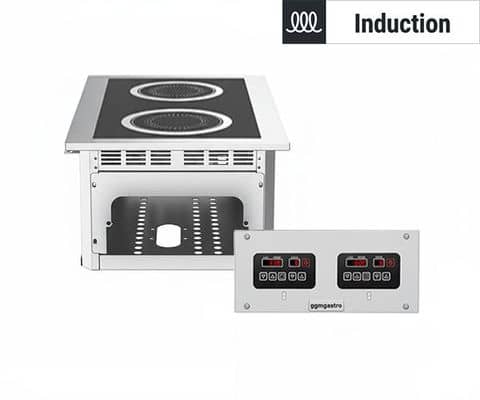
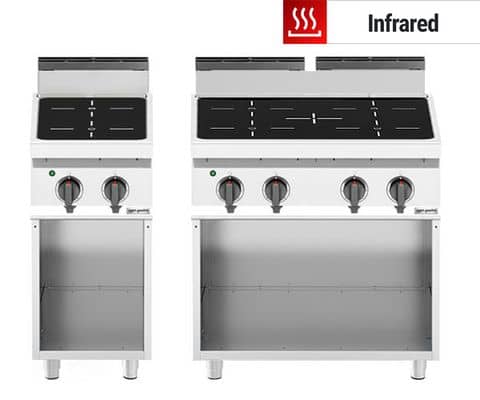
Induction and infrared appliances are professional cooking appliances that generate heat using different technologies. Induction units transfer energy directly into suitable cookware, whereas infrared units first heat the ceramic glass surface and can therefore be used with a wider range of pots and pans.
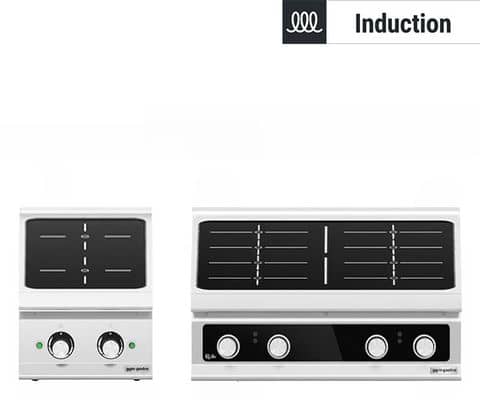
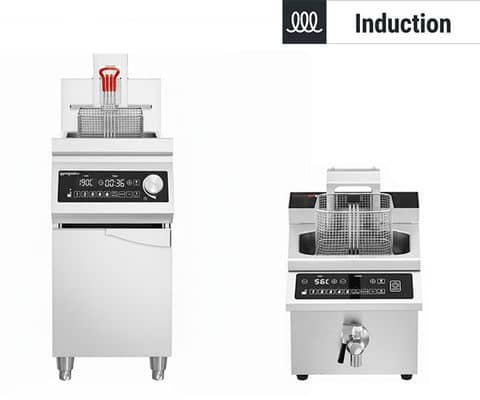
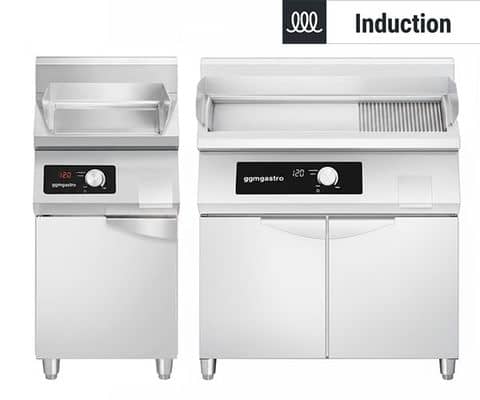
In commercial catering, both types are used wherever short heat-up times, controllable temperatures and a compact design are needed. That applies to restaurant kitchens as much as to takeaways, hotels, staff canteens, live cooking areas or mobile catering stations. Single units can supplement an existing cookline, while multi-zone freestanding or built-in units can permanently take over a central production area.
Induction or infrared – your operation decides
The right technology depends mainly on how you plan to use it. Induction responds quickly to changes in power and only releases energy when suitable cookware is on the cooking zone. That makes precise work easier when bringing to the boil, reducing, frying or holding.
Infrared hobs work via a heated ceramic glass surface. This often means existing pots and pans can still be used, provided they can withstand the temperatures involved. However, the cooking surface retains heat for longer and responds less directly than an induction zone.
The following criteria are particularly relevant when choosing:
-
required power and number of cooking zones
-
available 230 V or 400 V power supply
-
diameter and material of your cookware
-
mobile, countertop or permanently integrated use
-
available floor space and worktop space
Matching power and cooking zones to peak service
Sizing should not be based solely on average daily trade. What matters is how many pots or pans are in use at the same time during the busiest production phase. A compact 230 V countertop unit may be sufficient for sauces, side dishes or a flexible back-up station. For several parallel cooking processes, models with two or four cooking zones and a higher power rating are usually a better fit.
In a small à la carte kitchen, a portable induction hob can quickly add extra capacity when a station is at full stretch during the evening rush. In a production kitchen or contract catering operation, on the other hand, what counts is permanent integration with clearly defined workflows, sufficient landing space and matched power ratings.
Suitable stainless steel furniture provides a sturdy, hygienic base. For built-in units, cut-out dimensions, ventilation, safety clearances and electrical connections must already be considered at the planning stage.
Ceramic glass and stainless steel make daily cleaning easier
Smooth ceramic glass surfaces can be cleaned in just a few steps once they have cooled. Stainless steel housings make sense for professional use because they withstand moisture, grease and regular cleaning, and integrate well into existing kitchen lines.
Under heavy use, robust controls, cleanly finished joints and easily accessible surfaces are essential. Spills, grease splashes and residue should be removed before they become baked on. Aggressive or abrasive cleaners can damage ceramic glass and markings; soft cloths and purpose-made cleaning products are the right choice.
Quick check for choosing equipment
Before deciding, a short review of your operational requirements helps:
-
Will the unit be used daily, only at peak times or on the move?
-
How many cooking processes run at the same time?
-
Do you have induction-compatible cookware?
-
Are the available power and circuit protection at the installation site sufficient?
-
Do the width, depth and design fit your planned workflow?
This check prevents you from choosing a unit that is technically powerful but does not suit your space, your cookware or your actual production volume.
Planning it as part of a coherent cooking station
Induction and infrared appliances deliver the most value when the cooking surface, prep area and landing space are logically arranged. Short distances to nearby refrigeration, enough clear worktop space and a sturdy base make parallel working easier. For mobile concepts, suitable service and transport trolleys can support flexible use.
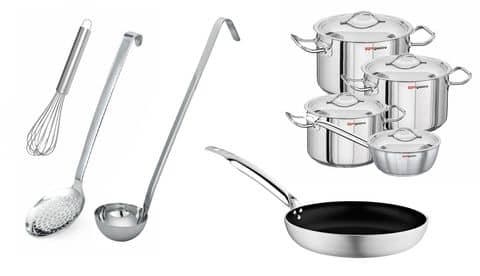
Pots and pans must also match the size of the cooking zones and the technology used. Induction requires a magnetic base. Bases that are too small or uneven can impair energy transfer and limit the usable power.
Investing wisely rather than just comparing output
The right unit can shorten heat-up and response times, create additional production capacity and simplify cleaning. What really matters, though, is integration into your actual kitchen workflow. Oversized units tie up space and electrical capacity, while models that are too small quickly become a bottleneck at peak times.
Induction and infrared equipment should therefore be chosen according to frequency of use, power, design, compatibility and cleaning effort. The result is a cooking solution that supports day-to-day work and fits your operation’s production logic in the long term.