


Commercial Griddles for Professional Kitchens
Griddles allow direct, controlled cooking of meat, fish, vegetables and other foods on a continuously heated plate. Gas and electric models are available in different designs, sizes and plate finishes. Find out which griddle suits your menu in our buying guide »
Electric griddles
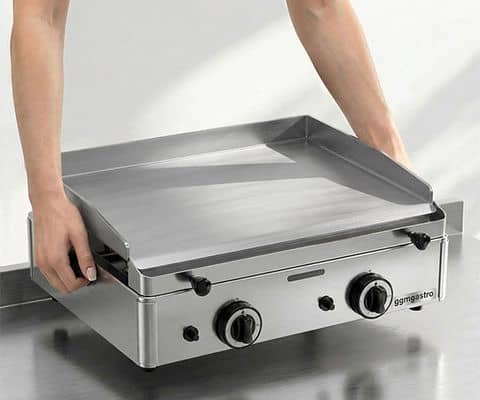

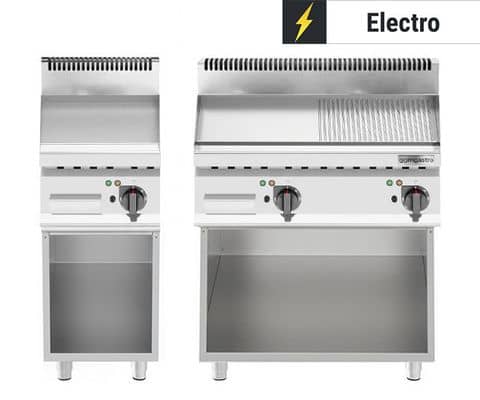
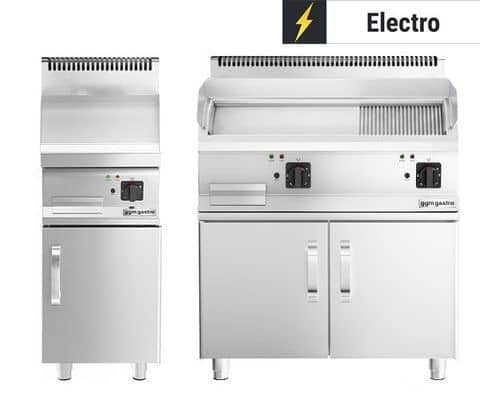
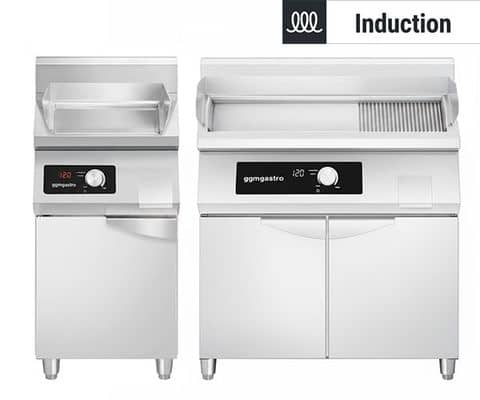

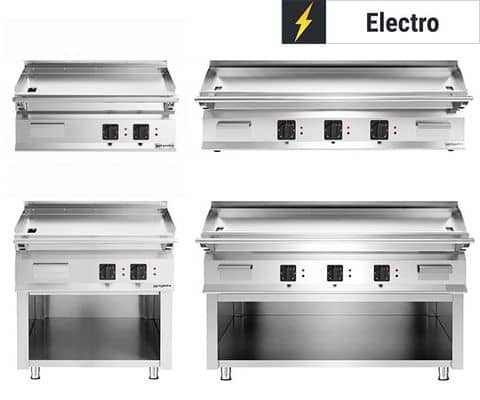
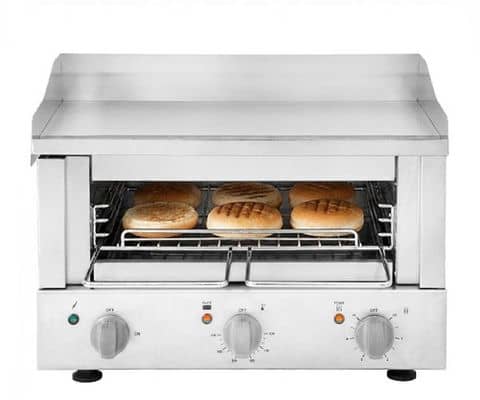
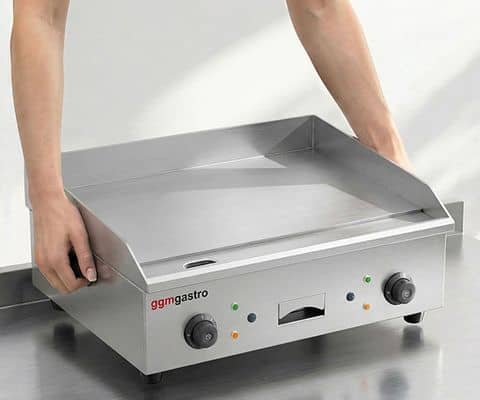
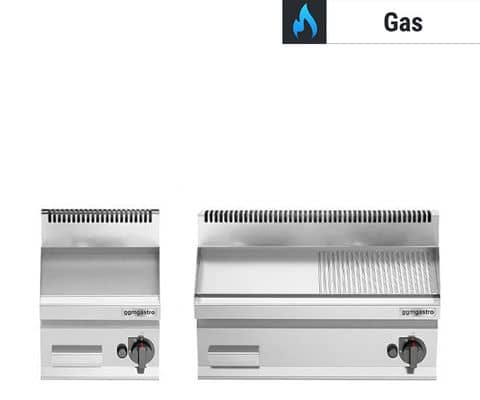
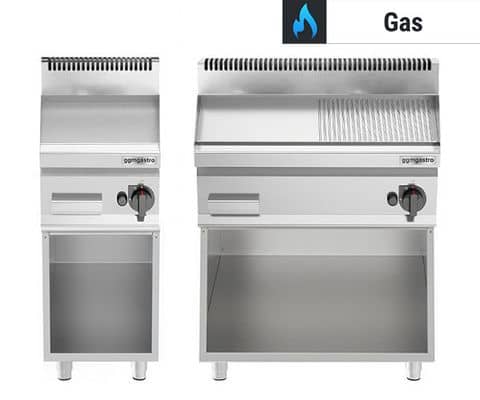
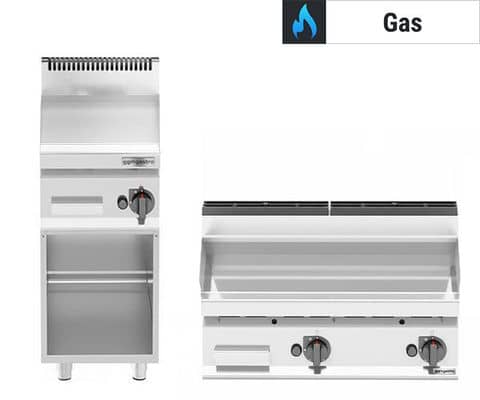
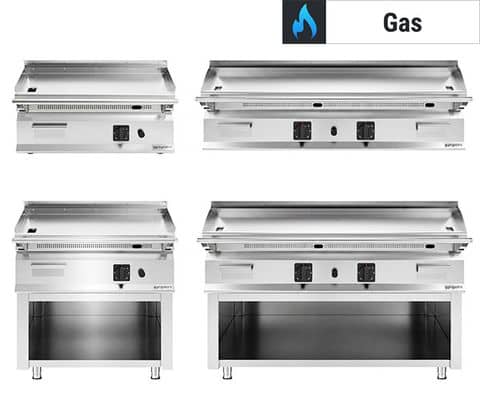
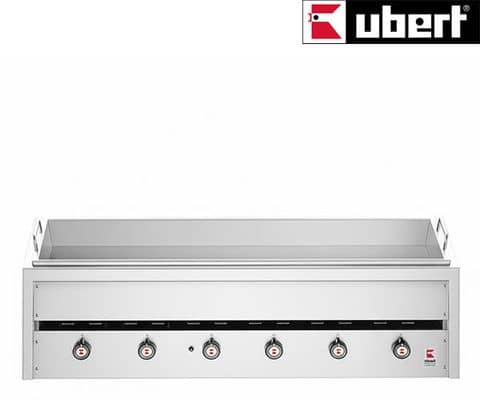
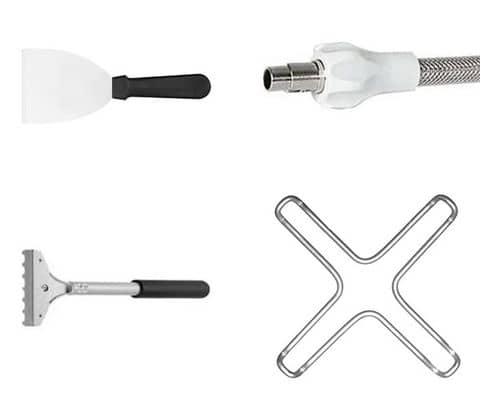
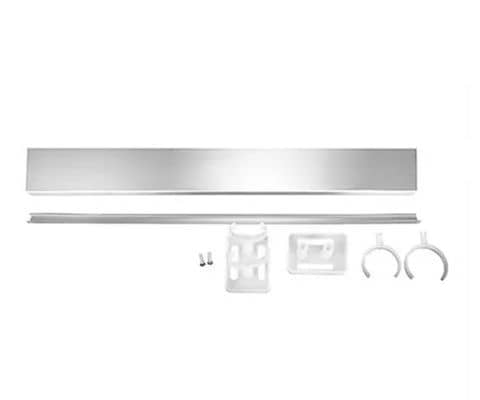
Griddles as a high-performance station in the professional kitchen
Griddles are commercial cooking appliances on which food is cooked directly on a smooth, ribbed or half-ribbed metal plate. They are used in restaurants, takeaways, hotels, staff canteens, food trucks and for live cooking wherever short routes and fast throughput are needed.
Meat, fish, vegetables, egg dishes or batter-based products can be cooked on one continuous surface without separate pans. This makes parallel workflows easier and gives the kitchen team a cooking area that is easy to keep an eye on. Unlike a contact grill, a griddle heats from one side only; open grill grates or lava rocks are not part of this equipment category.
Choosing gas or electric to suit your kitchen concept
The energy type depends on the existing infrastructure and the intended use. Electric griddles are available as compact 230 V versions and as more powerful models with a 400 V connection. Before choosing, consider not only the power rating but also the available circuits and the total load of the cooking station.
Gas griddles are particularly suitable where a gas supply is already in place. Depending on the model, they can run on natural gas or, after conversion, on propane. This can be relevant for fixed cooklines as well as mobile catering operations.
Countertop models use existing worktops or suitable stainless steel work tables. Freestanding units come with their own base and are often easier to integrate into modular cooking suites. Built-in units are worth considering when a continuous work or service line is planned. Whatever the design, adequate ventilation, safe clearances and easily accessible service points remain essential.
Matching plate surface and heat zones to your menu
A smooth plate offers plenty of contact with the food and is suitable for burger patties, fish, vegetables, fried eggs or pancakes. Ribbed plates create characteristic grill marks and let fat run off between the ribs. Half-ribbed versions combine both ways of working on one unit.
Width and the number of heat zones also affect the workflow. Compact units suit smaller volumes and limited kitchen space. Wider griddles make room for several portions; separately controlled heat zones allow different temperature ranges at the same time. This means delicate vegetables and meat that needs hard searing can be cooked side by side during a rush.
Hard-chrome plated surfaces can support even heat transfer and an easy-care finish. What remains decisive is that plate type, usable cooking area and output match the actual production volume.
Quick check for choosing a commercial griddle
-
clarify connection type and available power
-
size the cooking area to your menu and portion numbers
-
choose smooth, ribbed or half-ribbed plates to suit the food
-
match the number of heat zones to parallel cooking
-
check grease drainage, collection drawer and cleaning access
External width alone does not fully reflect how much production area is available. Comparing the usable cooking surface helps to estimate realistic throughput.
Cleaning and durability in daily operation
Grease, high temperatures and frequent cleaning cycles put strain on the unit and the plate. A stainless steel body makes it easier to keep the work area clean. Side splash guards, a grease channel and a removable grease drawer limit soiling and shorten routes during cleaning between services.
Residues are best removed promptly, using tools approved for the specific surface. Particularly with coated or hard-chrome plated surfaces, unsuitable scrapers and aggressive cleaning agents can damage the finish. Cleaning agents and detergents as well as suitable turners and palette knives should therefore be part of planning the station.
Integrating griddles cost-effectively into your workflow
A correctly sized griddle brings several preparation steps together at one station. This can reduce pan changes, shorten routes and keep things clearer during very busy service periods. Oversized units, on the other hand, take up unnecessary space and electrical capacity; plates that are too small limit throughput.
Short routes to chilled prep and an easily accessible landing area make for a coherent workstation. Ventilation, grease management and sufficient space in front of the unit are just as important. The right solution is therefore defined by menu, volumes, energy supply, available space and cleaning routine – not by maximum output alone.