


Commercial Bain-Maries for Professional Catering
Bain-maries keep sauces, soups, side dishes and other food evenly at serving temperature using a heated water bath. Different designs and GN configurations let you equip your kitchen, buffet and food service counter to match your needs. Find out which bain-marie suits your service in our buying guide »

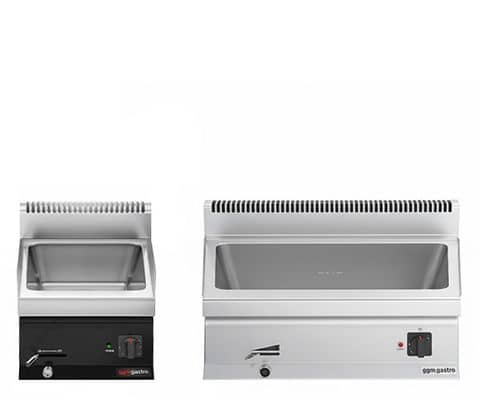
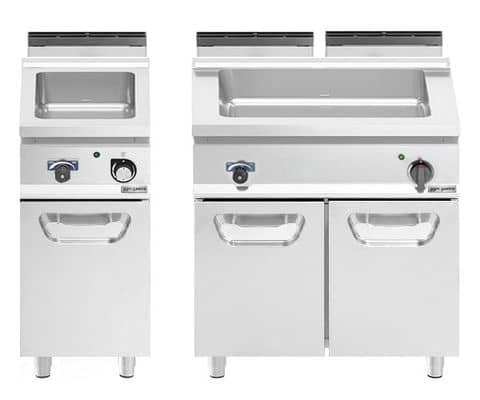


Product type
Building depth
Width
Operation type
Design/Equipment
Capacity
Maximum Temperatur
Power
Power Connection
Price
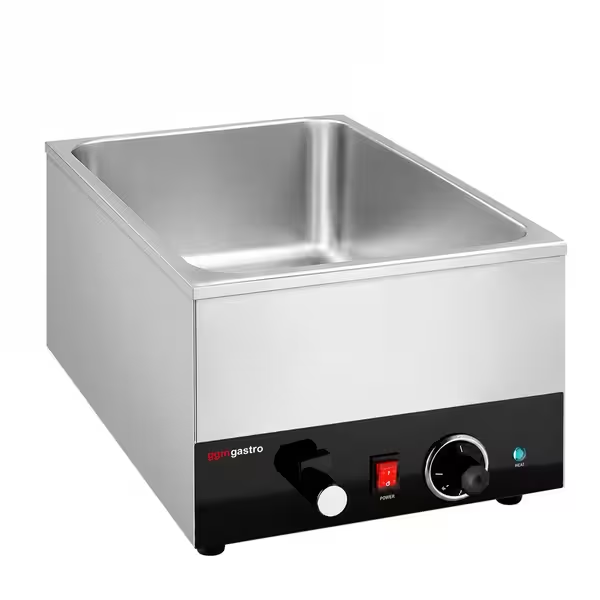
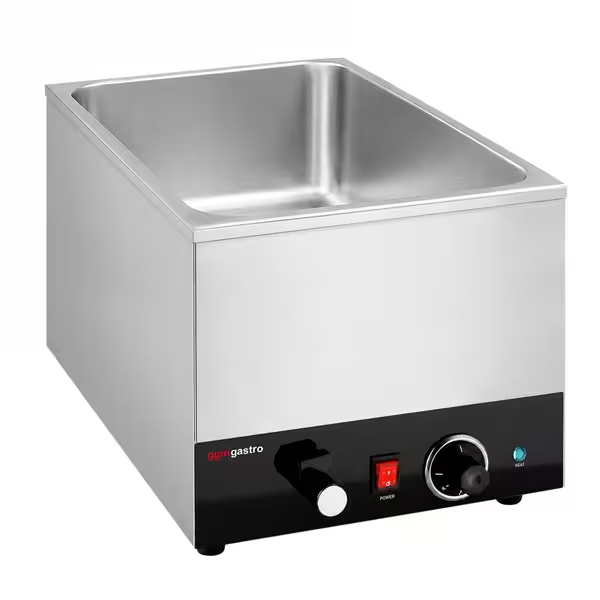
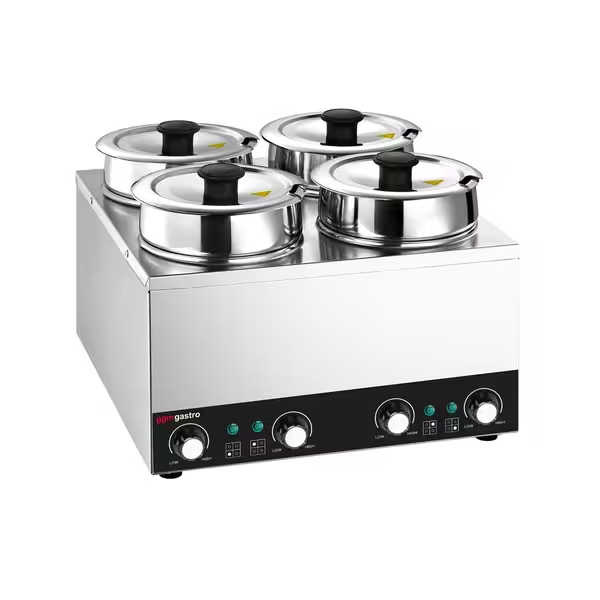
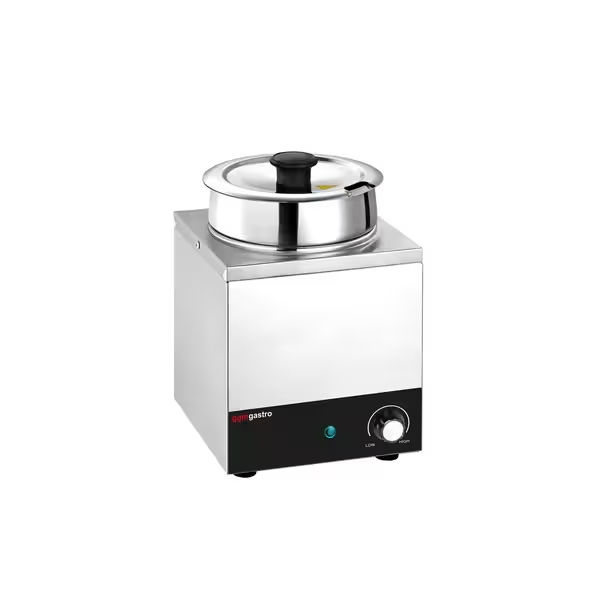
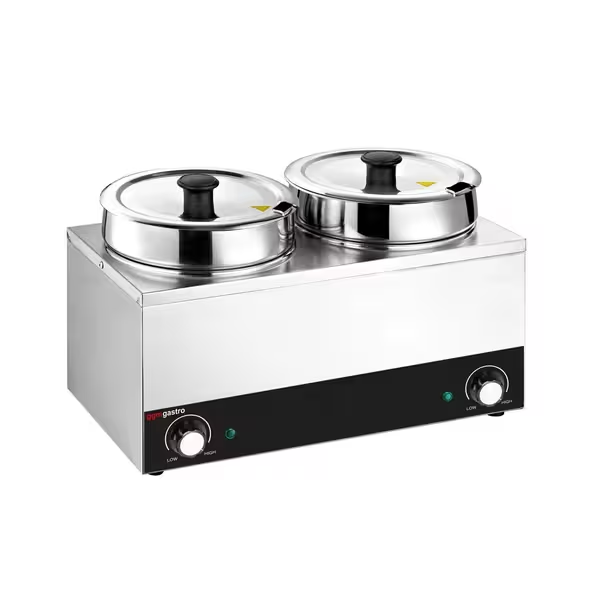
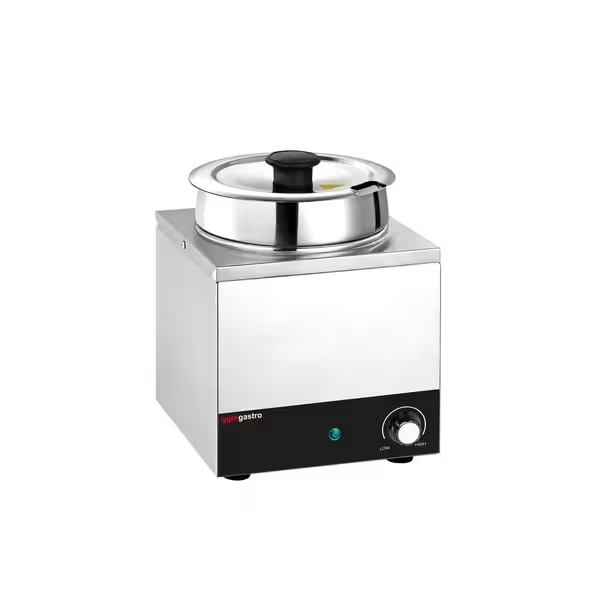
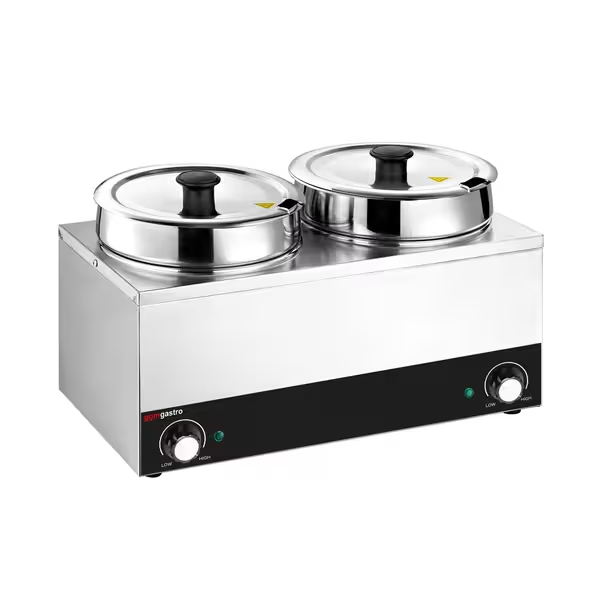
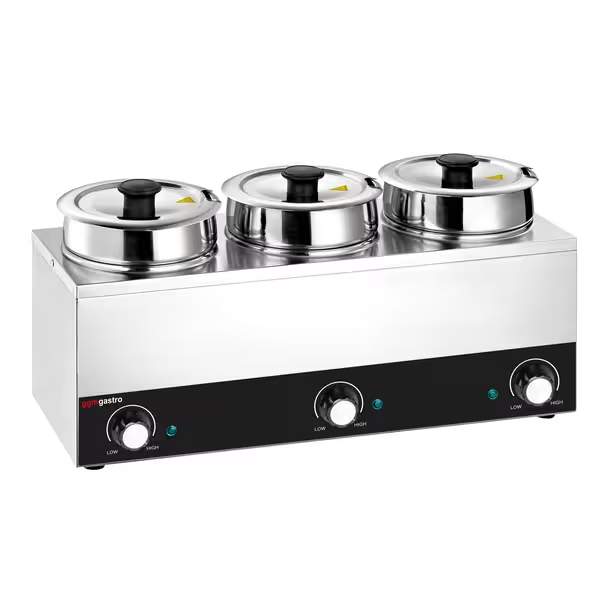
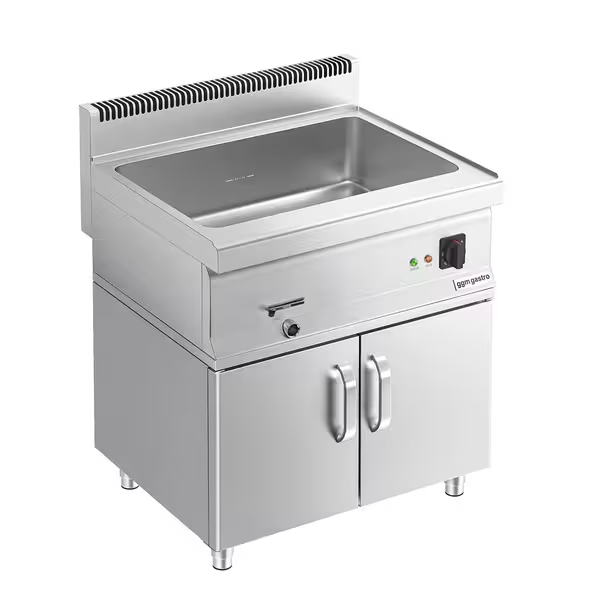
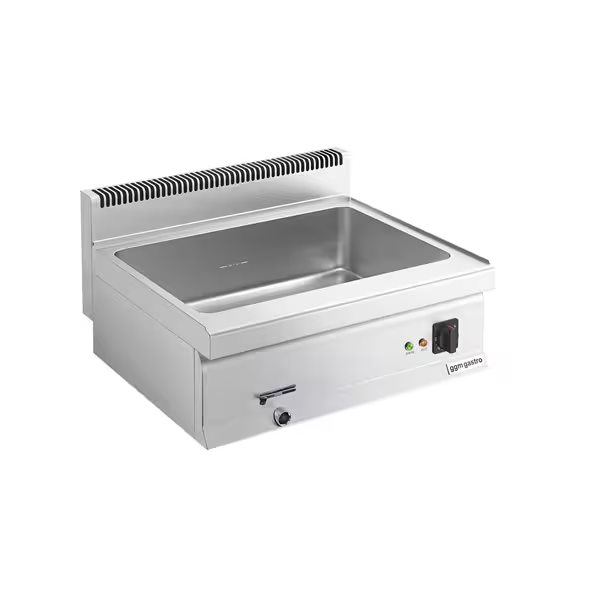
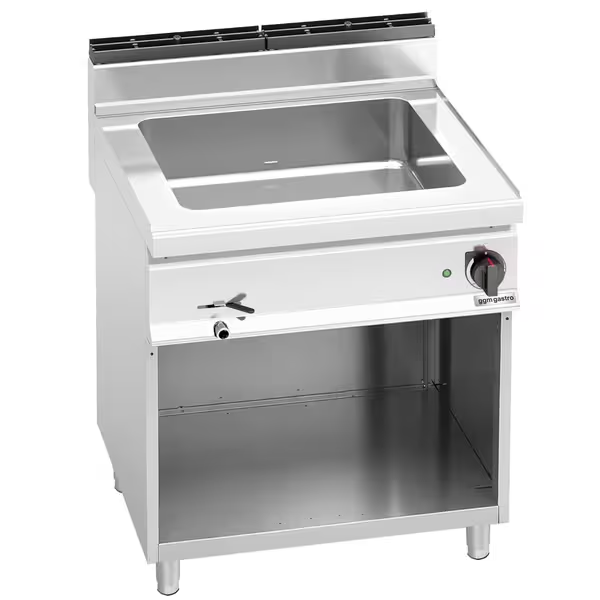
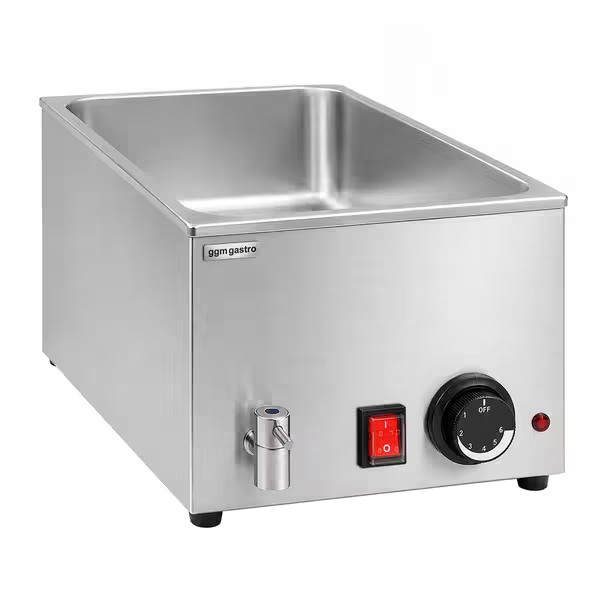
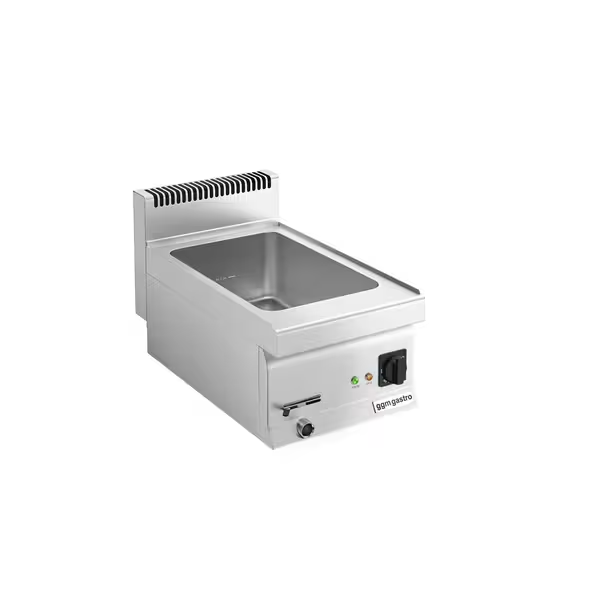
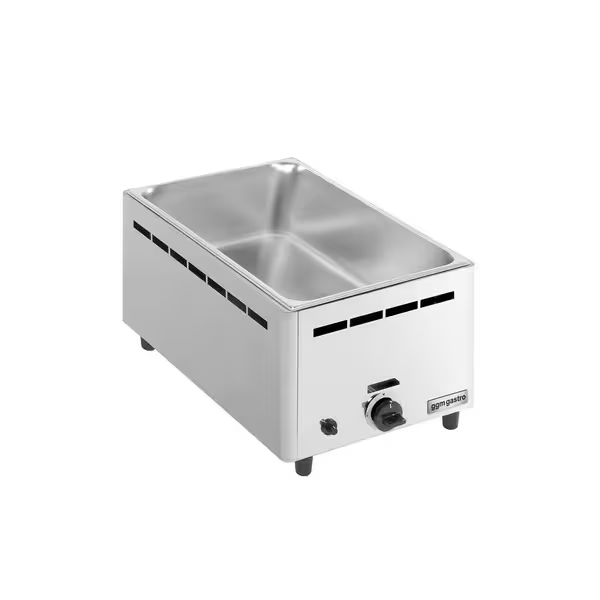
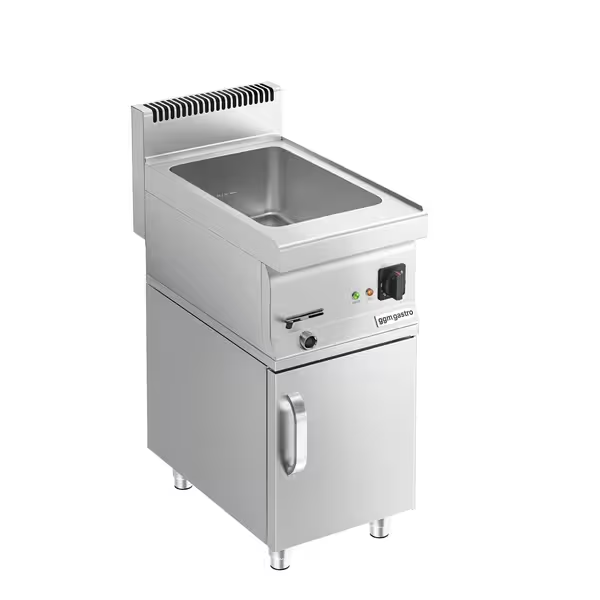

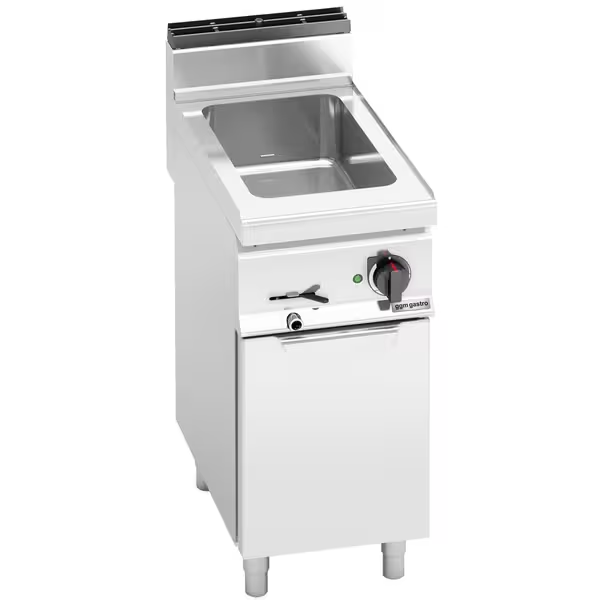

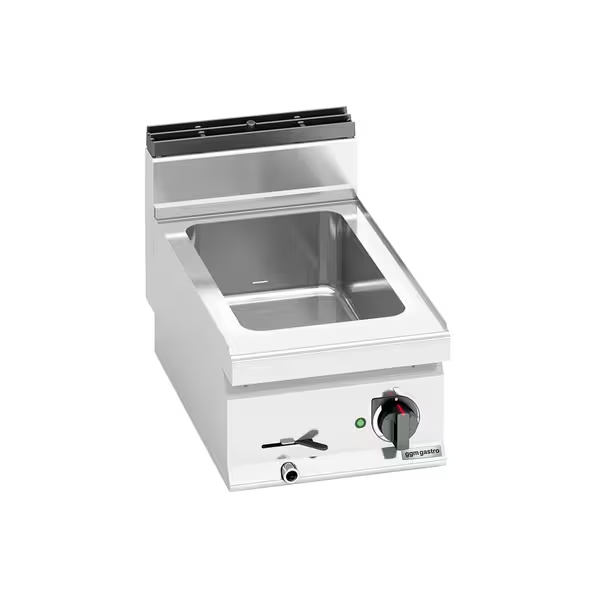
Bain-maries as a reliable hot-holding zone in your business
Bain-maries are professional hot-holding units in which food is kept at an even temperature over a heated water bath. They are used wherever sauces, soups, side dishes or prepared components need to stay ready to serve for a defined period – for example in restaurants, hotels, catering, in staff canteens or at buffet and service stations.
In day-to-day operation, bain-maries help keep service calm. Several dishes can be held separately without having to reheat every portion. This makes coordination at the pass easier, shortens routes and creates a better overview, especially at peak times. In a small kitchen, a compact countertop unit can hold individual sauces or side dishes. In a production kitchen or contract catering operation, freestanding and built-in units offer more capacity for parallel food lines.
Choosing the right design, GN capacity and connection
Selection starts with the question of how many components need to be ready at the same time and how the unit will be integrated into the worktop. Countertop units stay flexible and need little space. Freestanding units create a fixed hot-holding station, while drop-in and top-mounted models can be integrated into existing cooklines or service counters. Mobile bain-maries and soup kettles are suited to changing locations, smaller quantities or temporary stations.
The GN configuration is also decisive. A single large well for GN 1/1 offers plenty of volume, while several smaller inserts such as GN 1/2, GN 1/3, GN 1/4 or GN 1/9 allow a wider variety of dishes. Depending on the model, container depths of 150 or 200 mm are possible. The right configuration therefore depends not just on litres, but on portion numbers, refill frequency and the menu.
The type of connection also needs to be planned early. Compact electric units often run on 230 V, while larger systems may require 400 V or a gas connection. Before buying, footprint, power rating, unit depth and existing infrastructure must all fit together. For modular cooking suites, depths of 600 and 700 mm are particularly relevant.
H2: Quick check for choosing a bain-marie
-
choose the design to suit the location: mobile, countertop, freestanding, top-mounted or built-in
-
define the GN configuration by variety of dishes and service volume
-
match 230 V, 400 V or gas to the existing infrastructure
-
check unit depth, external dimensions and routes before integration
-
factor drain tap, temperature control and container depth into cleaning
Stainless steel, drain tap and cleaning in daily service
Bain-maries are regularly exposed to moisture, heat, food residue and cleaning chemicals. Stainless steel supports hygienic working because smooth surfaces are robust and easy to access. Build quality is still decisive: wells, edges, controls and water drainage must be easy to clean without awkward intermediate steps.
A drain tap makes controlled emptying after service easier. This reduces the need to lift full water wells and simplifies the cleaning routine. A thermostat, power indicator light and, where fitted, dry-boil protection help keep operation under control. Suitable GN containers ensure that volume and layout match the unit and that containers sit securely.
Good integration stabilises service and staffing
A correctly sized bain-marie does not work in isolation, but as part of the production chain. It connects prep, hot holding and service. If the unit is too far from the pass, unnecessary routes are created. If capacity is too tight, staff end up refilling in a rush at peak times. If it is much too large, space and energy are tied up without the business benefiting.
It makes sense to combine it with easily accessible stainless steel furniture, a clear chilling and refill routine and efficient warewashing. For mobile food lines or larger quantities, coordination with heated banqueting trolleys may be relevant. This keeps hot holding part of a coherent workflow instead of creating a new bottleneck.
Using bain-maries cost-effectively in the long term
The commercial benefit comes from everyday practicality. A unit that matches the menu, peak demand and available staff supports consistent workflows, reduces unplanned extra production and makes service easier. Durable materials, accessible cleaning and a suitable power rating reduce friction in daily operation.
For the purchase decision, price and size are therefore not the only factors. What matters is whether design, GN capacity, connection and cleaning fit real-world use. GGM Gastro offers bain-maries ranging from compact soup kettles to fixed built-in solutions, along with expert advice, fast availability, delivery and spare parts supply for commercial businesses.