


Seasonal Supplies for the Food Service Industry & Events
Summer patios, Carnival, Oktoberfest, and Christmas markets all present very different challenges for restaurants and bars. Professional seasonal supplies help expand existing operations in a targeted way to accommodate limited-time offers, events, and peaks in demand. The right equipment depends primarily on the occasion, product range, expected foot traffic, duration of use, and whether the equipment can be put to good use outside of the respective season. Seasonal Supplies Guide »




Planning for Seasonal Dining: From the Event to the Additional Demand
Professional seasonal supplies for the foodservice industry include appliances, equipment, and accessories that allow businesses to tailor their offerings to specific seasons, holidays, and events. The goal is not to completely overhaul existing operations for every occasion. Cost-effective seasonal planning makes the most of existing infrastructure and adds only where the menu, production volume, or sales format actually change.
For example, a restaurant might place greater emphasis on its menu, wine, and desserts for Valentine’s Day. In the summer, there are additional requirements for beverage refrigeration, ice, or outdoor dining. A Christmas market stall, on the other hand, requires compact equipment for hot beverages and snacks, while on New Year’s Eve, the focus may shift to a buffet, a bar, and high beverage turnover.
Each occasion thus changes not only the product lineup but, in some cases, the entire workflow.
Choose seasonal items based on demand rather than the calendar
Not every seasonal occasion is equally relevant to every business. A café may be particularly affected by summer business, while an event venue may see its biggest spikes on New Year’s Eve or during the Christmas season. A beer garden requires different seasonal additions than a hotel restaurant or a mobile sales stand.
So the first question isn’t: What seasonal items are available?
Rather: What additional products or guest numbers will this event generate for our business? Only then can we determine the actual need.
If you’re simply expanding an existing dessert menu, the necessary equipment can remain manageable. If, on the other hand, you’re setting up an additional outdoor sales area with its own food and beverage offerings, you’ll need to plan for refrigeration, production, service, and checkout as a new, small-scale operational station.
Quick Check for the Right Seasonal Needs
Here are five points to help narrow down seasonal investments:
- Occasion: Which season or event actually changes the existing offerings?
- Additional offerings: Which foods or beverages are sold only during this period, or in greater quantities?
- Peak Volume: How many additional orders need to be processed during the busiest times?
- Location: Will existing dining areas be used, or will an additional patio, bar, buffet, or sales station be set up?
- Continued Use: Can the purchased equipment also be used for other seasons, events, or regular operations?
This approach ensures that seasonal needs are planned not as a short-term shopping list, but as a targeted expansion of the existing operational system.
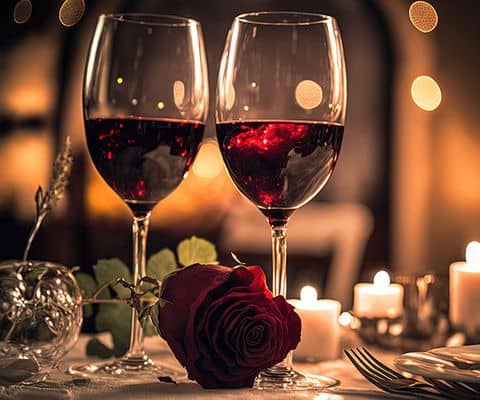
Valentine's Day: Planning the Menu, Beverages, and Presentation Together
On Valentine's Day, restaurants, cafes, and delivery services may shift their focus more toward special menus, desserts, wine, and carefully curated presentations.
Wine chillers, glasses, tableware, table linens, and dessert presentation techniques may see increased use as a result. Chocolate also plays a special role in appropriate offerings.
Chocolate fountains can be used, for example, for dessert or presentation concepts, while waffle and praline equipment enables additional sweet offerings.
What matters most here is not so much the number of new pieces of equipment as a clearly defined seasonal menu.
An additional menu item, dessert, or beverage package is easier to integrate into existing operations than an extensive special menu that requires numerous new ingredients and production steps.
Take-out can also be considered. If a Valentine’s Day menu is offered for take-out, packaging and transportation must be taken into account when putting together the menu.
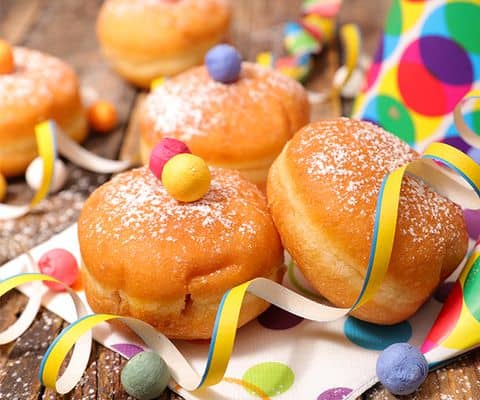
Carnival: Managing High Foot Traffic with Mobile Stations
Carnival poses a unique challenge, particularly for businesses with outdoor sales, events, or a strong beverage and snack business.
A large number of orders can come in quickly, while available workspace is limited.
As a result, beverage refrigeration, dispensing, ice, and sturdy glasses or suitable drinking vessels become increasingly important. For food, production concepts with few, repeatable steps are particularly suitable.
Mobile tabletop units, waffle and crêpe machines, and sausage or snack stations can serve as additional sales stations for this purpose.
Beverage refrigerators should be positioned where the actual serving takes place. Large stock reserves can be stored separately.
Especially during such short, high-volume periods, it is crucial to do more than just keep enough inventory on hand. Ordering, production, payment, and dispensing must all handle the same throughput.
Easter: Flexibly Expand Your Brunch, Set Menu, and Buffet
Easter can combine several different types of culinary offerings.
Breakfast and brunch may be paired with classic lunch or dinner menus. At the same time, baked goods, desserts, or seasonal specialties can require additional preparation steps.
Combi-steamers, ranges, and griddles can be used for hot food preparation, while egg cookers, tartlet pans, and other baking equipment complement special offerings.
For a larger Easter brunch, buffet setups also become more important.
Heat bridges and warming plates can be used where suitable hot items need to be kept ready between preparation and service.
Here, too, the entire quantity should not be placed on the buffet all at once. Organized restocking in smaller batches keeps the serving area more organized and reduces clutter on the display surface.
Summer Must-Haves: Cooling Becomes a Key Capacity Area
High temperatures and outdoor dining can significantly change the demands placed on a business.
Ice, cold drinks, slushies, freshly squeezed juices, and grilled items are becoming increasingly important in such concepts. At the same time, the need for refrigerated storage is growing.
Ice makers, for example, are particularly useful in settings where cocktails, long drinks, and other cold beverages are regularly served in large quantities.
Capacity should be based on the hottest summer day or typical peak periods, rather than solely on the annual average. The same applies to beverage refrigerators, bottle coolers, or mobile cooling units.
Especially when there’s an additional outdoor patio, the distance to the existing indoor refrigeration can quickly become a bottleneck. Refrigeration located near the production or sales area then reduces walking distances and keeps the outdoor area more self-sufficient.
Plan Ice Cream and Cold Desserts as a Standalone Summer Offering
Summer business can also open up new product categories. Ice cream trucks, ice cream counters, soft-serve machines, or other ice cream equipment enable additional sales models depending on the business. However, such offerings require more than just the machine itself.
Cups, spoons, toppings, workspace, and chilled or frozen inventory must also be factored in. The expected foot traffic is particularly important. A complementary dessert menu in a restaurant poses different challenges than a heavily frequented standalone ice cream stand. Seasonal equipment should therefore always be evaluated against realistic sales volume.
Compactly Organizing Summer Barbecue and Outdoor Stations
Barbecue offerings can also seasonally expand an existing business. Grill stations, outdoor pizza ovens, or mobile preparation tables create additional production options outside of a traditional kitchen. The same basic principles apply here as they do indoors. Ingredients need to be refrigerated, prepared items need a designated spot, finished dishes need a handoff area, and packaging or tableware must be readily available.
The outdoor station should operate as independently as possible. If employees have to move back and forth between the patio and the main kitchen multiple times for each order, long walking distances can quickly offset potential additional revenue with extra labor time.
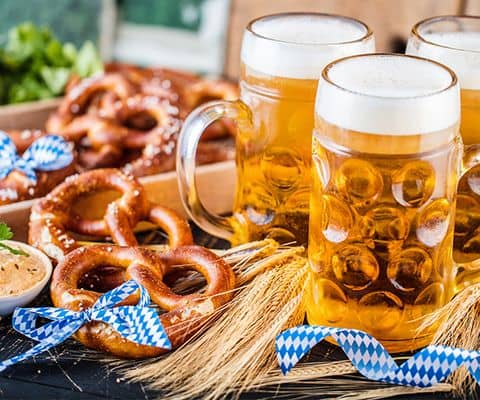
Oktoberfest: Coordinating Beverage Service and Food Production
At Oktoberfest and similar seasonal events, the focus is often on beer, hearty food, and a high volume of service.
Beer counters & tap systems form a central beverage area for these events. Keg cooling, beer glasses, and glassware logistics must be scaled to the actual volume of beer served.
On the food side, chicken and suckling pig grills, dumpling steamers, or food-warming equipment can support typical seasonal offerings. Coordinating production and service is crucial.
An efficient beverage service can serve a large number of guests per hour. If the food station operates significantly slower and those same guests are waiting for their meals at the same time, bottlenecks will still occur. Beverage and food service should therefore be planned as separate capacity areas whenever possible.
Don’t Underestimate the Glass Cycle During Heavy Bar Service
At events and seasonal promotions with a high volume of beverage service, the supply of clean glasses quickly becomes a critical factor. Beer glasses, wine glasses, and cocktail glasses must be served, returned, washed, and made available again. Especially during periods of high volume, it’s not enough to simply have enough glasses at the start of the event. The return process must also keep pace. Depending on the concept, glass washers, polishing solutions, and rinsing solutions can be part of this cycle.
The required capacity is determined by the peak serving period and the time it takes for a glass to become available again at its station.
Fall Must-Haves: Warm Dishes and Efficient Planning
In the fall, menus may shift more toward soups, stews, hot beverages, and seasonal ingredients. Depending on the restaurant’s concept, this increases the importance of food holding, cooking, and food preparation techniques.
Soup warmers, for example, can serve as a compact serving station for suitable dishes. Combi-steamers, stoves, or small cooking appliances support the actual production process. Vegetable cutters, hand blenders, and vacuum-sealing equipment can also be useful when seasonal ingredients are processed in large quantities. The key factor remains the volume of production.
A seasonal daily special does not automatically require its own specialized machine. However, if certain work steps are repeated daily over several weeks and tie up a significant amount of staff time, additional processing equipment can offer greater operational efficiency.
Incorporate Fall Specials Modularly Rather Than Permanently
Seasonal menus are particularly cost-effective when existing equipment can be used as versatilely as possible. A combi-steamer, range, or vacuum sealer can be used year-round while still supporting specific fall specials. Specialized equipment is more worthwhile when a particular item is sold regularly in sufficient quantities.
This is especially true for small and medium-sized businesses with limited kitchen space. A seasonal product should not result in valuable counter space being permanently occupied by a piece of equipment that remains unused for most of the year.
Winter Must-Haves: Prioritize Hot Drinks and Warm Snacks
In winter, many seasonal vendors shift their offerings more toward hot drinks and hot food. Mulled wine makers can be used for such beverage concepts. Hot beverage dispensers, hot chocolate dispensers, or insulated beverage containers are also good options.
Sweet treats such as waffles, crêpes, churros, or poffertjes can also be offered using compact stations. On the savory side, deep fryers, grills, soup warmers, or heated display cases may be relevant, depending on the menu. A focused menu is particularly helpful for temporary food stands.
A small selection of products with easily predictable ingredients and consistent preparation processes is usually easier to produce in a limited space than a wide-ranging restaurant menu.
Christmas Market: Planning Your Booth as a Small Production Line
The Christmas market is a particularly unique form of seasonal operation. In a confined space, hot beverages, warm snacks, serving, payment, and restocking all come together.
Mulled wine, hot cocoa, or other hot beverages require appropriate beverage equipment. Sausages, soups, potato dishes, and grilled items, in turn, require their own production and warming processes.
Folding work tables can provide additional counter space, while radiant heaters and outdoor furniture can serve additional functions depending on the booth design.
The most important planning question is:
How does an order move through the stand?
Ordering, paying, preparing a drink or meal, and serving it should work with as few cross-paths as possible. Especially during very high foot traffic, short reach and walking distances are often more important than a particularly extensive product selection.
Organizing Christmas Market Restocking Outside the Sales Booth
Small sales booths cannot store all their inventory directly at the production station. That’s why it’s worth making a clear distinction between working stock and reserves. Cups, packaging, ingredients, and beverages for the current sales period should remain right at the workstation. Larger reserves should be stored in an organized manner outside the main traffic zone. Restocking intervals can also be planned.
If an employee only reacts once the mulled wine container is completely empty or cups are missing, this creates an avoidable interruption in the middle of peak hours. A defined minimum stock level helps trigger restocking earlier.
New Year's Eve: Combining the Buffet, Bar, and Peak Traffic
New Year’s Eve often involves several particularly demanding service areas. Cocktails and beverages, a buffet or hot snacks, and a large number of guests can all require high capacity at the same time within a short period.
Cocktail stations create a centralized workspace for beverage preparation, while ice machines and bar refrigeration ensure the necessary supplies. For food, buffet counters, chafing dishes, and snack warmers may be relevant.
The equipment should not be based solely on the total number of guests. It is more important to consider when guests will be taking advantage of specific offerings.
For example, if a particularly large number of drinks are ordered simultaneously shortly before midnight, the bar requires significantly more peak capacity than during the rest of the evening.
Plan the Buffet and Bar as Separate Service Flows
For larger seasonal events, not every guest should be directed through the same area for every service. Drinks, food, and return stations can be set up as separate stations. This helps distribute the flow of guests more evenly, and individual bottlenecks do not automatically block the entire event area.
Depending on the concept, mobile work carts and banquet carts can also help move supplies between preparation and service areas. Clear assignment of responsibilities is key.
Who refills drinks? Who manages the buffet? Who handles returns and cleaning? Good seasonal planning therefore always considers not only the equipment but also the associated work processes.
Plan for Seasonal Peaks Based on Peak Demand, Not the Annual Average
Seasonal demand is characterized precisely by the fact that it can at times deviate significantly from normal operating conditions. A beverage station that functions without issues on ordinary days may become too small during Carnival or New Year’s Eve. A restaurant’s refrigeration system can handle normal operations but may reach its limits due to additional summer patio seating and beverage demand.
For seasonal periods, the expected peak should therefore be considered separately. This does not mean that every existing system needs to be permanently expanded. Mobile or additional units can be a way to supplement capacity only where it is needed temporarily. This increases flexibility and prevents the entire operation from having to be scaled to accommodate just a few exceptional days a year.
Using Mobile Equipment for Multiple Occasions
Seasonal investments become particularly worthwhile when they can be used for more than just a single event. Foldable work tables, for example, can be used at Christmas markets, carnival celebrations, or summer events. Mobile beverage cooling systems can support various outdoor and event areas. Warming equipment can also be used for multiple buffet and seasonal formats.
It’s therefore worth taking a yearly perspective before making a purchase. What other promotions, catering jobs, or events are on the horizon? Can the same equipment be used there as well? A seasonal purchase with multiple opportunities for use is usually easier to justify financially than a highly specialized piece of equipment intended for just a few days of operation.
Do not introduce additional seasonal offers at the expense of the core business
Seasonal promotions should complement existing operations and not unnecessarily slow them down. Problems arise when a new promotion ties up the very equipment or workstations that are already at full capacity during regular peak hours. For example, a Christmas dessert that constantly blocks the same workstation as a high-revenue standard product can create more operational complexity than expected.
Therefore, the following should be clarified before introduction:
What new work steps are involved? Which station produces them? Where are the ingredients stored? And what additional demand will this place on existing capacity? Seasonal offerings work particularly well when they can be integrated into existing processes.
Carefully Determine Seasonal Inventory Levels
Seasonal products have a clearly defined sales period. This also affects inventory planning. Insufficient inventory can lead to stockouts during a peak sales period. Conversely, excessive quantities may remain after the season ends.
Therefore, especially when it comes to special packaging, decorations, or ingredients, planning should be based on realistic sales figures. Equipment and versatile accessories can often be used beyond the season. Consumables or highly seasonal products, on the other hand, require more precise quantity planning.
Here, too, the following applies: The peak sales day and the entire season must be considered together.
Include cleaning and dismantling in the planning for temporary stations
Seasonal pop-up stations must not only be set up but also maintained and dismantled. Mobile cooking equipment, beverage systems, work surfaces, and warming stations require adequate cleaning facilities during use.
After a promotion ends, equipment must be cleaned, inspected, and, if necessary, stored until the next season. Well-organized storage makes the next deployment easier.
Cables, accessories, and matching containers should be stored together with the corresponding equipment whenever possible, so that missing parts do not have to be searched for again during the next setup. A standardized setup and dismantling plan is particularly worthwhile for recurring seasonal events.
Prioritizing Seasonal Needs Economically
The most economically sensible seasonal investment isn’t automatically the most eye-catching specialty piece of equipment. The first priority should be addressing the bottlenecks that actually limit additional sales.
In the summer, this might be beverage cooling or ice supply. At Oktoberfest, it might be the beer dispensing and glass circulation. At a Christmas market, a hot beverage area that’s too small can slow down the entire operation, while on New Year’s Eve, bar or buffet capacity becomes crucial. Only then should additional products and specialized equipment be considered.
Solutions that can support multiple events or normal operations are particularly attractive. This results in seasonal planning that enables additional sales opportunities without having to maintain unnecessary equipment and capacity on a permanent basis.
Put Together Your Seasonal Supplies Professionally with GGM Gastro
From Valentine’s Day, Carnival, and Easter through summer and Oktoberfest to fall, winter, Christmas markets, and New Year’s Eve, each season brings changes to different aspects of restaurant operations. Seasonal needs are therefore determined by the occasion, the additional product range, expected foot traffic, the location, and the potential for use beyond the seasonal period.
GGM Gastro bundles the appropriate equipment categories for various seasonal requirements—from beverage refrigeration, ice and bar technology, and grill, buffet, and food-warming solutions to hot beverage technology, mobile workstations, and accessories for presentation and service.
This allows food service establishments to supplement existing work areas specifically for seasonal peaks, set up temporary sales stations, or test new offerings without disrupting the planning of their normal core business.