


Dough Mixers for Catering and Bakeries
Dough mixers mix and knead pizza, bread and yeast doughs evenly, reducing your team's daily preparation workload. A choice of bowl capacities, speeds and electrical requirements allows you to select a machine suited to your production volume. Find the right mixer for your business in our buying guide »


Product type
Power Connection
Capacity
Dough Weight
RotationS per minute
Price
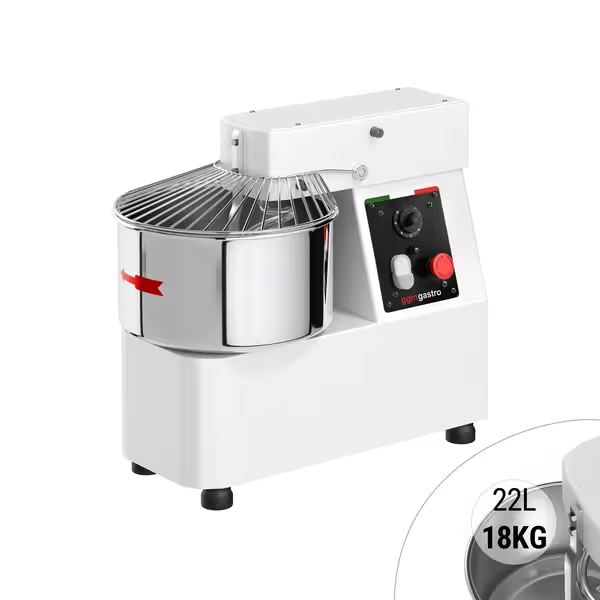

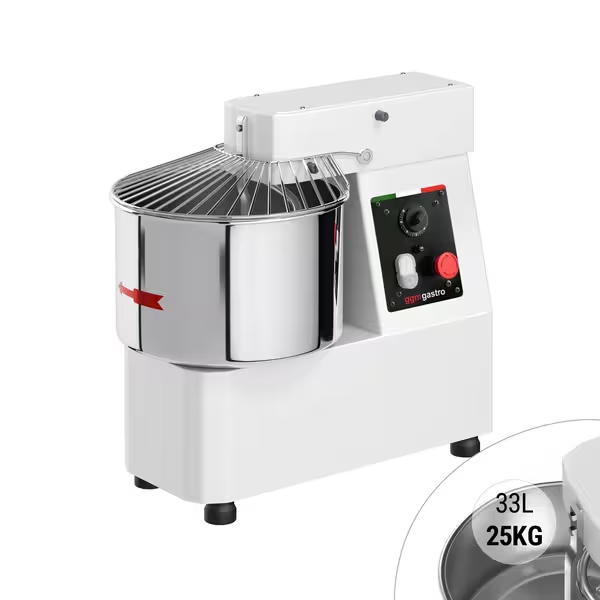


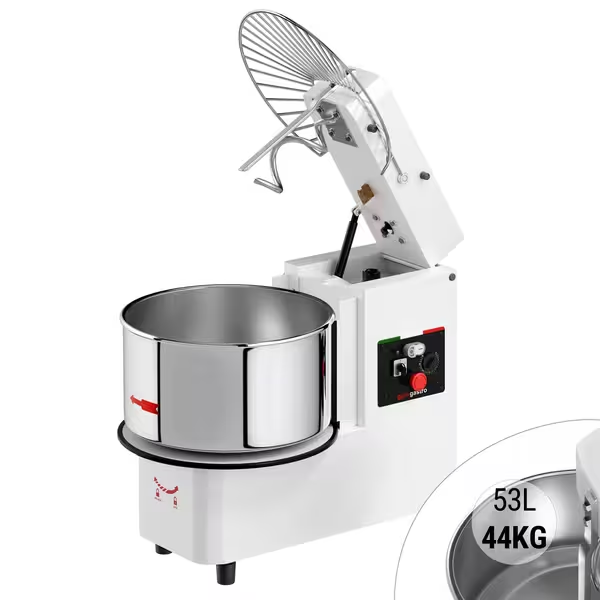


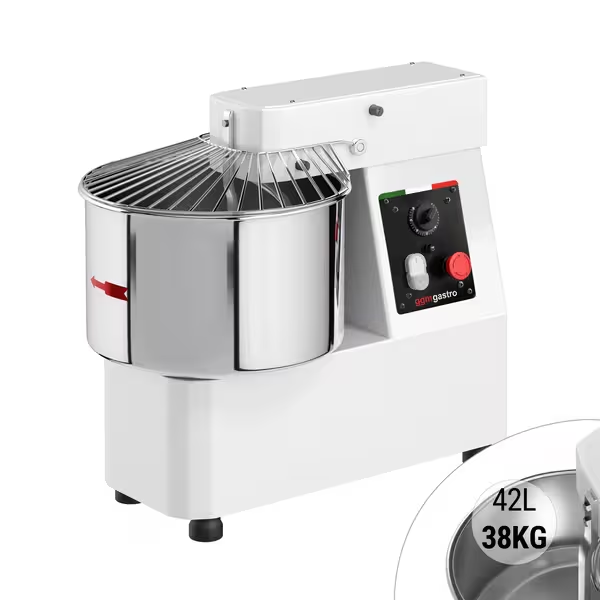

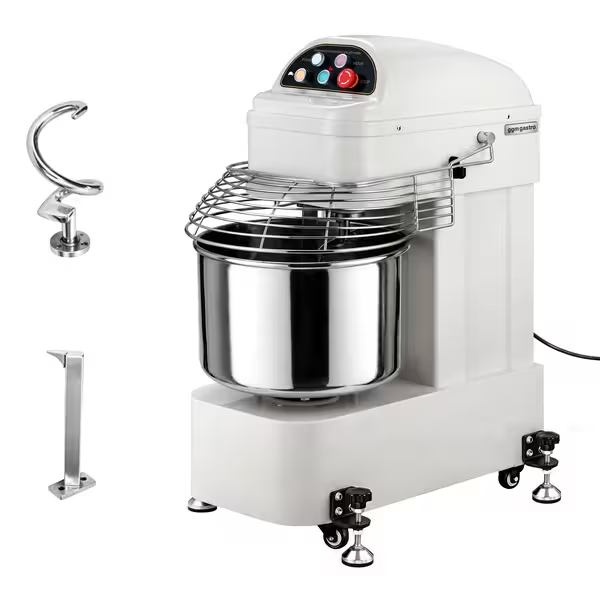
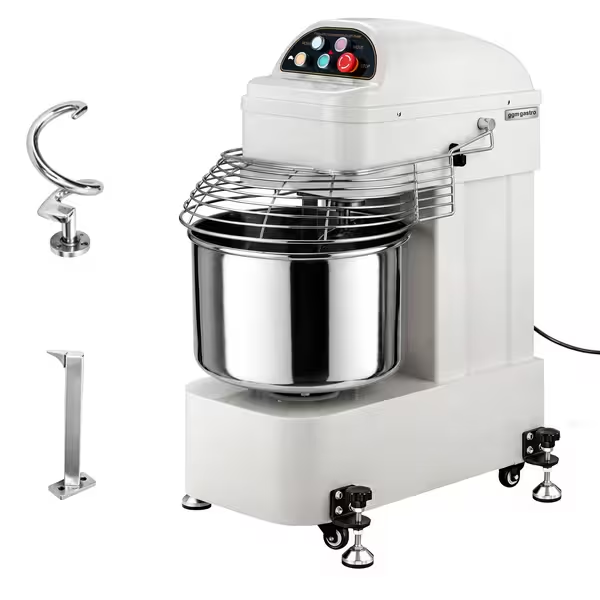
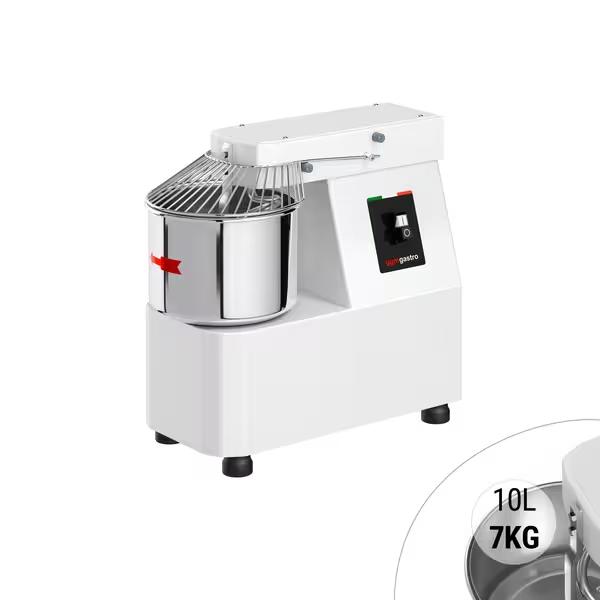


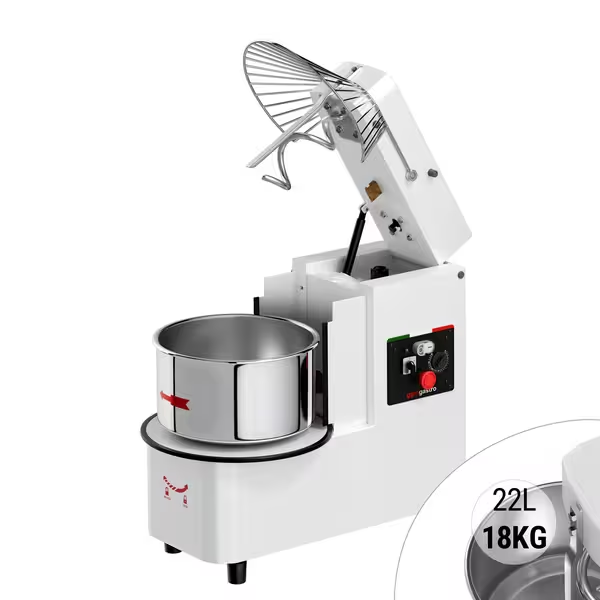
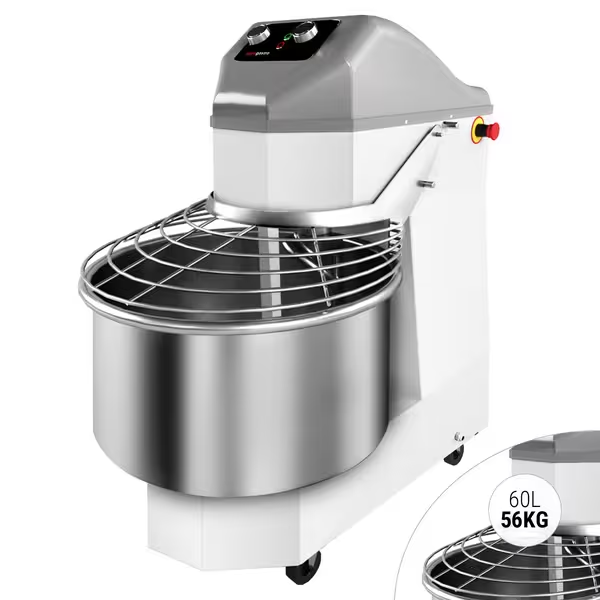
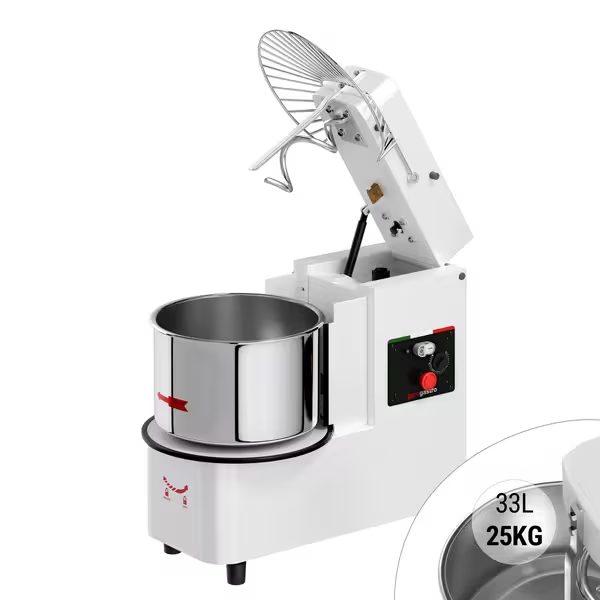
Dough mixers for predictable dough production
Commercial dough mixers combine and knead ingredients evenly into elastic, workable dough. They are mainly used in pizzerias, bakeries, patisseries, restaurants and production kitchens that regularly prepare larger quantities of pizza, bread or yeast dough.
In daily operation, they take on a physically demanding and time-consuming task. Consistent mixing times make recurring batches easier to schedule and recipes easier to reproduce across different staff members. While the machine works, your team can prepare ingredients, organise work surfaces or set up the next production stage.
Choose the right bowl size and dough capacity
Bowl volume and maximum dough capacity are two of the most important selection criteria. They are not the same: a bowl's full litre capacity cannot be filled with dough because the mixing action needs sufficient space. Use the manufacturer's stated dough capacity in kilograms as the deciding figure.
Compact models of around 10 to 20 litres suit smaller batches and businesses with limited space. Larger dough mixers of 40, 60 or more litres support businesses preparing several trays, loaves or pizza dough batches per cycle. Production rhythm matters as much as daily volume. A pizzeria with concentrated evening trade may need larger batches before service than a business producing throughout the day.
Fixed or removable bowls in daily use
Fixed-bowl dough mixers offer robust construction for recurring standard production. Removable-bowl models make dough removal, recipe changes and cleaning easier. A tilting head further improves access to the bowl and dough hook.
The right design depends on your preparation routine. A fixed bowl may be sufficient for a small number of regularly repeated dough recipes. If you make different doughs in succession or frequently need to clean the bowl completely, a removable version offers more flexibility.
Coordinate speeds, power supply and installation space
Single-speed models cover many standard pizza and bread dough applications. Two speeds allow closer control of different mixing stages: slowly combining ingredients, then kneading more intensively to develop the dough.
Plan the electrical supply early. Smaller dough mixers often run on 230 V, while more powerful machines may require 400 V, depending on the model. Check that connection type, power consumption and the existing electrical installation are compatible before buying.
Alongside width, depth and height, allow sufficient working room around the machine. A stable, level position supports smooth operation. Models on castors are easier to move when needed but must be securely locked in place during use.
Quick check for choosing a dough mixer
-
Compare maximum dough weight per batch as well as bowl volume
-
Allow for production peaks and planned spare capacity
-
Choose a fixed or removable bowl to suit cleaning and dough removal routines
-
Match one or two speeds to dough types and recipes
-
Check dimensions, floor space and the 230 V or 400 V supply in advance
Hygiene, cleaning and durability in regular use
Commercial models often have stainless steel bowls, spirals and safety guards. The material is durable, suitable for food contact and easy to include in workplace cleaning routines. Remove flour dust, dough residues and moisture regularly from the bowl, attachments and accessible surfaces.
Disconnect the machine from the power supply before cleaning. Do not use powerful water jets on electrical components or the machine housing. Accessible parts, smooth surfaces and a tilting head can reduce daily cleaning effort.
Integrate dough mixers into production effectively
The machine works best when ingredients, flour bins, scales and work surfaces are close by. Suitable pizza dough boxes and trays simplify the subsequent resting and holding stages. Dough dividers and rounders can be added to the production line for uniform dough pieces.
In pizzerias, the next stage often uses pizza dough rollers and pizza presses. Proving cabinets can complement the process where controlled resting and proving times are required. The dough mixer remains responsible for combining ingredients and developing the dough, while the other machines handle separate stages.
Invest cost-effectively and stabilise workflows
A correctly sized dough mixer can reduce manual work, allow larger batches and make preparation easier to schedule. Undersized machines require many cycles, while oversized ones tie up space, electrical capacity and capital unnecessarily.
For a cost-effective choice, consider actual production quantities, available power supplies, cleaning requirements and expected workload. This gives you a solution suited to the size of your business, your team and your daily dough requirements.