


Frank Rosin's Favorites for Professional Restaurants
From cooking and grilling equipment to refrigeration and combi-steamers, all the way to sinks, food warming systems, and display refrigerators: Frank Rosin’s favorites bring together professional foodservice equipment from various functional areas. This selection serves as a guide for establishments looking to equip central kitchen and service areas or to modernize existing workflows in a targeted manner. Guide to Rosin’s Favorites »




Frank Rosin's Favorites: Choose Professional Gear Based on Application
Frank Rosin's Favorites include a selection of commercial kitchen equipment and restaurant supplies from various sectors of the professional foodservice industry. Rather than focusing on a single product group, the selection ranges from cooking equipment and refrigeration to pizza ovens, grills, and combi-steamers, as well as dishwashing equipment, display refrigerators, food warming systems, coffee machines, ice cream machines, and kitchen gadgets. This makes the category particularly well-suited as a starting point for operators who want to learn about different aspects of their professional kitchen. However, the specific needs of your own business remain the deciding factor: A restaurant with an extensive à la carte menu has different requirements than a pizzeria, a café, or a snack bar. Even equipment that is generally of interest to the professional foodservice industry must be suited to the actual application in terms of capacity, dimensions, and performance. The selection process is therefore most effective when it is aligned with the specific operational requirements.
Think of favorites as a guide rather than a universal shopping list
Professional foodservice establishments cannot be equipped with a single, identical list of equipment for all operations. The menu, production volume, workspace, staffing structure, and guest volume all determine which equipment is actually needed. A piece of equipment may be a perfect fit for a specific production process but barely utilized in a different setting. That’s why it’s worth asking yourself this question for every item on your shortlist: What recurring task does this piece of equipment perform in my business? The clearer the answer, the easier it is to assess its operational importance. Equipment for a core process that is heavily utilized on a daily basis has a different investment priority than a specialized appliance that is used only occasionally.
Quick Check: Which favorite is right for your business?
Five points to help you assess the situation:
- Menu: Which products and cooking methods account for the majority of daily operations?
- Peak Capacity: What volumes must be processed during the busiest 30 to 60 minutes?
- Workspace: How much space is actually available for equipment placement, operation, and movement?
- Process Benefits: Which existing bottleneck or work step is the equipment intended to improve?
- Day-to-Day Operations: How often and for how long is the equipment actually used?
Using these criteria, you can narrow down your selection to equipment that fits your actual production or service workflow.
Choose cooking appliances based on the main focus of the menu
Cooking equipment is among the key components of many professional kitchens. The specific equipment needed depends on the cooking methods used for the menu items. Stoves, griddles, deep fryers, and other cooking equipment serve different purposes and should be selected based on actual usage. For example, a restaurant that serves many pan- and pot-based dishes requires different capacities than an establishment with a high proportion of fried or grilled items. Peak hours are particularly important. It is not the average number of meals produced daily that is the sole determining factor, but rather the volume that must be processed simultaneously at the individual stations. A cooking line is therefore appropriately sized when the most important dishes can be produced without a persistent backlog, even during periods of high order volume.
Not every cooking station has to be the same size
In many kitchens, the workload is distributed very unevenly. One piece of equipment may be needed for nearly every order, while another station produces only a few dishes. Accordingly, the investment budget should not be distributed evenly across all areas. The highest capacity should be allocated where the majority of sales or production takes place. Free counter space also remains important. A kitchen that is completely filled with equipment may have a high theoretical cooking capacity, but too little space for preparation, containers, and handoffs. Professional planning therefore balances equipment performance with usable counter space.
Consider pizza and barbecue as separate production areas
Pizza & Grill covers technology for cooking methods that can account for a very large portion of daily operations in relevant business models. With pizza, for example, the oven is a key factor in determining potential throughput, while preparation, topping, and serving must support that same output. With grilling, on the other hand, the grilling surface, product mix, and the number of portions produced simultaneously play an important role. Here, too, the rule applies: bigger is not automatically better. A capacity that remains largely unused during normal operations takes up space and eats into the investment budget. A solution that is too small, on the other hand, becomes a bottleneck precisely during peak sales times. The appropriate size is determined by the realistic peak volume.
Plan a production line instead of a single machine
In professional foodservice operations, individual stations influence one another. A high-performance pizza oven is of little use if the topping station has a significantly lower throughput. A large grill won’t solve a bottleneck if prepared ingredients are missing or finished products are waiting at the pass. Before making an investment, it’s therefore worth taking a look at the entire process: Prep → Cooking → Plating → Serving. The slowest station that’s regularly in use often determines the overall throughput. That’s exactly where modernization can have the greatest operational impact.
Organize Cooling Based on the Flow of Goods
Refrigeration serves several purposes in professional kitchens. Larger quantities of inventory must be stored, while frequently used ingredients should be kept as close as possible to the respective production station. This often results in a combination of storage and workstation refrigeration. Refrigerators and freezers can hold larger quantities of goods, while refrigerated tables or other solutions located near the production area reduce the distance traveled during the actual preparation process. Product range, delivery intervals, and actual quantities of goods are key factors in the selection process. The largest possible cooling capacity is not automatically cost-effective. It should provide sufficient reserve capacity without consistently providing significantly more volume than is needed.
Adjust the cooling capacity to match daily usage
When it comes to refrigeration technology in particular, it’s worth considering more than just the nominal capacity. How are the food items arranged inside the unit? What container sizes are used? How often are supplies restocked? And which products are needed most frequently during a shift? These questions influence the unit’s practical usability. A smaller, well-organized unit located directly next to the production area can be more valuable for certain tasks than a larger refrigeration unit with long access distances. The main reserve and the current working stock therefore serve different purposes and should be planned accordingly.
Using Combination Ovens for Recurring Cooking Processes
Combi ovens can perform a variety of tasks in a professional kitchen. Depending on the menu, they can be used to manage different cooking processes or prepare batches of food. They are particularly useful in settings where regularly recurring quantities are processed. Capacity and production rhythm are key factors in the selection process: How many GN containers or baking sheets are needed per batch? How many runs must be completed during a production phase? And which other stations must subsequently be able to handle the produced quantity? Preparation and storage areas are also part of the workspace. A high-performance combi-steamer requires a process before and after it that can handle the same production volume.
Pay for versatility only when it's used
Professional equipment can offer a wide range of functions. However, for an investment to be cost-effective, what matters less is what is theoretically possible and more what functions are actually used on a regular basis. This is especially true for versatile kitchen equipment. If certain programs or production methods simplify a recurring work process, they can provide significant operational benefits. If, on the other hand, they remain largely unused, the investment should be evaluated more closely based on core tasks. The selection of equipment therefore begins with the actual food service and production concept.
Prioritize kitchen appliances based on daily usage time
In addition to large cooking appliances, small and medium-sized kitchen appliances also influence the efficiency of professional kitchens. Tasks such as cutting, blending, stirring, portioning, or other preparation steps are sometimes repeated many times a day. It’s worth asking how much work time a particular process actually takes. A specialized appliance can be particularly cost-effective if it takes over or streamlines a manual task that occurs regularly. For infrequent uses, the math looks different. Appliances should therefore be selected not only based on their function, but also on frequency of use, the required volume, and the available workspace.
Preparation must not slow down the cooking line
In many food service establishments, the actual bottleneck doesn’t occur during cooking. A lack of mise en place, insufficiently chopped ingredients, or inadequately prepared components can result in cooking equipment sitting idle while waiting for supplies. Preparation processes should therefore be planned to match production capacity. For example, if the hot kitchen can produce 100 servings within a certain time frame, the preparation process must also provide enough ingredients for that quantity. This creates a resilient workflow rather than relying on individual high-performance machines.
Understanding Washing Technology as Part of Production Capacity
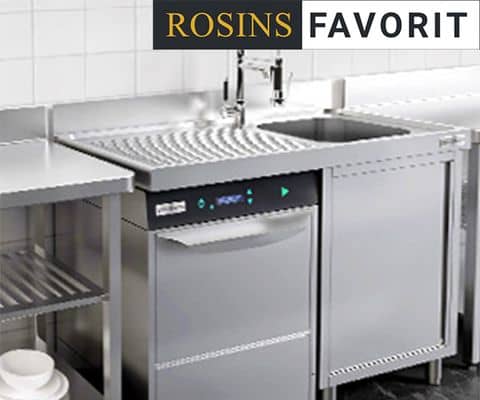
Dishwashing & Cleaning is one of those areas whose importance quickly becomes apparent during day-to-day operations. Plates, glasses, cutlery, pots, GN containers, and work equipment must be continuously returned to the workflow. If the dishwashing capacity is too low, used items pile up, clean items are in short supply, and used dishes take up valuable counter space. The appropriate dishwashing technology therefore depends on the type and quantity of items to be washed, as well as the peak return phase. An establishment with many glasses has different requirements than a kitchen with large cookware or a high volume of plates.
Plan not just the machine, but the entire dishwashing zone
A high-performance dishwasher alone does not guarantee a fast dish cycle. Before the dishwasher, dirty items must be received, sorted, and, if necessary, prepared. After the wash cycle, clean dishes need sufficient space and a clear path back to the service area or kitchen. These areas must support the same throughput as the machine. Waste and food scraps also require a defined process. The dishwashing zone therefore works best as a clear cycle: Return → Pre-sorting → Washing → Drying/Storing → Reuse.
Retail refrigeration combines cooling performance with product display
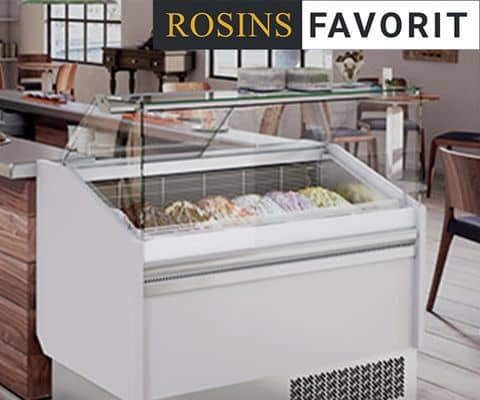
Retail refrigeration serves a second important purpose in addition to temperature control: products should be displayed in a way that is visible and accessible to guests or customers. Refrigerated display cases, sales counters, and other refrigerated presentation solutions therefore require a different planning approach than storage refrigeration alone. Product assortment and sales volume are key criteria. A display case that is too large takes up space and requires a corresponding amount of stock, while a solution that is too small must be restocked frequently and can only display a limited product assortment. The location within the sales area also affects operational efficiency: For staffed service, employees need quick access; for self-service, the customer flow must be taken into account.
Organize on-hand inventory and reserve inventory separately
Not all of the inventory needs to be immediately visible on the sales floor. Often, a combination of visible stock and easily accessible reserve stock makes sense. This keeps the display organized and allows it to be restocked based on actual sales. This separation is particularly helpful for more perishable products or when demand fluctuates significantly, as it allows for more controlled management of the visible inventory. The refrigerated display case thus becomes part of a restocking system rather than just a piece of furniture in the dining area.
Use food warming based on the product and sales cycle
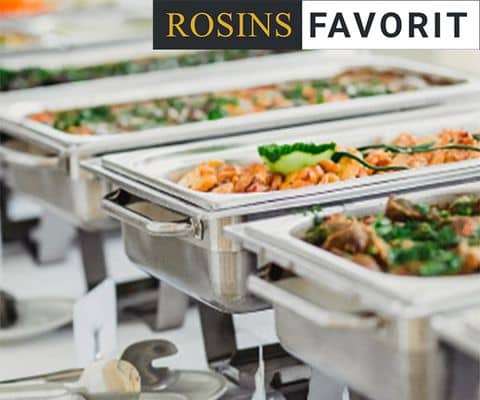
Keep Warm is available at Restaurant, buffets, snack bars, cafeterias, or event catering. Warming display cases, bain-maries, or other solutions can keep suitable dishes ready between production and service. However, keeping food warm should not serve as a substitute for coordinated production planning. Not every product can be kept warm for the same amount of time. It is therefore crucial to determine how long a dish should realistically be kept on hand and how quickly it will subsequently be sold. Targeted buffer capacity can be particularly useful in high-volume settings: smaller batches are produced, held for a short time, and continuously replenished. This allows for fast service combined with a controlled production rhythm.
Size the heat retention capacity based on the peak load
Similarly, holding capacity should not be selected based solely on average daily volumes. The key factor is how many products must be kept on hand simultaneously during peak sales periods. Insufficient space means that prepared meals will lack a suitable handoff point. On the other hand, too much warming capacity can lead to the temptation to prep larger quantities than necessary. The right solution supports the production flow without becoming a permanent storage area.
Plan to add a café and ice cream shop as an additional revenue stream
The Café & Ice Cream section shows the wide range of ways in which professional foodservice equipment can be used. Coffee, ice cream, and desserts can form the core menu of a café or be offered as a supplement in restaurants, hotels, bakeries, or other establishments. The investment decision therefore depends heavily on the actual share of sales. A business that sells many specialty coffees every day requires a different setup than a restaurant that only occasionally serves espresso after a meal. The same applies to ice cream offerings: A standalone ice cream concept requires different refrigeration, display, and serving capacities than a small dessert section.
Tailor additional services to existing business processes
New product lines can generate additional revenue, but they also create new steps in the workflow. Coffee, for example, requires beverage preparation, cups or mugs, and cleaning. Ice cream requires refrigeration, portioning, and possibly additional toppings or supplies. Before expanding, it’s therefore worth asking which existing resources can be utilized. Is suitable refrigeration already available? Is there sufficient counter space? Can the existing staff handle the additional workload during peak hours? A
Organize Kitchen Utensils by How Often They're Used
Kitchen gadgets may represent a smaller investment compared to large appliances, but they are sometimes used continuously in everyday cooking. Knives, containers, bowls, tongs, cutting boards, and other tools should therefore not be scattered haphazardly throughout the kitchen. Frequently used tools belong at their respective workstations. During a busy service period, an employee should not have to switch between multiple stations simply because a particular tool is available only once. Having sufficient quantities is also important. If a piece of equipment is constantly in the sink even though it is needed on the production line at the same time, even a small additional stock can help ease the workflow.
Small purchases can save you a lot of walking
Not every productivity gain requires a large machine. Additional GN containers, clearly organized tools, or suitable storage solutions can reduce repetitive trips and interruptions. That’s precisely why it’s worth looking beyond just large equipment when modernizing. The question is always: Where does the team regularly lose time during a normal shift? Sometimes the cause is a lack of machine capacity. In other cases, all that’s missing is a clearly organized workspace.
Evaluate devices based on peak times rather than on quiet, everyday periods
A recurring principle runs through nearly every aspect of professional foodservice: Equipment must function reliably, especially when the kitchen is operating at full capacity. A cooking station, refrigeration unit, or dishwasher that is perfectly adequate in the afternoon can become a bottleneck during the evening rush. At the same time, the equipment shouldn’t be unnecessarily oversized beyond the regularly required peak capacity. For this reason, a simple load analysis is helpful: What volumes are generated during the busiest 30 to 60 minutes? Which station is already operating at its limit during that time? And which subsequent processes would actually benefit from additional capacity?
Do not reduce the space requirement to the dimensions of the device
When selecting professional commercial kitchen equipment, you shouldn’t just check whether a model fits into the existing space based on measurements. Equipment must be easy to operate, load, clean, and, if necessary, maintain. Doors and drawers require space to open, staff need room to move around, and hot, cold, and dirty work areas should be organized efficiently. Transfer areas are also important. A kitchen can have plenty of equipment and still function poorly if there is no space for GN containers, baking sheets, plates, or prepared food. The actual floor space is therefore only one part of kitchen planning.
Check the infrastructure before making a purchase decision
Professional equipment places varying demands on electricity, gas, water, wastewater, and ventilation. The technical infrastructure should therefore be taken into account before making a final selection. Especially when modernizing existing kitchens, the available power capacity can influence which appliances are suitable for use. Exhaust air and heat generation must also be factored into the planning when using certain cooking and grilling equipment. A particular model is only truly suitable for a business if, in addition to its function and capacity, the technical requirements at the intended location are met.
Take Cleaning and Maintenance Into Account When Making a Decision
A piece of equipment is not only used during production but must also be cleaned regularly and kept accessible throughout its service life. Equipment that is subject to heavy use, in particular, should therefore be positioned so that relevant surfaces can be reached without having to move it unnecessarily. Removable components or those requiring regular cleaning also need a clear path to the washing or cleaning area. A kitchen line that looks efficient on paper can end up causing an unnecessary amount of work time in everyday use if cleaning and maintenance were overlooked during the planning phase. Operational suitability therefore also means considering the effort required after the equipment is installed.
First, analyze the existing kitchen for bottlenecks
If you already run a restaurant, you don’t have to start from scratch when modernizing. Day-to-day operations provide plenty of clues about what investments are actually needed: Where do wait times regularly occur? Which station has to constantly produce more food during peak hours? Where are there insufficient refrigeration or work surfaces? Which equipment is constantly operating at its capacity limit? And where are staff standing idle because another process isn’t finished yet? These observations are more valuable than a purely technical wish list. The right new purchase resolves a recurring operational bottleneck.
Consider Cost-Effectiveness Throughout the Entire Work Process
A professional commercial kitchen appliance should not be judged solely on its purchase price. What matters most is the contribution it makes to daily operations. For example, higher production capacity can reduce wait times, production-integrated refrigeration can shorten walking distances, and the right dishwashing technology keeps dishes and utensils in circulation. At the same time, larger and more complex equipment comes with corresponding investment, space, and operational requirements. The economic decision therefore stems from the balance between investment, frequency of use, capacity, and operational benefits. It is precisely this perspective that helps you filter through a wide selection to find the equipment that best suits your business.
Put together a selection of Frank Rosin's favorites that suit your business
Frank Rosin’s Favorites bring together professional equipment from various sectors of the foodservice industry—ranging from cooking appliances and pizza and grill equipment to refrigeration and combi-steamers, as well as dishwashing equipment, display refrigerators, food warming systems, café and ice cream equipment, and kitchen gadgets. For operators, this selection thus offers a concise introduction to various core areas of a professional kitchen and foodservice operations. However, which favorites are relevant for your own business always depends on the specific concept: the menu, production volume, peak capacity, available space, and existing infrastructure determine which equipment will be most beneficial in day-to-day operations. This selection can therefore be used for new openings as well as for modernization and expansion—with the goal of deploying equipment where it effectively supports the actual production and service processes.