


Energy-Saving Solutions for the Food Service Industry: Choosing Efficient Commercial Appliances
Cooking, refrigeration, keeping food warm, and dishwashing are among the energy-intensive core processes of professional food service establishments. Energy-saving solutions for the food service industry therefore focus on areas where equipment is operated regularly, for long periods, or at high power levels. Which solution makes economic sense depends not only on an appliance’s energy consumption, but also on its utilization rate, capacity, operating time, and the actual workflow. Energy-Saving Guide »




Energy Conservation in the Food Service Industry: What Does It Entail?
Professional energy-saving solutions for the foodservice industry encompass foodservice equipment across various functional areas, where the most efficient and needs-based use of energy plays a key role in the selection process. This can include cooking equipment as well as refrigeration technology, display refrigeration, proofing equipment, or professional dishwashers. The key difference from a traditional product category is that here, the focus is not merely on comparing specific types of equipment. Instead, the economic question takes center stage: which technology best aligns with the establishment’s required performance profile over the long term.
For example, a refrigerator may run continuously for many hours, while a pizza oven requires a certain level of power during production hours. A dishwasher may only operate at specific intervals but must then handle large volumes in a short amount of time. Energy efficiency should therefore always be considered in the context of actual usage.
Consider not just the purchase price, but also the operating costs
When it comes to professional foodservice equipment, the purchase price is only one part of the economic equation. Equipment incurs additional costs throughout its entire service life, so energy consumption can become a more significant factor, especially for equipment with long operating hours.
A sensible selection therefore takes several factors into account simultaneously: How many hours per day does the appliance run? What capacity is actually needed? How often is it operated at full capacity? Does it need to remain at operating temperature or on standby for long periods? And does its performance match the actual production volume? This shifts the focus from “Which appliance is cheaper?” to a more important question: Which appliance performs the required task cost-effectively in your own operation?
Quick Checklist for Selecting Energy-Efficient Commercial Kitchen Equipment
Here are five points to help you compare energy-saving devices effectively:
- Operating time: Does the device run only during specific production phases, for many hours, or continuously?
- Utilization: Is the available capacity used regularly, or does a large portion of it usually remain unused?
- Peak capacity: What capacity is actually required during the busiest operating phase?
- Operating process: Can the equipment be shut down or operated at reduced capacity during periods of low demand, or must it be available at all times?
- Total costs: How do the purchase price, energy consumption, capacity, and expected usage relate to one another over the planned operating life?
This makes energy efficiency an integral part of kitchen and investment planning rather than an isolated equipment feature.
Induction Cooktops: Using Heat as Needed for Production
Induction cooktops are particularly well-suited for kitchen layouts where cooking power needs to be available quickly and can be flexibly adjusted to different stages of food preparation. When making a selection, power requirements and cookware are just as important as the number of cooking stations needed simultaneously. A small establishment with few à la carte dishes may require a different configuration than a heavily utilized restaurant kitchen with multiple stations operating in parallel.
Here, too, the rule applies: More installed power is not automatically more cost-effective. The decisive factor is how many cooking stations are actually needed simultaneously during the busiest service window. A properly sized cooking line provides sufficient power for peak demand without maintaining unnecessarily large capacities on a permanent basis. Induction should therefore always be considered in the context of the menu, production volume, and station layout.
Size pizza ovens to match actual throughput
In a pizzeria, the oven is one of the key pieces of equipment. Pizza ovens must provide sufficient baking capacity during peak order times. At the same time, its size should be appropriate for realistic sales volume. An oven that is too small will cause a backlog during peak hours, while a significantly oversized model provides capacity that may rarely be needed during normal operations.
For cost-effective planning, therefore, considerations such as baking time, chamber size, the number of pizzas baked simultaneously, and typical order volume are more important than simply aiming for maximum capacity. The rest of the pizza line must also keep pace: dough preparation, topping, and serving should support roughly the same throughput as the oven. Otherwise, another workstation will simply become the bottleneck.
Choose refrigeration units based on usage rather than just capacity
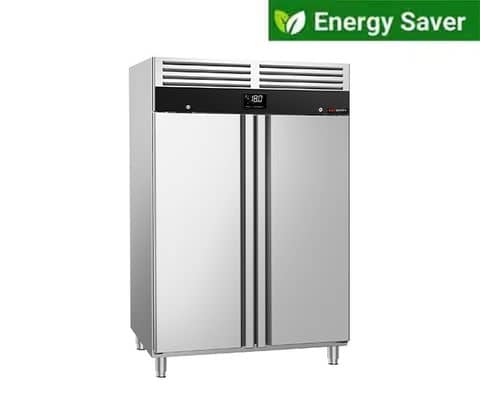
Refrigeration systems operate continuously for long periods in many food service establishments. It is therefore important to size them appropriately to meet demand. Refrigerators & Freezers should provide sufficient capacity for inventory and typical delivery intervals without maintaining unnecessarily large reserves. While a very large refrigerator offers more storage space, it also requires a corresponding amount of floor space and must be organized efficiently. Appliances that are too small, on the other hand, can be constantly overcrowded and make daily access difficult.
The key question is therefore not just: How many liters does it hold? More important is what products are being stored, how often deliveries are made, and what quantities need to be reliably stocked between two deliveries. Refrigerated and frozen storage needs should also be clearly separated. Each temperature zone should be set up only where it is needed for the actual product assortment.
Refrigerated counters combine refrigeration with short work paths
Refrigerated counters serve a different purpose than standard storage refrigerators. They deliver chilled ingredients directly to the production station and are often integrated with a work surface. This allows a single unit to not only provide cooling capacity but also reduce walking distances. This is particularly beneficial for kitchens that rely heavily on mise en place, where frequently used ingredients must be immediately available during service.
For a cost-benefit analysis, therefore, it is not only the energy consumption of the refrigerated counter that matters, but also how much daily walking and work time can be saved by its placement near the production area. The size is determined by the station’s needs, while larger stock reserves can continue to be stored in the central refrigeration system.
Plan Process Cooling and Storage Cooling Separately
A basic structure that often makes sense consists of two levels: The storage cooling system accommodates larger quantities of goods and reserves, while the work cooling system provides only the products needed during the current shift or production phase. This separation can prevent each individual production station from being equipped with unnecessarily large cooling capacity, while still ensuring that important ingredients remain readily accessible.
Even in energy-efficient planning, the goal is not to minimize the amount of equipment but to ensure a sensible distribution of the required capacity. An additional compact cooling table can be more cost-effective in the workflow if it eliminates the need for constant trips to a distant main cooling unit.
Sizing Beverage Refrigerators Based on Sales Frequency
When it comes to beverages, there is also a clear distinction between warehouse inventory and inventory kept on immediate display in refrigerated cases. Beverage refrigerators should hold the amount needed within a reasonable restocking interval. In a high-traffic kiosk, bar, or restaurant with high beverage sales, correspondingly more immediately available refrigeration capacity is needed than in a small establishment with modest sales.
Location also affects operations. A properly sized refrigerator located directly at the bar can eliminate many trips to the stock area, while an oversized unit takes up valuable work or sales space. The size of the unit and actual consumption should therefore be matched as closely as possible.
Using Wall-Mounted Refrigerated Display Cases with Glass Doors for Retail Cooling
Wall-mounted refrigerated display cases with glass doors combine refrigerated product display with direct access for customers or staff. They are particularly useful in situations where the refrigeration unit also serves as sales space. When selecting a unit, consider the width, display area, product assortment, and daily sales volume.
A large display case can showcase extensive product ranges, but it also requires sufficient stock and floor space to ensure that the available capacity is used efficiently. Glass doors also change the nature of customer access compared to a completely open display. Restocking routes should also be taken into account: The faster a product group sells, the more important it is to have an easily accessible stock area near the sales floor.
Don't Judge Refrigeration Technology Based Solely on the Nameplate
When comparing professional refrigeration units, energy consumption should always be considered in conjunction with capacity and usage. A smaller unit may consume less energy in absolute terms, but it may be unsuitable if its capacity is insufficient for the intended operation. Conversely, a larger model is not cost-effective if a significant portion of its volume remains unused on a permanent basis.
The meaningful comparison is therefore: How much can a unit reliably provide under the required operating conditions, and how much of that capacity is actually utilized? Installation also affects practical operation. Appliances require suitable conditions in accordance with technical specifications, as well as sufficient accessibility for cleaning and maintenance. Thoughtful kitchen planning thus also supports the long-term operation of the equipment.
Tailoring Bakery Proving Machines to Production Batches
Energy efficiency can also be a part of production planning in bakery and bake shop concepts. Bakery proofing machines operate under defined conditions for dough pieces and must be scaled to the actual baking and production volume. A properly balanced capacity prevents the system from continuously conditioning significantly more space than production requires. At the same time, the equipment must not be designed with such limited capacity that batches have to wait during typical production peaks.
Proofing technology, oven capacity, and prepared dough quantities should therefore be considered together. If the proofing machine can hold significantly more products than the oven can subsequently process, no additional throughput is achieved. Conversely, insufficient proofing capacity can slow down the baking process. Energy efficiency and process performance go hand in hand here as well.
Choose dishwashers based on actual dish return volume
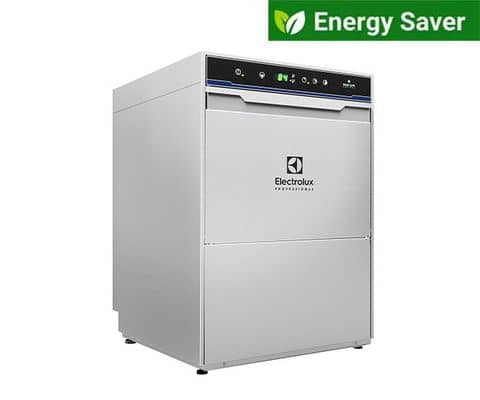
Dishwashers require energy, water, and time to return dishes and kitchen utensils to the operational cycle. The most cost-effective machine therefore depends on the actual items being washed and the volume during peak usage periods. A small machine may be sufficient for modest use, while high-frequency use can lead to additional wash cycles and backlogs. Conversely, a significantly larger solution offers little advantage if its capacity is rarely utilized in day-to-day operations.
The key is finding the right balance: How many baskets are generated during peak hours? What types of dishes are being washed? How quickly must clean items be available again? And can the machine be loaded efficiently? The most efficient dishwashing solution is not necessarily the largest one, but rather the one whose capacity matches the actual volume of items being processed.
Enable full work cycles instead of unnecessary idle time
The way an organization is structured also influences how cost-effectively professional equipment can be used. A dishwasher that regularly has to be run with only a small load is used differently than one whose capacity matches the typical dish return volume. The same applies to other batch-processing equipment such as proofing machines, ovens, or certain cooking appliances.
This does not mean waiting for maximum capacity at any cost. Rather, the size of the appliance should be chosen so that typical workloads and available capacity are well-matched. Proper sizing thus reduces both underutilization and constant overload.
Always balance energy efficiency against peak power
Operating as efficiently as possible must not result in the equipment failing to deliver the required performance during peak service hours. For professional foodservice operations, peak times remain critical. If a unit appears adequate on average but constantly reaches its capacity limits during lunch or dinner service, production times and workflows are extended.
That is why the required throughput is determined first. Only within this appropriate performance class is it worthwhile to compare energy consumption, features, and cost-effectiveness. This prevents a common mistake: choosing the smallest possible appliance, even though it would have to operate under maximum load at all times during actual use.
Also avoid oversizing
The opposite can be just as uneconomical. Very large cooking, refrigeration, or dishwashing equipment offers excess capacity but requires floor space and incurs acquisition costs. If the additional capacity is needed only on a few days a year, it should be determined whether it actually needs to be maintained on a permanent basis.
The key factor is the regularly recurring peak load. A restaurant that experiences significantly higher foot traffic every Friday and Saturday needs corresponding capacity reserves. A rare special order, on the other hand, does not necessarily have to dictate the sizing of the entire kitchen. The cost-effective solution therefore lies between under- and oversizing.
Weighing Operating Hours in Investment Decisions
Not every piece of equipment has the same impact on a company’s energy consumption. Equipment that is turned on only for short production phases has a different usage profile than equipment that must be available for a very long period of time. The longer and more regularly a piece of equipment is used, the more economically significant differences in ongoing energy consumption can become over the course of its usage.
However, this does not mean that only devices in continuous operation should be considered. High-performance cooking or dishwashing equipment can also account for a significant portion of the operational profile when used intensively on a daily basis. Therefore, priority is given to the devices that have the greatest operational relevance based on performance × operating time × frequency of use.
Carefully Evaluate Energy-Saving Measures During a Renovation
In an existing kitchen, it’s often already clear which appliances run for long periods and which production areas are used particularly intensively. This provides a solid foundation for modernization decisions. Instead of indiscriminately replacing equipment that still works, it’s worth analyzing the current inventory first.
Which appliances have particularly long operating times? Where is there significantly more capacity available than is actually needed? Which equipment must remain turned on at all times? Where has a piece of equipment become too small and is therefore constantly operating at its capacity limit? These questions help create a list of priorities. Equipment that is heavily used and also has significant potential for modernization may be more economically viable than rarely used specialized equipment.
Compare total costs rather than individual consumption figures
A professional commercial kitchen appliance should not be evaluated based on a single technical specification alone. Purchase price, expected service life, capacity, energy consumption, and operational benefits must all be considered together. Labor time can also be part of this assessment.
A properly sized refrigerated counter, for example, can bring ingredients closer to the production area. A high-performance dishwasher that matches the volume of dishes being washed can prevent staff and dishes from having to wait for available machine capacity. Cost-effectiveness, therefore, does not result solely from the lowest possible energy consumption. The goal is an appliance that performs the necessary work while using resources as efficiently as possible.
Always compare devices within the same task
A fair comparison is especially important when dealing with a broad category such as energy-saving appliances. A small refrigerator should not be considered more economical than a larger model simply because they have completely different storage capacities. The same applies to pizza ovens, dishwashers, and cooking appliances.
Appliances that can meet the same operational needs should be compared. Only then can differences in energy consumption, capacity, features, and price be meaningfully evaluated. The starting question is therefore always: What performance does my business actually need? Within this appropriate appliance class, the most cost-effective solution can then be selected.
Consider Cleaning and Maintenance in Terms of Cost-Effectiveness
Professional equipment must not only be operated but also regularly cleaned and maintained. Accessibility and practical placement can therefore also be economically significant. Equipment that must be laboriously moved or disassembled every day results in additional labor hours, while hard-to-reach areas make regular maintenance more difficult.
When planning a kitchen, therefore, sufficient space should be allocated for operation, cleaning, and technical accessibility. Energy-efficient equipment selection and practical operation go hand in hand, as cost-effective technology should integrate seamlessly into daily workflows over the long term.
Prioritize energy-saving measures based on the greatest operational impact
Not every business needs to replace its entire equipment at once. It makes particular sense to prioritize based on usage and operational relevance. First, consider the equipment that runs for particularly long periods, is used frequently, or supports a key production step. Next, focus on areas with lower daily usage.
In one facility, refrigeration technology may therefore be the top priority, while in another, a pizza oven, cooking line, or dishwashing equipment may be significantly more relevant. The most economically sound investment is not necessarily the piece of equipment with the lowest energy consumption, but rather the modernization that is expected to yield the greatest practical benefit over its useful life in that specific facility.
Choose Energy-Efficient Commercial Kitchen Equipment That Fits Your Business
Energy conservation in the professional foodservice industry doesn’t start with a single piece of equipment, but rather with the right combination of technology, capacity, and usage. Therefore, especially for equipment that is operated continuously or intensively, it’s worth carefully comparing power requirements and ongoing operation.
GGM Gastro has compiled a selection of appliance groups in the “Energy Savers” category, covering cooking, refrigeration, display refrigeration, baking equipment, and dishwashing. These include, among others, pizza ovens, induction ranges, refrigerators and freezers, refrigerated counters, beverage refrigerators, wall-mounted refrigerated display cases with glass doors, bakery proofing cabinets, and dishwashers. This allows food service establishments to focus specifically on those areas where energy consumption, operating hours, and required capacity are particularly relevant to their investment decisions.