


Chopping Block Scrapers & Fish Scaler for the Food Service Industry
Chopping block scrapers and fish scalers help professional kitchens maintain heavily used cutting surfaces and prepare whole fish. Depending on the workload, you can choose from simple manual tools as well as electric fish scalers—either corded or cordless. Guide to Chopping Block Scrapers & Fish Scalers »
Product type
Product material
Width
Depth
Height
Price
Using Hackblock Scrapers & Fish Scaling Tools Strategically in the Workflow
Chopping block scrapers and fish scalers are specialized tools designed for specific tasks in professional food preparation. Chopping block scrapers are used to remove residue from worn cutting and chopping surfaces, while fish scalers remove scales before further processing.
These tools are particularly relevant for restaurants, butcher shops, fish markets, hotel kitchens, catering companies, and production kitchens. The frequency of use is more important than the size of the operation. An establishment that prepares whole fish only occasionally requires a different solution than a kitchen that processes large quantities daily.
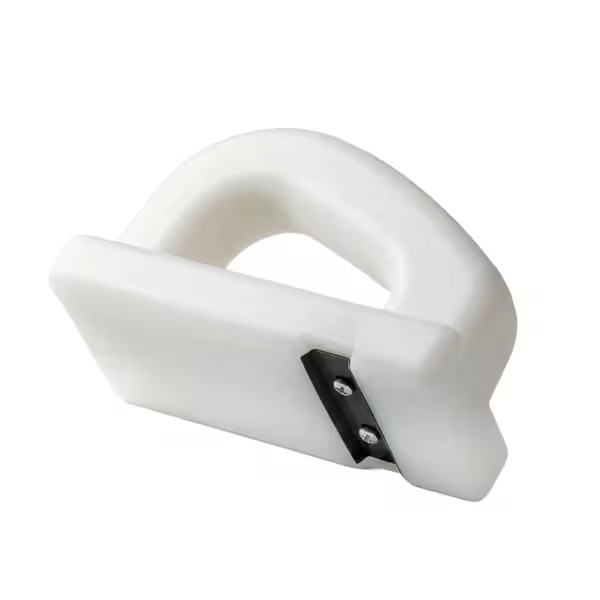
When it comes to chopping block maintenance, integration into the workflow is also important. A compact chopping block scraper measuring approximately 175 × 75 × 105 mm can be stored within easy reach at the workstation and used immediately after or between work tasks. This ensures that cleaning heavily used surfaces is not unnecessarily delayed.
Manual or electric fish scaler?
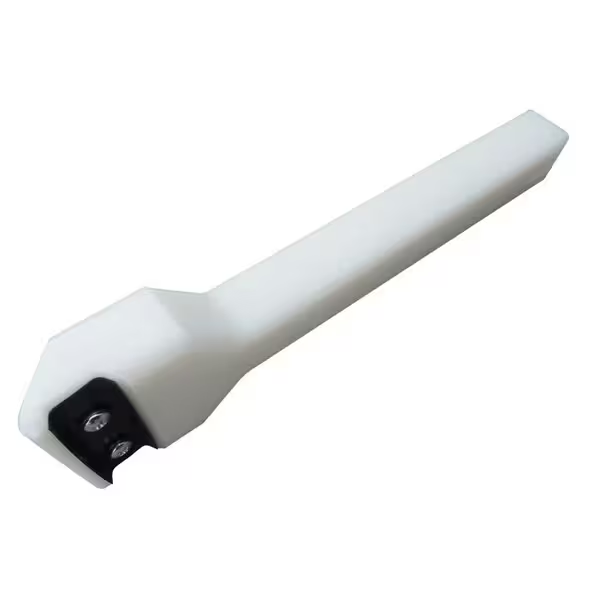
When choosing a fish descaler, processing capacity is one of the most important selection criteria. For smaller quantities, a manual fish scaler made of sturdy plastic with compact dimensions of approximately 200 × 75 × 25 mm may be sufficient. It requires no power connection and can be used flexibly at various preparation stations.
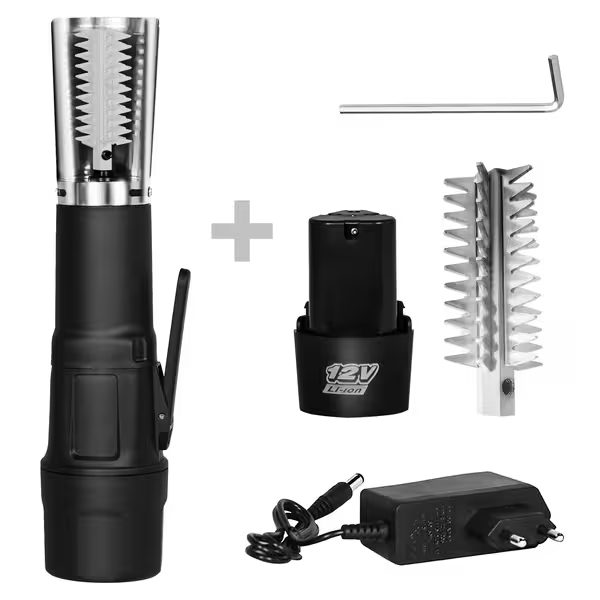
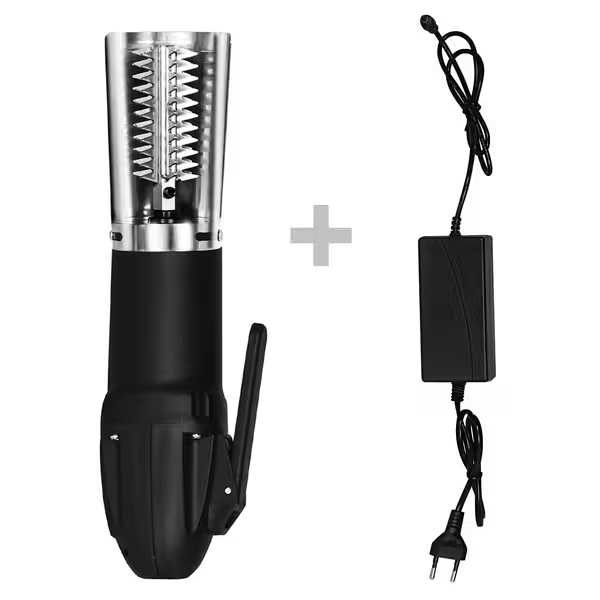
Those who regularly scale larger quantities can reduce manual steps by using an electric model. Models with 75 watts and up to 7,000 revolutions per minute are designed for repetitive tasks. This also raises the question of whether to choose a corded or cordless model: A corded 230-V model is suitable for a fixed workstation with an available outlet. A cordless model offers more freedom of movement and can be useful, for example, when working at different preparation stations; with the right models, runtime can reach around 80 minutes.
Properly Assess Materials, Cleaning, and Load-Bearing Capacity
In food preparation, tools are regularly exposed to moisture, organic residues, and cleaning processes. For this reason, smooth, easily accessible surfaces and durable materials are more important than additional features.
For electric fish scalers, stainless steel components such as AISI 304 and a moisture-resistant housing can enhance their suitability for everyday use. A protection rating such as IP67 is particularly relevant when the tool is regularly used and cleaned in a damp work environment. The product’s specific care and cleaning instructions remain the guiding factor.
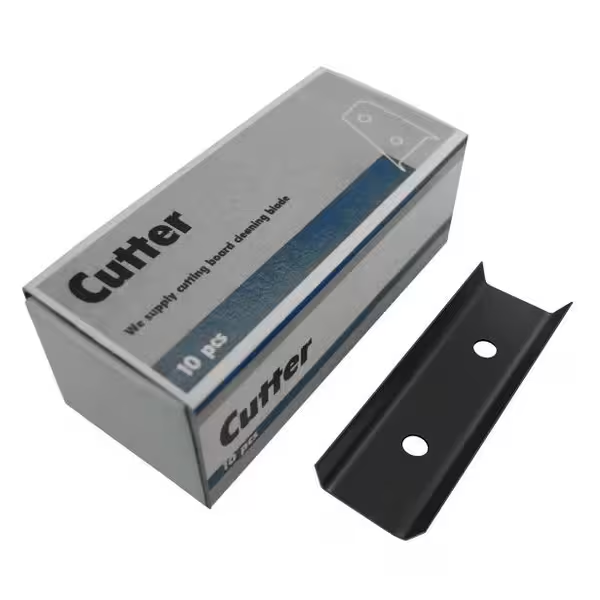
Cutting board scrapers are primarily subject to mechanical stress. If the blade is worn out, it is not necessarily required to replace the entire tool. For compatible models, suitable replacement blades—for example, in a pack of 10—can allow the existing scraper to continue being used.
Quick Check to Help You Make the Right Choice
Before making a decision, operators should consider five points:
-
What volumes are processed per day or week?
-
Is manual operation sufficient, or should the process be electrically assisted?
-
Is there a 230-V outlet at the workstation, or is freedom of movement required?
-
How often does the tool need to be cleaned, and how humid is the work environment?
-
Are replacement parts, such as spare blades, compatible and available?
These criteria help ensure that you neither purchase a tool that is unnecessarily large nor choose a solution that takes up too much work time with regular use.
Tailor workstations to suit chopping block maintenance and fish preparation
A tool is only efficient if it is available right where the task is being performed. Chopping block scrapers should therefore be kept right next to the chopping blocks or suitable cutting boards are used. Short distances make it easier for the team to consistently incorporate cleaning and maintenance into the workflow.
When preparing fish, a well-organized, easy-to-clean work surface is crucial. Sturdy stainless steel furniture can support proper preparation, while sufficient space prevents scaling, temporary storage, and subsequent processing from overlapping in an area that is too small. The subsequent cleaning should also be conveniently connected to the washing and cleaning area.
Especially with a regular flow of fish, a clear workplace layout has a greater impact on speed than individual technical metrics. Tools, containers, and cleaning stations should therefore be arranged in such a way as to avoid unnecessary movement and rearranging of items.
Make economic decisions rather than just comparing purchase prices
While chopping block scrapers and fish descaling tools are relatively inexpensive purchases, their impact is felt daily in the workflow. The right solution can simplify repetitive tasks, help keep work surfaces clean, and reduce the workload on staff when fish volumes are high.
For light use, a simple manual model may be perfectly adequate from a cost perspective. As volume increases, however, electric models become more important. Therefore, the key factor is not the most technically advanced solution, but rather the model that best suits the actual workload, the workstation, and the volume of work. This ensures that the investment remains justifiable and that the preparation step is reliably integrated into the workflow.