


Dough Sheeters
Dough sheeters help bakeries, patisseries, hotels, restaurants and production kitchens roll larger quantities of dough evenly. Powered conveyor belts feed the dough through the rollers in a controlled way, supporting repeatable thicknesses and predictable preparation. Find the right sheeter for your business in our buying guide »
Dough Weight
Price
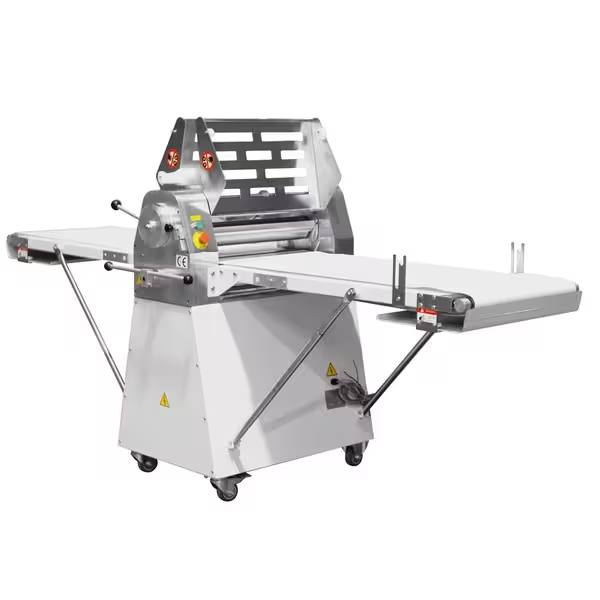
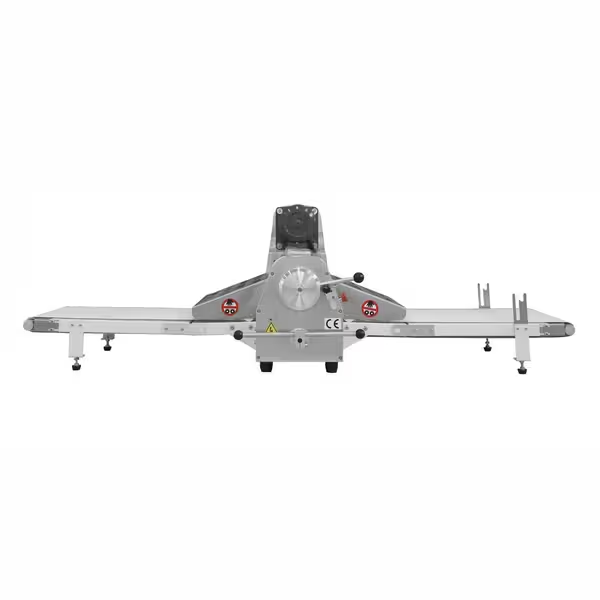
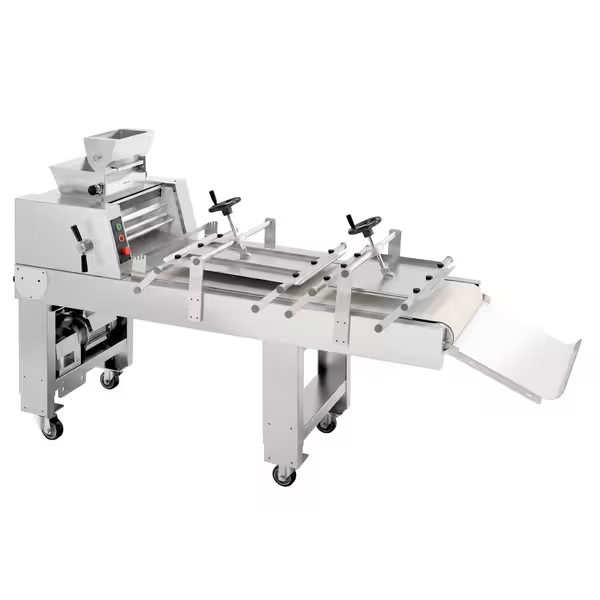
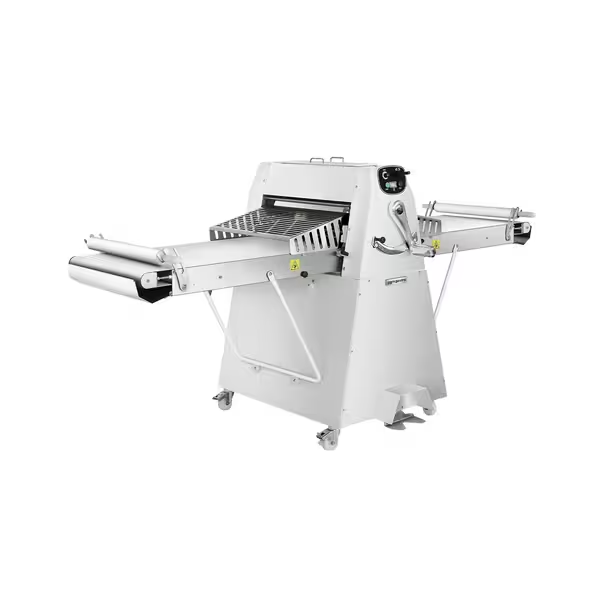
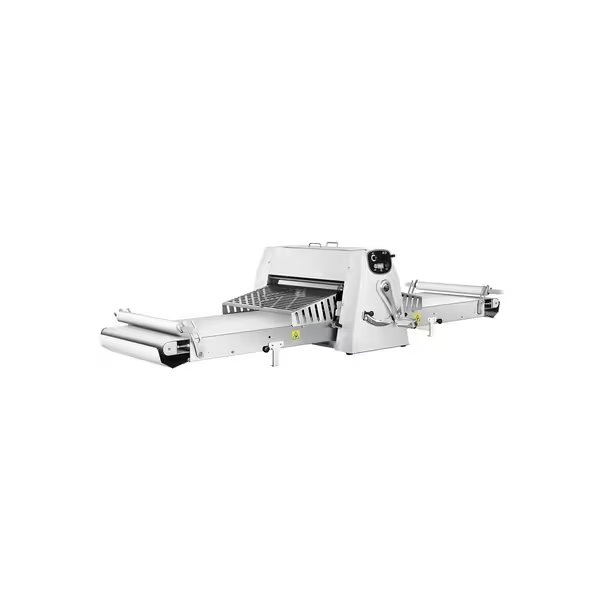
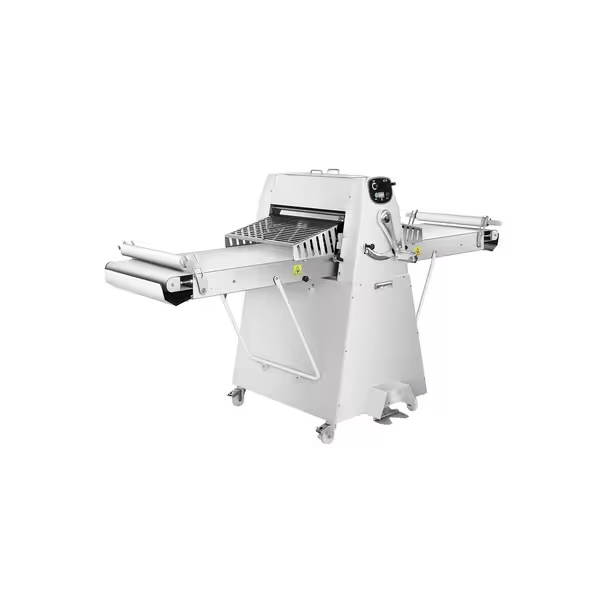
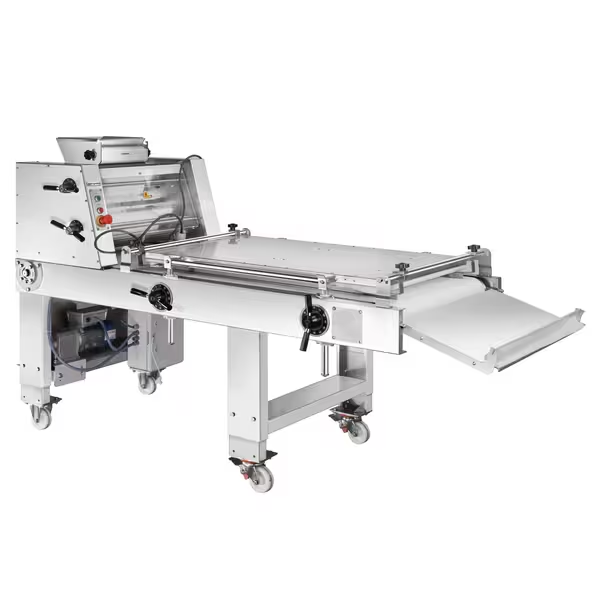
Dough sheeters for even sheets of dough
Dough sheeters are commercial machines that feed dough between rollers and roll it to a defined thickness. Powered conveyor belts provide an even flow and are particularly suitable for businesses that need to prepare larger quantities consistently.
In bakeries, patisseries, hotels, restaurants and production kitchens, this reduces manual rolling. Recurring batches can be organised more smoothly: feed in the dough, set the roller gap, check the sheet and pass it through again if needed. This supports consistent preparation for the following stages.
Match belt dimensions, dough thickness and power to daily output
Key selection factors are conveyor belt length, working width, adjustable dough thickness, motor power and machine format. The range includes models with belt lengths of approximately 1,700 to 2,800 mm and motor ratings of 400 to 750 W. Some versions allow dough thickness to be adjusted from 0.3 to 35 mm; 500 mm wide belts accommodate suitably wide dough sheets.
Dough type also matters. Soft yeast doughs, firmer doughs and laminated doughs require different roller gaps, numbers of passes and levels of gentle handling. For businesses working with varied recipes, a readily adjustable thickness setting is more important than a single high power rating.
Size the machine around busy preparation periods rather than the daily average. If you process several batches before breakfast, lunch or a baking run, choose belt length and power to suit the actual dough volume. A countertop model can work well in smaller production areas. Floor-standing machines provide a dedicated workstation and are often easier to integrate into fixed routines at higher volumes.
Plan space and electrical supply early
Conveyor dough sheeters need considerably more working space than compact dough rollers. External dimensions in the range run from approximately 2,080 x 880 x 620 mm for a countertop model to 3,240 x 1,090 x 1,300 mm for a larger floor-standing unit. Staff also need enough room to feed, remove and turn the dough.
Several models fold away, while some floor-standing versions have castors or a foot pedal. These features can help when the machine needs to free up space after preparation or the operator needs both hands for the dough. Include the electrical connection in pre-order planning: several models require a 400 V or 380 V three-phase supply.
Hygiene and ease of use in daily operation
Flour dust, dough residues and frequent cleaning are part of normal use. Stainless steel bodies, accessible working areas and robust rollers support a clean routine. Check access to conveyor belts, collection areas and controls, and whether the machine can be stored compactly after use.
Quick selection check:
-
Required dough width, dough type and thickness adjustment range
-
Daily volume and workload during the busiest preparation period
-
Belt length, countertop or floor-standing design and available space
-
Available 400 V or 380 V supply and a safe installation position
-
Cleaning access, castors, foot pedal or folding function to suit your working methods
Plan dough preparation as a connected process
A sheeter delivers value when the stages before and after it are coordinated. Dough from dough mixers can be organised in pizza dough boxes and trays. Depending on the production method, resting, proving or baking then follows, using proving cabinets and bakery deck ovens. Keep routes short and provide enough set-down space at both the infeed and outfeed.
A well-integrated dough sheeter can reduce physically demanding manual work, improve repeatability and make preparation easier to schedule. This is particularly valuable where similar dough thicknesses and larger quantities are produced regularly and a stable process matters more than improvised corrections. Training is also easier when settings, feeding and handover procedures are clearly defined.
Choose the format that fits your business
Compact countertop models are better suited to limited space and clearly defined production volumes. Larger floor-standing units offer a longer working area and suit businesses organising dough processing as a permanent station. The key is a balanced combination of dough size, belt dimensions, power supply, space, controls and cleaning routine. This makes the machine a reliable part of preparation without unnecessarily obstructing other work areas.