


Commercial Wok Stoves for Professional Kitchens
Wok ranges allow fast preparation of wok dishes with high, precisely applied heat. You can choose from portable, fixed and multi-burner models with gas or induction technology for different business sizes and production volumes. Find out which wok station suits your kitchen in our buying guide »
Building depth
Width
Operation type
Design/Equipment
Number of Wok Hobs
Number of Burners
Number of hobs
Power
Power Connection
Price
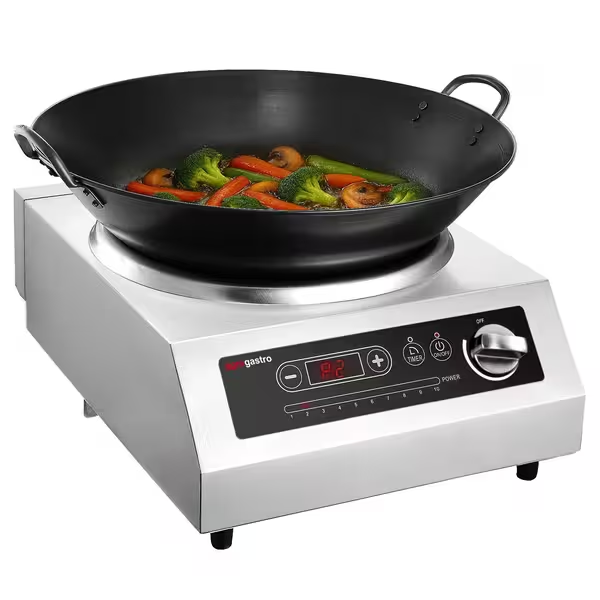
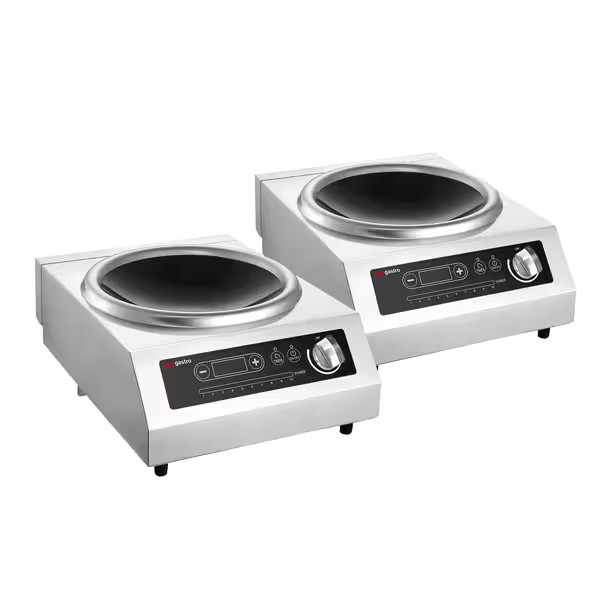
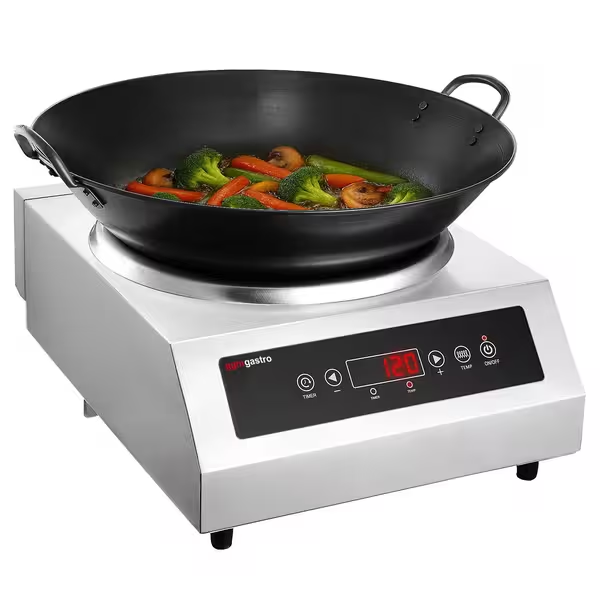
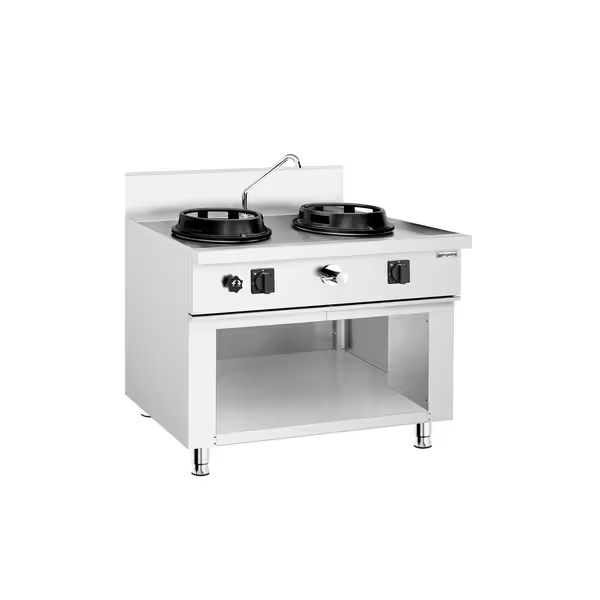
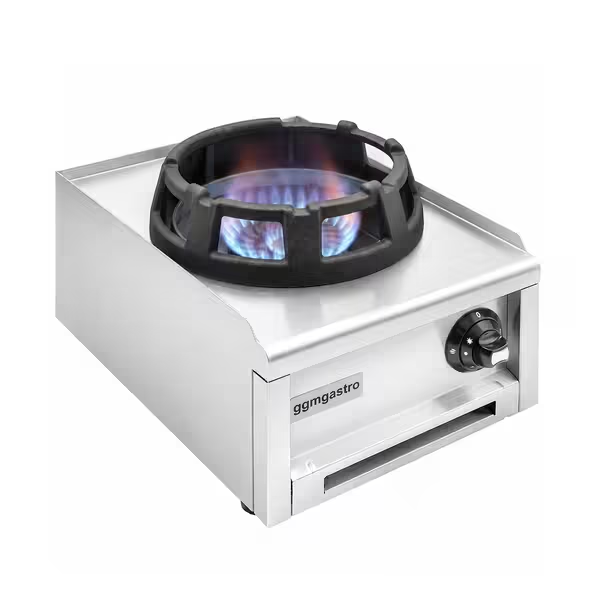
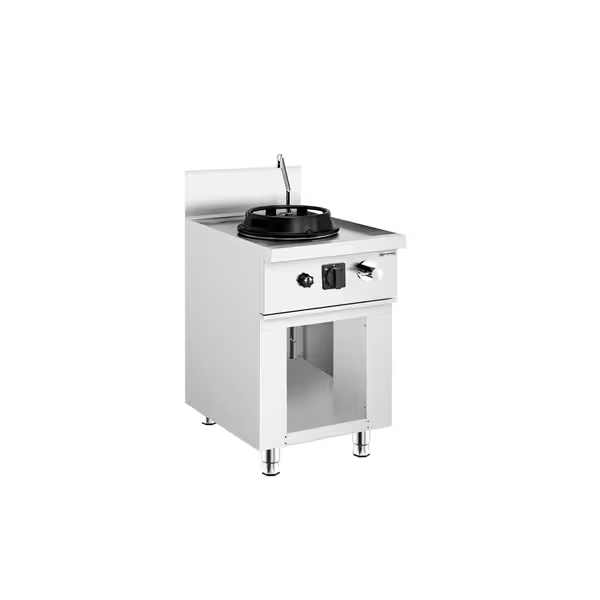
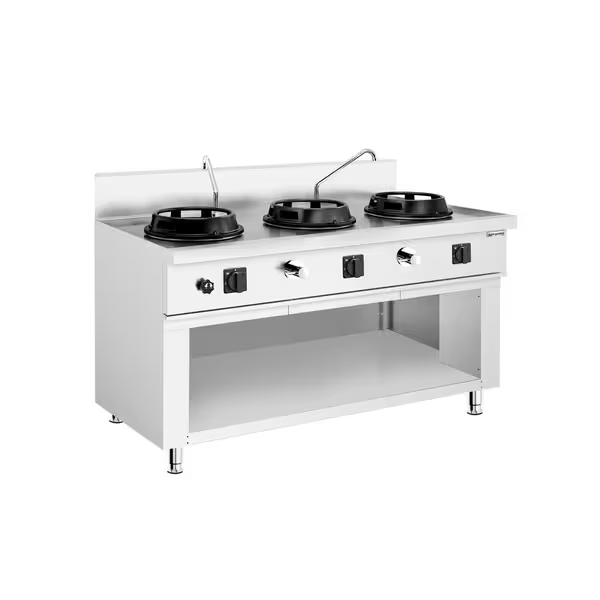
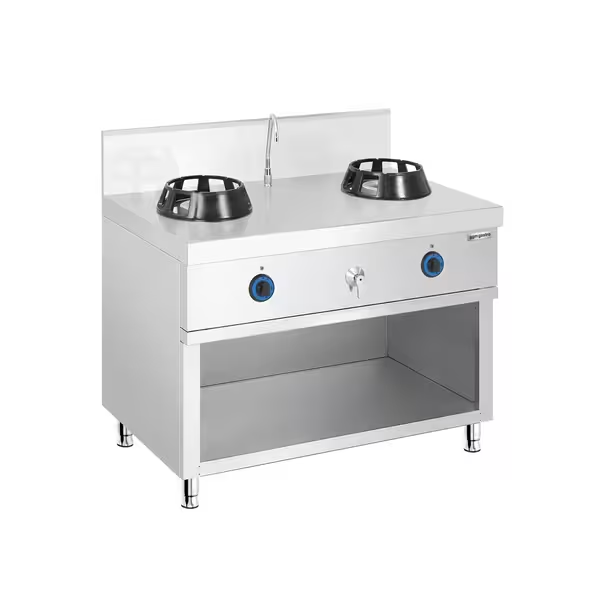
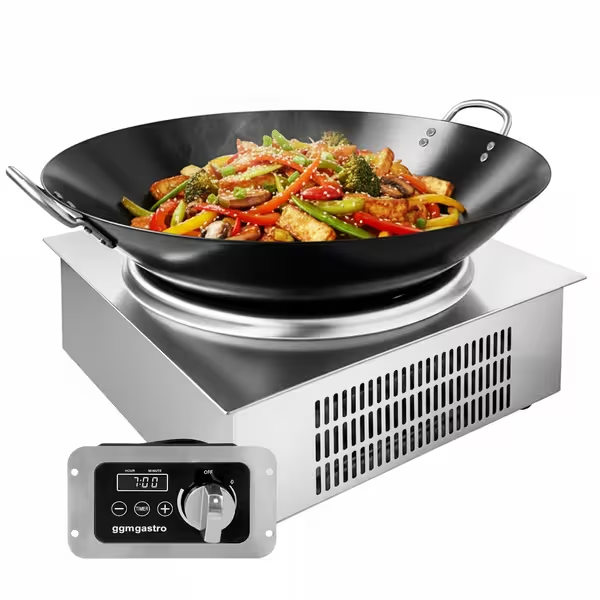
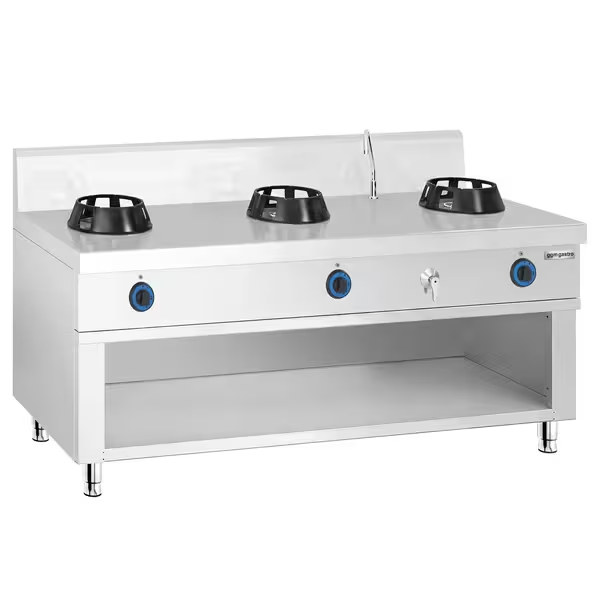
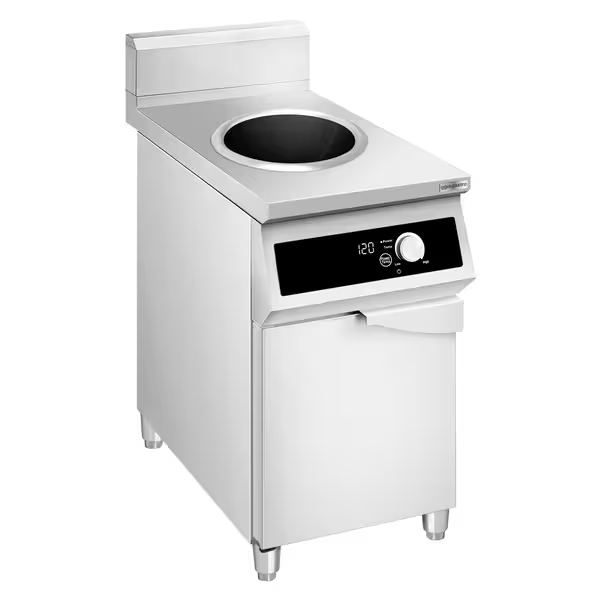
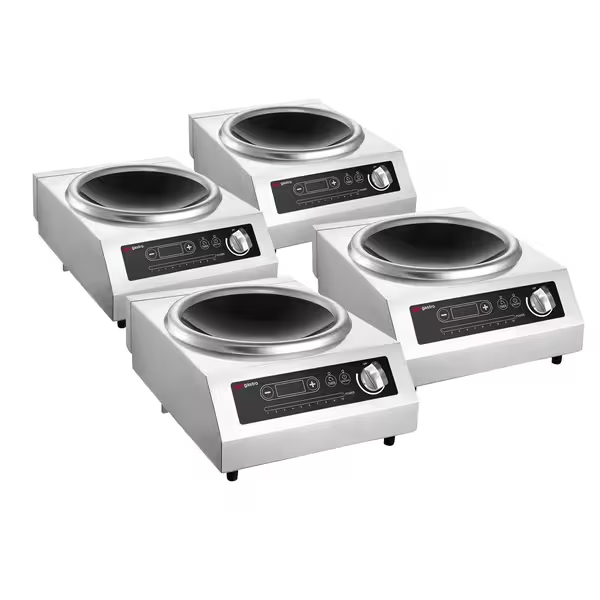
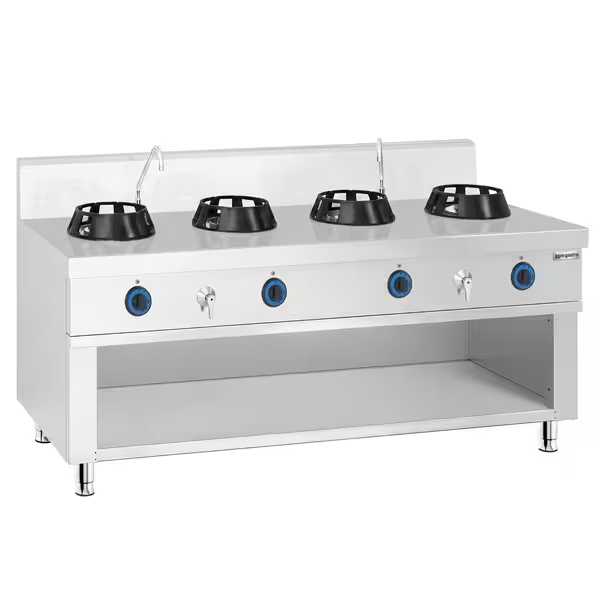
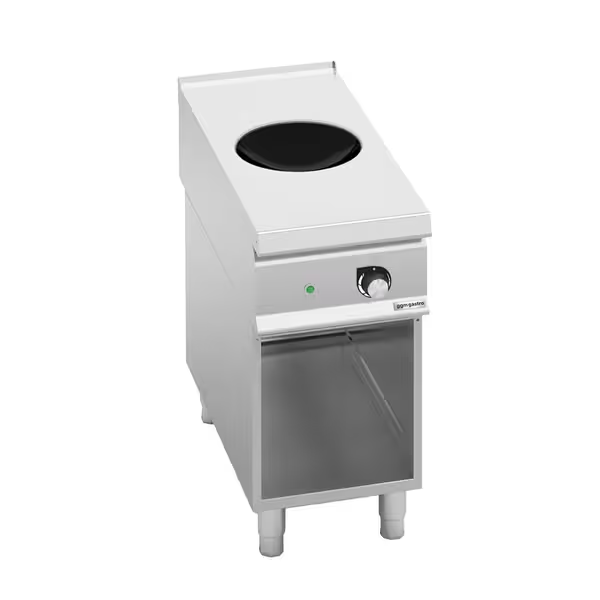
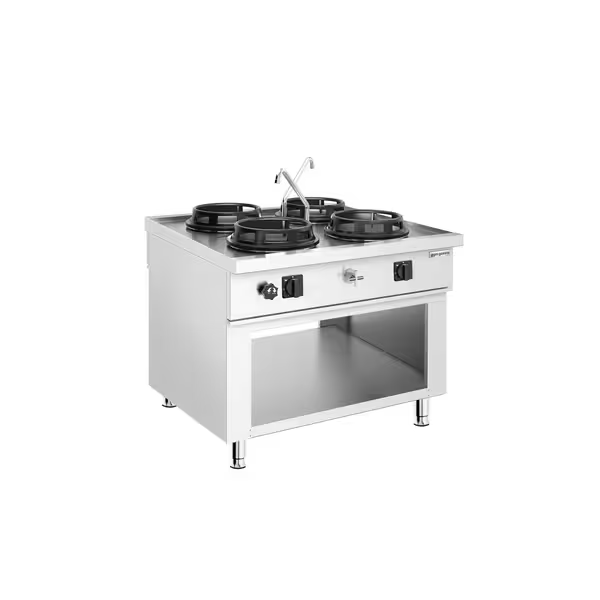
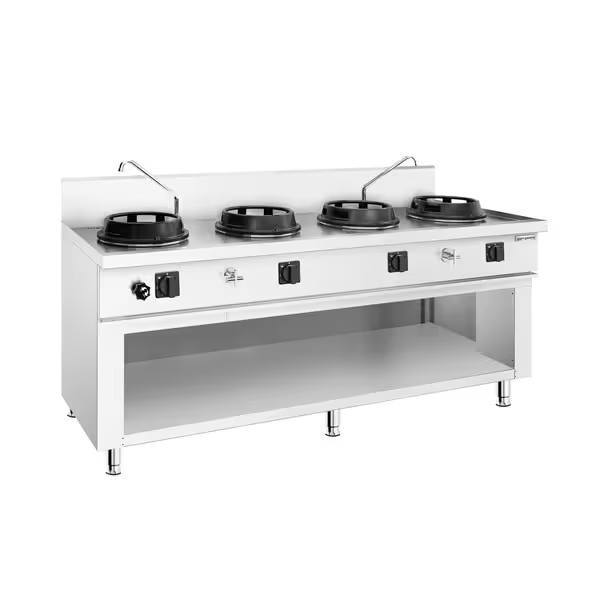
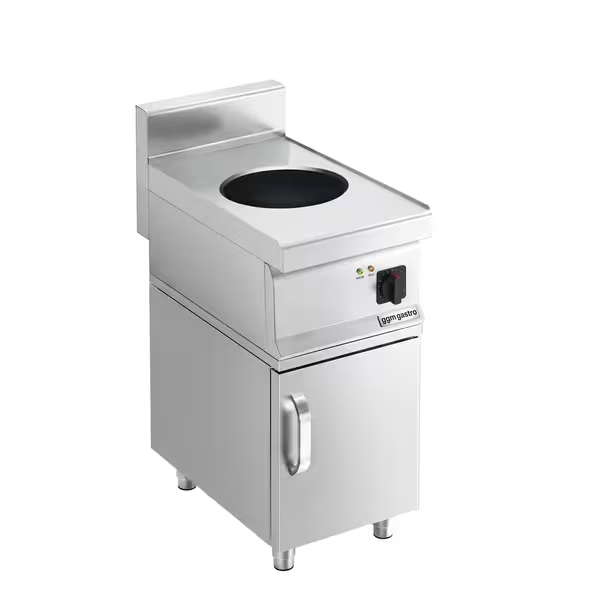
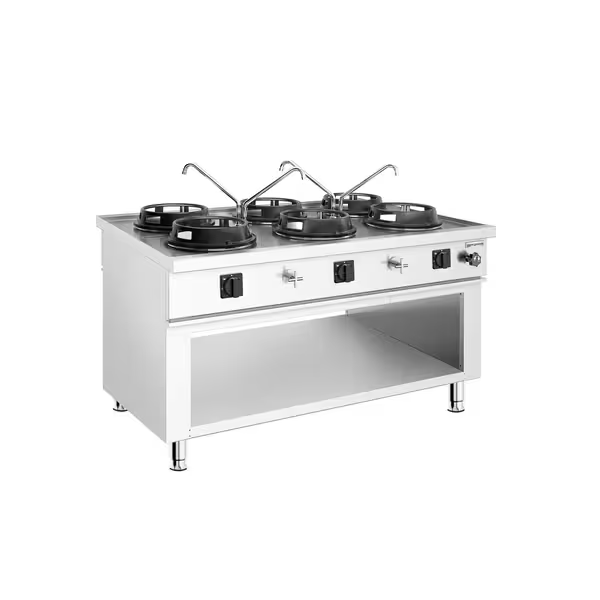
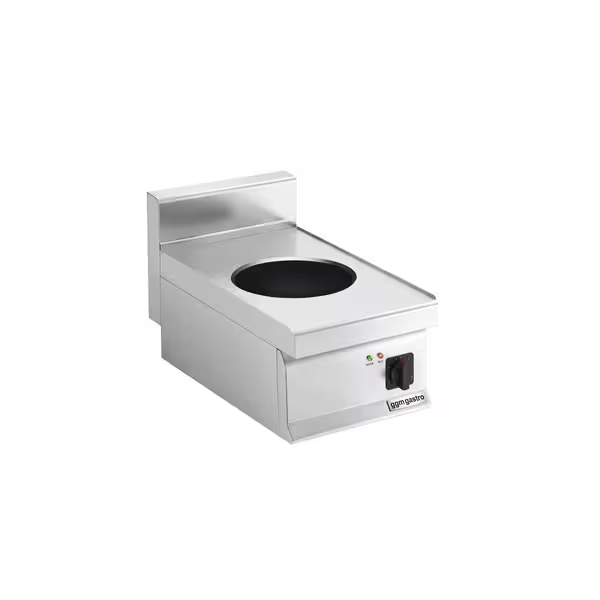
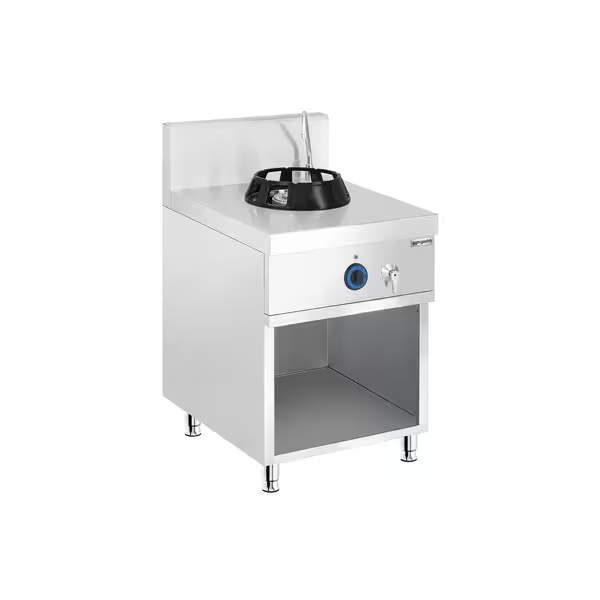
Wok ranges for fast, controlled cooking
Wok ranges are professional cooking appliances with a specially shaped ring or recess for woks. They concentrate heat on the curved base of the wok, making them particularly suited to short, intensive searing, tossing and cooking at high temperature.
They are used mainly in Asian restaurants, international kitchens, quick-service restaurants, hotels, food courts and live cooking areas. Direct heat transfer lets ingredients be processed quickly without the wok station becoming a bottleneck when orders pile up. It is essential, however, that output, number of burners and workstation layout match the actual production volume.
Choosing gas or induction to suit your business
Gas wok ranges work with powerful burners and respond immediately to changes in flame intensity. They are particularly attractive when cooking regularly at very high heat and when the business has the required gas connections and a suitable extraction solution.
Induction wok ranges transfer energy directly into compatible wok cookware. They allow precise power control and release less heat into the room. Portable countertop units with around 3.5 kW can be a compact addition for smaller kitchens or promotional areas. Larger freestanding units and built-in modules offer higher outputs and are suited to permanent use at a fixed station.
The key selection criteria are:
-
available gas, electrical and ventilation connections,
-
required heat-up speed and output,
-
number of dishes prepared at the same time,
-
available worktop space and unit depth,
-
operating and cleaning effort for the team.
Planning burners and dimensions around peak demand
Our selection extends from single portable units to wok islands with several burners. A single burner is often suitable as an addition to an existing cookline. Two wok burners allow parallel working, for example when vegetables, meat or sauces are prepared separately. Models with three to six burners are designed for higher production volumes and clearly divided workstations.
For sizing, the number of dishes per day is not the only deciding factor. What counts is how many orders need to be processed within the busiest 30 or 60 minutes. A unit that is too small lengthens ticket times. An oversized wok station, on the other hand, needs more space, electrical capacity and cleaning effort without being fully used day to day.
Unit depths of around 700 or 1,000 mm make it easier to integrate into correspondingly designed [ranges] and cooklines. Before buying, width, working height, clearance and service access must also be checked.
Water taps and stainless steel surfaces make daily work easier
Professional wok ranges are usually made of robust stainless steel. The material withstands heat, moisture, grease and frequent cleaning in commercial operation. Smooth surfaces and easily accessible areas make it easier to remove food residue and grease splashes between production phases.
On heavily used stations, integrated water taps, splash guards and drainage channels are particularly helpful. Water is available directly at the workstation, while liquids can be drained away in a controlled manner. This makes it easier to organise changes between different dishes and keeps the work surface clearer.
Removable burner parts, grease collection areas and clear cleaning access reduce extra handling. Adjacent stainless steel furniture should also be arranged so that no hard-to-reach gaps are created.
Quick check for the right wok station
-
Is one burner enough, or do several dishes need to be cooked at the same time?
-
Is gas available, or does induction suit the technical infrastructure better?
-
Do width, depth and working height match the existing cookline?
-
Are a water tap, drain or base needed in daily operation?
-
Is the output matched to your actual peak time and team size?
Integrating wok ranges sensibly into the production workflow
A high-output wok station only works efficiently when ingredients, cookware and interim landing space are within direct reach. Nearby refrigerated bases can keep prepped ingredients to hand, while side worktops provide space for portioning and finished components.
In open kitchens or with live cooking, suitable ventilation also plays an important role. Heat, steam and grease must be extracted reliably so that working conditions, hygiene and visible tidiness are maintained.
A well-integrated wok station supports short routes, clear responsibilities and a steady production pace. As a result, the investment can not only make additional dishes possible, but also help make existing workflows more stable and predictable.
Buying wok ranges by output and usage profile
The right wok range depends on the business concept, the available space and the actual load at peak times. Portable induction units offer flexibility, while fixed gas or induction models create a dependable basis for regularly high production volumes.
GGM Gastro offers different designs, output levels and numbers of burners for compact kitchens as well as larger production lines. Careful coordination of connection type, dimensions and features makes it easier to choose a solution that fits sensibly into your workflow in the long term.