


Commercial refrigeration for catering and commercial kitchens
Commercial refrigeration keeps food and drinks safely stored, prepped and displayed in professional catering businesses. At GGM Gastro, you will find refrigeration equipment for restaurants, hotels, bars, takeaways, caterers, canteens and many other professional settings. Buying guide »
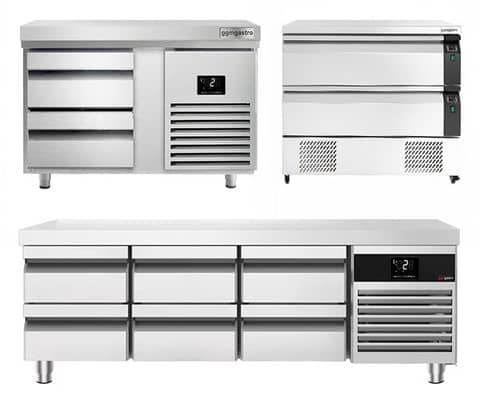
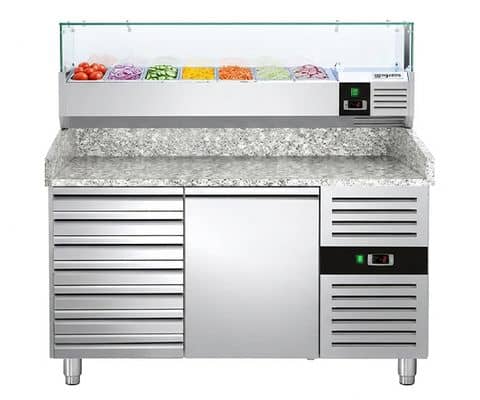
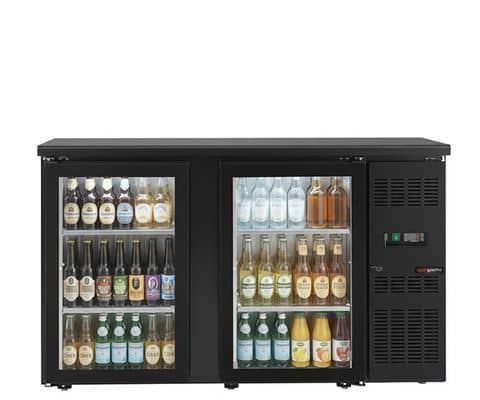
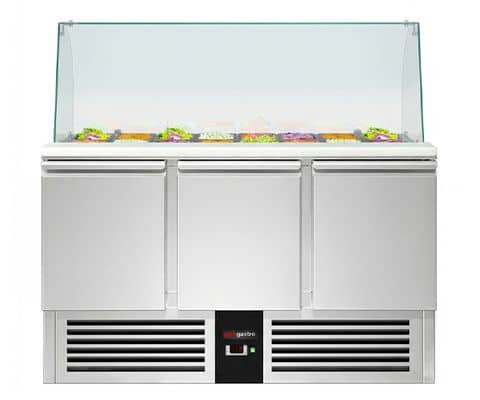
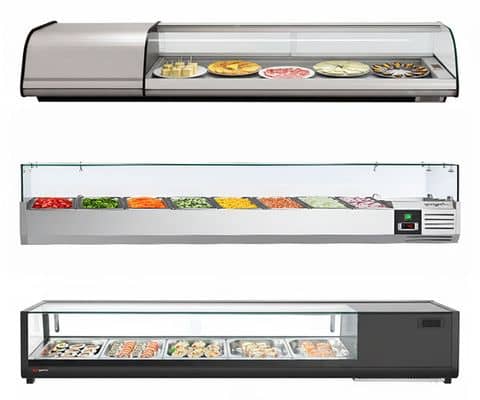
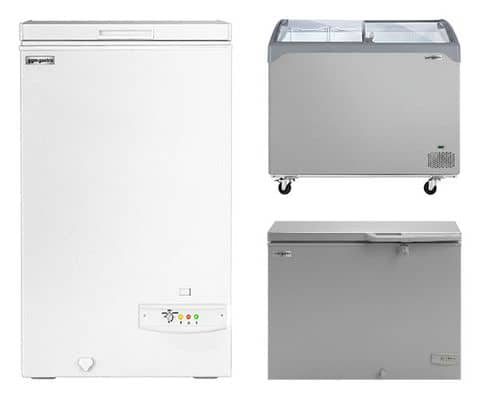
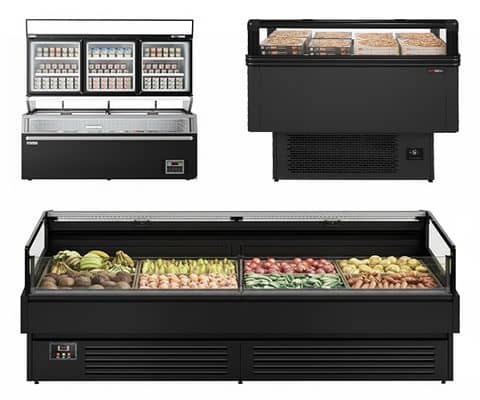
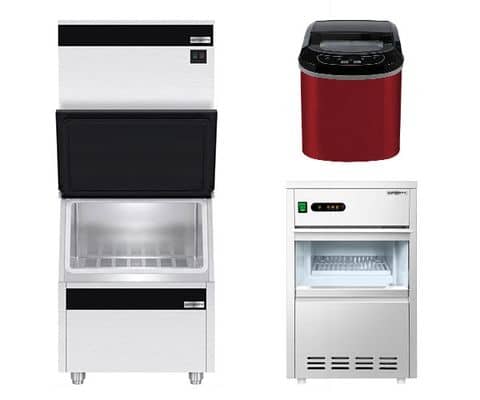

Refrigeration as the foundation of safe kitchen operations
Commercial refrigeration covers all professional cooling equipment used to store food, drinks and prepared dishes at controlled temperatures, keep them within easy reach or display them ready for sale. In catering, it is therefore not just storage space but an integral part of food hygiene, prep, service and stock control.
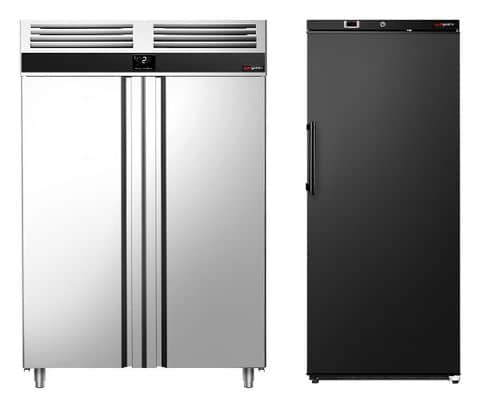
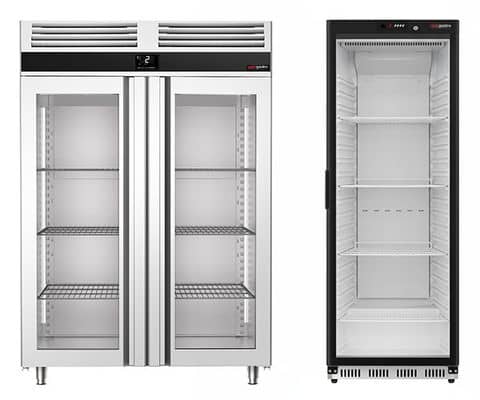
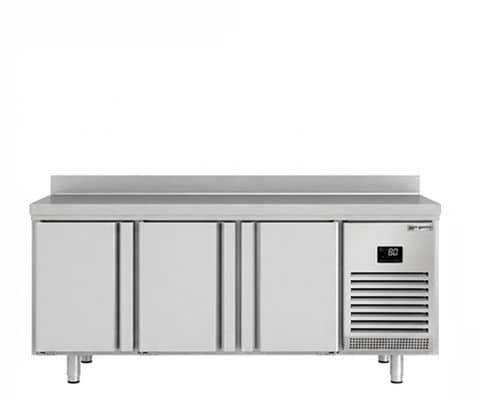
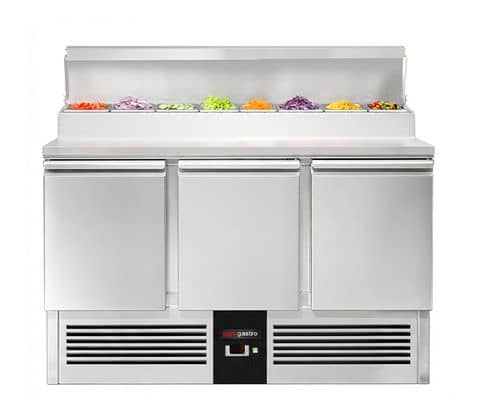
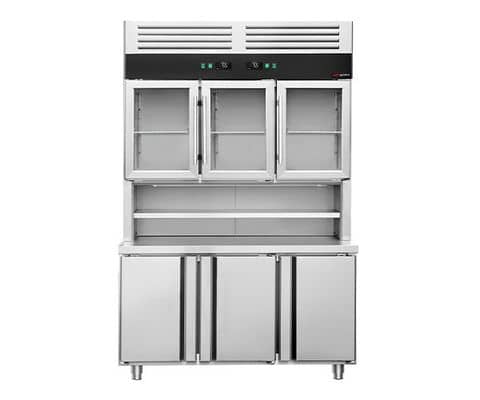
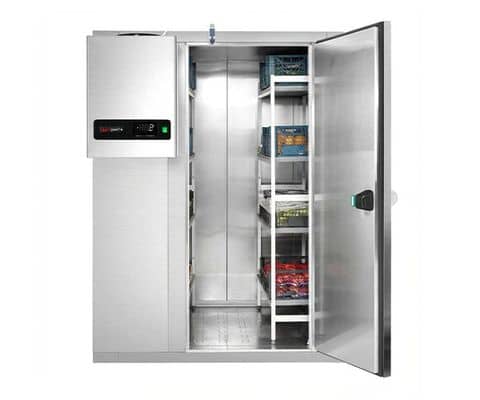
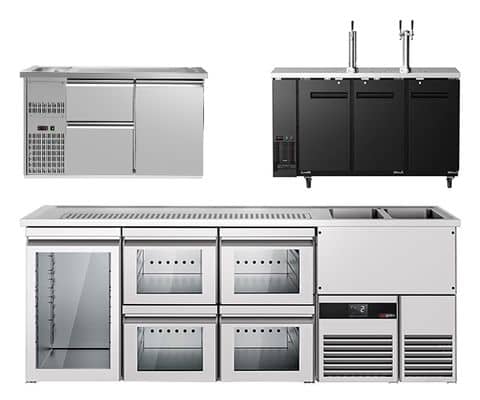
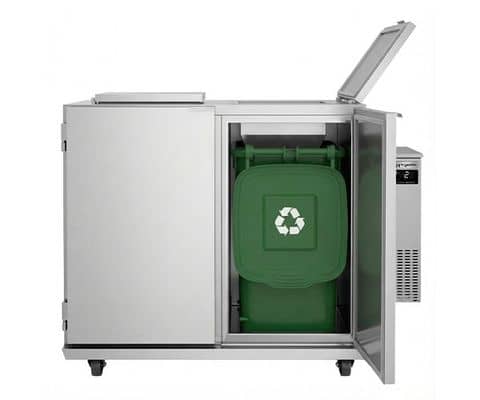
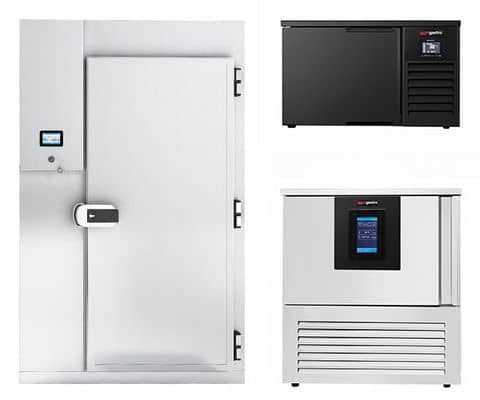
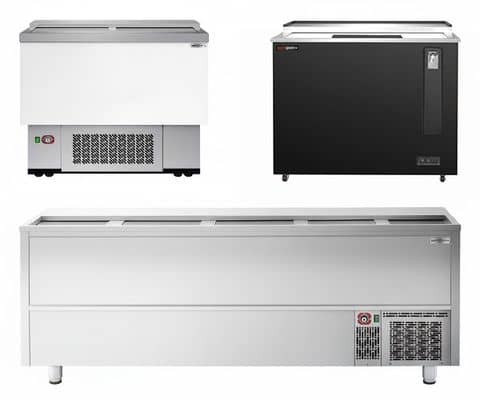
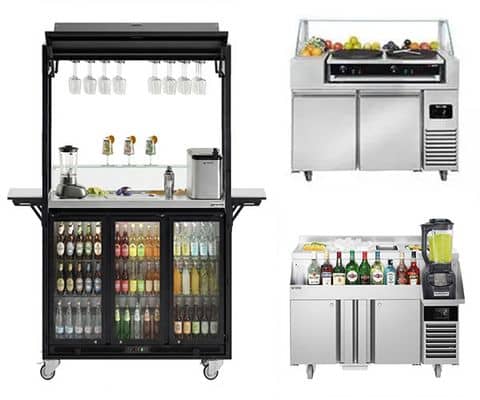
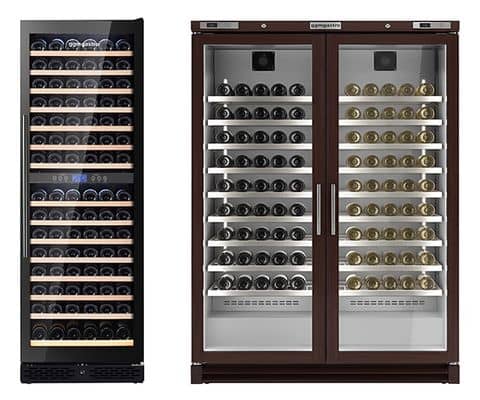
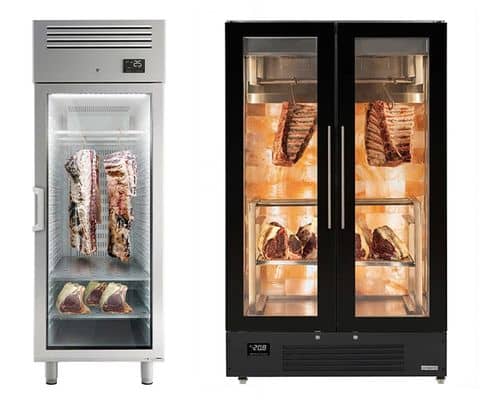
Whether you run a restaurant, pizzeria, hotel kitchen, bar, takeaway, café, catering business or contract catering operation, the wrong refrigeration set-up quickly leads to unnecessary walking, unclear storage areas and risks to freshness and process reliability. The key question is therefore not just which unit fits the room, but what job it does in your workflow. An upright fridge secures your stock, a counter fridge cuts walking distances at the station, a cold room provides capacity for larger volumes and a bottle cooler keeps front-of-house service moving.
Which commercial refrigeration suits your workflow?
The right refrigeration depends on stock volume, temperature range, available space and how the unit will be used. In small kitchens, compact dimensions, simple operation and quick access matter most. In production kitchens or hotels, usable capacity, cooling reserve, number of doors, shelving layout and reliable temperature control are more important. If you work with prepped components during the lunch rush, refrigeration right at the workstation pays off. If you store large quantities, central storage refrigeration or cold rooms are usually the better choice.
Typical selection criteria include:
- Temperature range for chilled storage, frozen storage or drinks
- Usable capacity and interior layout for GN pans, crates or bottles
- Dimensions, door hinging and footprint in tight kitchen spaces
- Materials and ease of cleaning, especially for stainless steel surfaces
- Connection type, energy consumption and integration into existing workflows
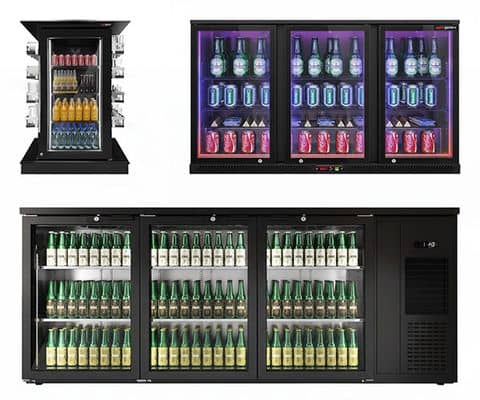
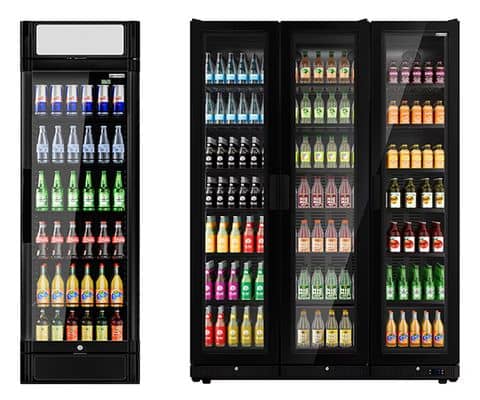
A practical example: in a pizzeria, a storage fridge alone is often not enough if ingredients constantly have to be fetched from the back during peak service. Here, a pizza prep counter right at the topping station can reduce walking and keep the workflow steady. In a bar, on the other hand, bottle coolers, beer counters or keg coolers take priority, because access, cooling performance and visibility have a direct impact on service.
Planning, space requirements and kitchen layout
Good refrigeration is placed where it is needed: storage refrigeration follows the flow of goods, working refrigeration sits at the prep station and display refrigeration belongs in the sales or service area. This creates clear routes from goods-in through prep and storage to service.
When planning, operators should look beyond the external dimensions. Door opening angles, walkways, cleaning clearances, ventilation and access during service are just as important. An oversized unit takes up valuable floor space, while an undersized one leads to constant reshuffling, overfilling and extra work. With counter fridges or refrigerated bases in particular, check whether drawers, doors or GN runners best suit your workflow.
Hygiene, Material und Alltagstauglichkeit bei gewerblicher Kühlung
Kühlgeräte im Gastro-Bereich werden täglich geöffnet, gereinigt, beladen und häufig unter Zeitdruck genutzt. Deshalb zählen robuste Verarbeitung, leicht zugängliche Innenräume, glatte Oberflächen, stabile Roste oder Einschübe und eine Bedienung, die auch bei wechselndem Personal verständlich bleibt. Edelstahl ist in vielen Bereichen sinnvoll, weil er hygienisch wirkt, belastbar ist und sich gut reinigen lässt.
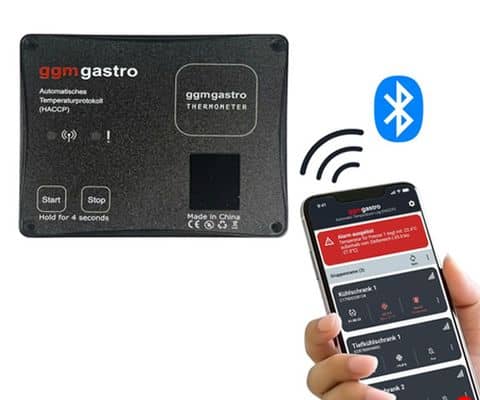
Auch Temperaturkontrolle ist ein praktischer Faktor. Digitale Anzeigen, klare Einstellmöglichkeiten und bei Bedarf ein automatisches Temperaturprotokoll unterstützen Betriebe dabei, Kühlprozesse nachvollziehbar zu führen. Bei Geräten mit Umluftkühlung ist eine gleichmäßige Temperaturverteilung wichtig, während statische Kühlung je nach Produktgruppe schonender sein kann. Entscheidend ist, dass die Kühltechnik zur Ware passt: Getränke, frische Zutaten, Fleisch, Fisch, Molkereiprodukte, Tiefkühlware oder vorbereitete Komponenten stellen unterschiedliche Anforderungen.
Hygiene, materials and everyday durability
Commercial refrigeration is opened, cleaned and loaded every day, often under time pressure. That is why robust construction, easily accessible interiors, smooth surfaces, sturdy shelves or runners and controls that stay easy to understand even with changing staff all matter. Stainless steel makes sense in many areas because it looks hygienic, is hard-wearing and is easy to clean.
Temperature control is another practical factor. Digital displays, clear settings and, where required, automatic temperature logging help businesses keep their refrigeration processes traceable. With fan-assisted units, even temperature distribution is essential, while static cooling can be gentler on certain products. What matters is that the refrigeration technology suits the goods: drinks, fresh ingredients, meat, fish, dairy products, frozen food and prepped components all have different requirements.
The right refrigeration set-up pays off
Commercial refrigeration can support your business financially if it is correctly sized and well integrated. It helps reduce stock losses, makes prep easier to plan and keeps peak times calmer. When ingredients are chilled and within reach, the team spends less time searching and walking and can work more cleanly.
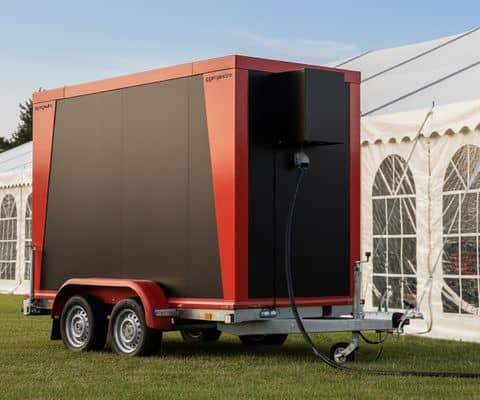
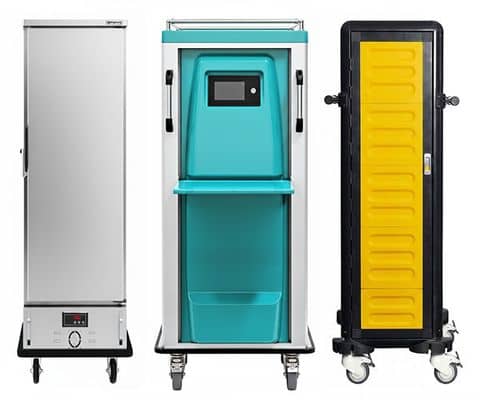
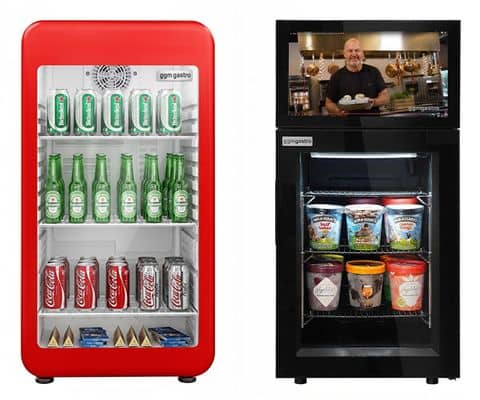
This is especially true for high-volume operations. In a takeaway, fast access to prepped ingredients is key. In a restaurant, reliable mise en place is essential. In catering or contract catering, larger cooling reserves, clearly defined storage zones and freezer capacity play a bigger role. For businesses with front-of-house sales, countertop display cases and sushi display cases also combine freshness, presentation and easy access.
Combining refrigeration and planning for the long term
Refrigeration works best as part of a well-coordinated kitchen concept. Worktops, stainless steel furniture, wash-up areas, prep tables and service zones should be arranged so that refrigeration units do not stand in isolation but support the workflow. Depending on the type of business, a central cold room, several undercounter units close to the stations and separate drinks refrigeration can make more sense than a single large unit.
When choosing, it pays to take a clear-eyed look at day-to-day operations: which goods need to be within reach at all times? What quantities are moved every day? Which temperature ranges are actually needed? Where do walking, waiting times or bottlenecks occur today? Once you have answered these questions, you will find refrigeration that not only fits your kitchen but makes your whole operation noticeably better organised.